PANAJI: Maryann D’Souza remembers the times when, as a six- or seven-year-old, Carnival meant nightmares as Potekars roamed around her house on the island of Divar.
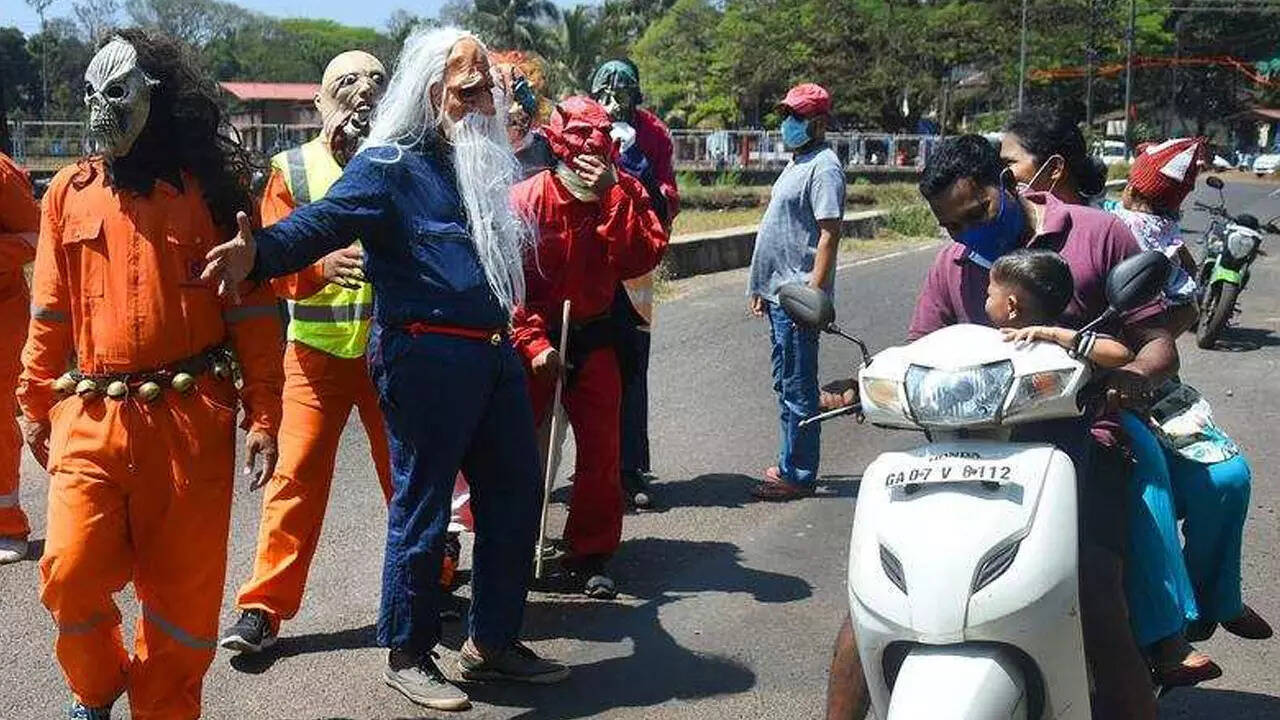
The word ‘Potekar’ in Konkani means shabby, but these guys were scary. They would come wearing masks, gothic clothes, and carry a sack on their back. The tinkle of anklet bells tied around their ankles or waist was enough to alert the children of the impending ‘danger’.
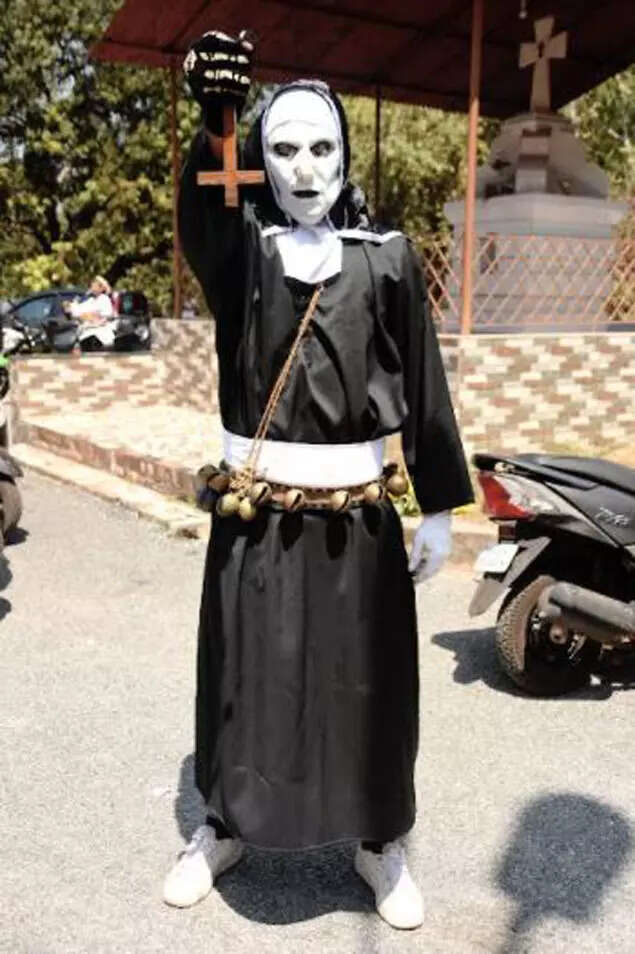
“We used to hide under the bed or lock ourselves inside the toilet,” said Maryann. “We were really scared. They used to carry a sack and our parents always warned us, ‘if you don’t eat your food or behave properly, Potekars will take you away’. Those words kept ringing in our ears.”
Now 51, Maryann knows what Potekars do.
On Sunday morning, she herself dressed up as one and went around a few houses in her locality of Malar, asking for and receiving sweets, though nobody really prepares what was a favourite dish of the Potekars of old — godshem (sweet porridge).
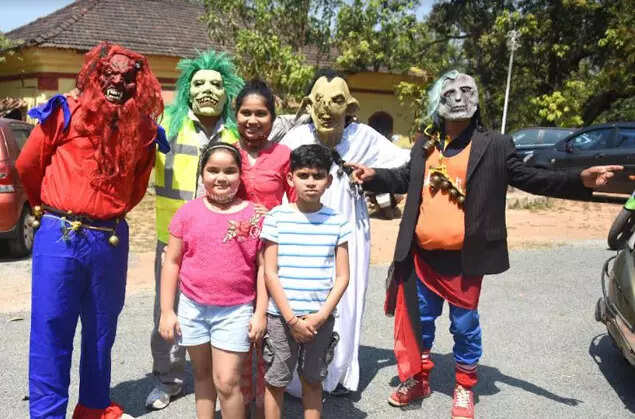
By noon, she was back home, and welcomed several Potekars inside her house, offering them lunch, soft drinks and, of course, chilled beers from the fridge.
Potekar — celebrated only on the island of Divar — is a unique local festival that makes its appearance as part of the pre-Lent Carnival festivities across the state.
Every Carnival, when King Momo announces three days of fun and merriment, Divarkars (villagers from Malar, Piedade and Naroa) celebrate the festival and have kept it alive for decades.
For three days, at no specific times, Potekars put on their scary costumes and masks, and prance around the streets. Children, not surprisingly, recede into the shadows as they pretend to frighten them.
“I’ve been doing this for the past 35 years,” said Moses Gonsalves, whose skeleton mask and attire made him look frightful. “We used to make our own masks, without letting anyone know. The uniqueness of this festival is being in disguise, so nobody should recognise us when we are out. That’s one of the reasons why Potekars speak in falsetto voices.”
“In the past, the masks and attire used to be really scary. Nobody would let you inside their houses. Doors would remain shut for three days. Now, these are all friendly Potekars who provide entertainment. The people are welcoming,” he said.
Even children are no longer scared. At least a majority of them, never mind the dark clothing, usually oversized to hide the person’s physical characteristics.
At Sao Mathias, opposite the village panchayat ground, a group of nine Potekars stop a motorbike where a child, accompanied by his father, screams for his life. But a few kilometres away in Maddant, young children happily shake hands with the show-stoppers and even pose for pictures, clicked by their parents.
“We want to make this a people-friendly festival and don’t want anyone to be scared,” said Marius Fernandes, a resident of the island who’s popularly known as festakar (festival man) for curating various festivals over the past 20 years. “In the past, Potekars used to go to schools and scare the teachers and students. That forced schools to remain shut for three days. Now it’s more relaxed. The participation has also increased. There should be at least 200 Potekars now, including many women. We can’t tell you the number (of women Potekars) because the fun is in the disguise.”
The origin of Potekars is mired in hoary legend and folklore which Marius has tried to research with little success. His mother knows stuff since the 1930s but didn’t have a clue how a festival so unique to Divar started.
Many say the tradition is related to customs and rituals practiced by village communes, known as gaunkaries. “This may have its origins in animism,” said an elderly villager, referring to the early masks which were shaped in animal forms.
Others feel it has educational values as children were taught moral behaviour.
Savio Vaz (UAE) and Cruz Grao (Kuwait) both returned home in time for the festival this year. Dressed in creepy attire, they pranced around the Goltim-Navelim panchayat area with people enjoying the sight from their balconies.
“This is a tradition that needs to be kept alive,” said Grao.
Festakar Marius is already laying the foundation.
“We have decided to showcase the potekar festival to the world from next year,” said Marius. “People are quite inquisitive. We will showcase everything — right from making of the masks to the use of ghumots. A month before the festival, we will have a workshop and train the next generation of Potekars.”
Unlike in the past, these Potekars would be super friendly and nobody would have to hide under the bed.