
Joshua Hoyt says he’s retiring, and I’m still not quite sure I believe him.
I keep thinking he’s like one of those boxers who announces his retirement after a big fight, only to make a comeback when the next opponent comes into view.
Pugnacious though he may be, Hoyt is no boxer. But he’s spent his career fighting the good fight as one of the best community organizers in Chicago, a city that has long cultivated some of the top practitioners of that underappreciated profession.
One of the problems with fighting the good fight, you understand, is that it’s never over.
There are always more injustices to be addressed, more wrongs to be righted. For that reason alone, I’m hardly the only person questioning what retirement holds for Hoyt, knowing his dedication to the cause of social justice, for immigrants in particular.
Hoyt’s extensive network of friends, protégés, allies and co-conspirators have doubts as well.
“I know you’re not done making trouble,” Roberta Rakove, a lawyer and activist, has told him.
Making trouble is indeed one of Hoyt’s specialties, especially for politicians, always in the interest of afflicting the comfortable and comforting the afflicted.
Hoyt, 65, is the guy who helped build the Illinois Coalition of Immigrant and Refugee Rights into a major force before moving to the national scene seven years ago to run the National Partnership for New Americans, itself a coalition of other regional organizations such as ICIRR.
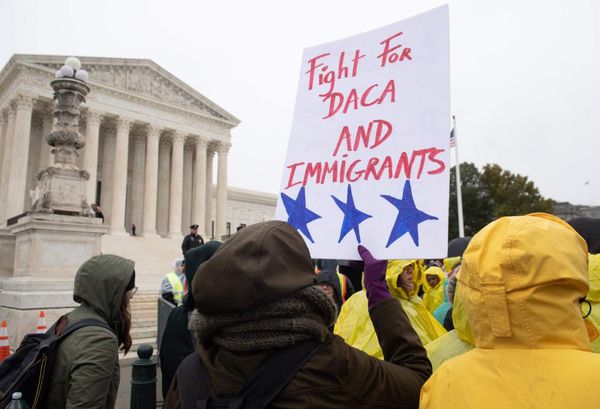
The national group has helped 5.3 million immigrants become citizens in the last six years, the first step in registering them to vote and asserting their political power.
“Organizing is about building power and forcing a reaction,” Hoyt says. As to his reputation for playing hardball, he explains mischievously: “If you’re going to be in a fight, you might as well fight to win.”
Hoyt is stepping down Friday as NPNA’s executive director, nearly 43 years to the day since he started his organizing career.
During that time, Hoyt has employed a people power strategy to come out on the winning side in more than his fair share of battles, in the process helping make Illinois one of the most immigrant-friendly states in the nation.
Whether it was convincing state leaders to provide health care for the working poor or drivers licenses for undocumented immigrants, Hoyt has been an architect and driving force behind important campaigns.
Exelon chairman emeritus John Rowe, one of Hoyt’s friends and frequent collaborators, says undocumented immigrants especially owe Hoyt a measure of gratitude for “whatever hope they have for a decent life in this country.” Hoyt would say they’ve earned it themselves by learning the power of telling their stories.
Despite his leftward leanings, Hoyt has made it a priority to work in a bipartisan manner, taking a carrot and stick approach to both sides of the political aisle.
Although Hoyt is better known for his brutal treatment of two Republicans, former U.S. Sen. Mark Kirk and then-candidate Jim Oberweis, over their immigration views, it remains a point of personal pride that two of his ostensible allies, President Barack Obama and U.S. Sen. Dick Durbin, each complained bitterly to Hoyt after he turned up public heat on them to do more.
/cdn.vox-cdn.com/uploads/chorus_asset/file/20006686/Josh___ICIRR_Protest_of_Cong._Lipinski.jpeg)
Yet the big goal, comprehensive immigration reform, has remained elusive. President Donald Trump has forced immigration organizers such as Hoyt to play defense the past four years, and now others will have to lead that fight into the future.
Happily, while Hoyt may no longer be on the front line, there is widespread agreement he has mentored a next generation of organizers and leaders who will be shaping public policy for decades to come.
One of them, Rebecca Shi, executive director of the American Business Immigration Council, credits Hoyt with advancing the organizing careers of women and people of color.
“Josh has been my role model,” said Shi, who now has her own team of crack young organizers forging ties between business and immigrant communities.
Abdelnasser Rashid, a political organizer who just lost an election for Cook County Board of Review but retains a bright future, credits Hoyt for always consulting on policy matters with Muslim and Asian groups, in addition to Latinos, because he understood that the immigrant coalition’s strength is in its diversity.
Juan Salgado, chancellor of the City Colleges of Chicago, and Dr. Zaher Sahloul, a local physician who operates an international disaster relief agency, credit their associations with Hoyt for helping their own personal development.
“He got me out of my comfort zone,” said Salgado, ICIRR’s former board president.
I can certainly say it was Hoyt who stiffened my backbone on support for immigration issues.
Hoyt has earned his retirement, but I’d be disappointed if he isn’t still causing trouble years from now.