TIJUANA, Mexico _ After traveling nearly 3,000 miles, enduring sweltering heat, tropical downpours, chilly evenings and endless stretches of mountains and desert during more than a month on the road, Ana Lidia Cruz acknowledged being somewhat deflated upon her arrival to this sprawling border city.
"Everywhere in Mexico, people treated us so nicely _ they gave us food, water, places to stay," said Vargas, 38, who was seated beneath a metal sculpture of dolphins in the seaside Playas de Tijuana district. "But here, they don't seem to want us. We're all tired, and a bit disillusioned."
She and her two children, Honduran citizens, are among the members of the migrant caravan that drew the ire of President Donald Trump and became an incendiary issue in the run-up to the U.S. midterm election.
In recent days, hundreds of caravan members _ including Cruz and her two children, 12 and 14 _ have been arriving in Tijuana, across the border from San Diego. Thousands more are expected to arrive here later Thursday and through the weekend.
They have received something less than a warm welcome in a city that has long been a byway for northbound migrants _ and a place where most residents have origins elsewhere in Mexico.
Late Wednesday, residents of the upscale Playas de Tijuana district protested the migrants' presence, and some fighting broke out between locals and the mostly Central American caravan members. Police responded.
Many migrants left the beachside community, headed for a sports center where municipal authorities had set up a temporary shelter, with mattresses, food and other necessities.
By midday Thursday, more than 500 migrants had registered at the sports complex, authorities said. The site can hold about 1,000 people, said one city official.
The possible arrival of 5,000 migrants from the caravan, mostly Hondurans, has stretched shelter capacity here, and it was unclear where the incoming multitudes would be housed.
And several other caravans of Central Americans, numbering more than 3,000 people, are working their way through Mexico toward the U.S. border.
The exhausted migrants who made it to Tijuana seemed taken aback by what they found here.
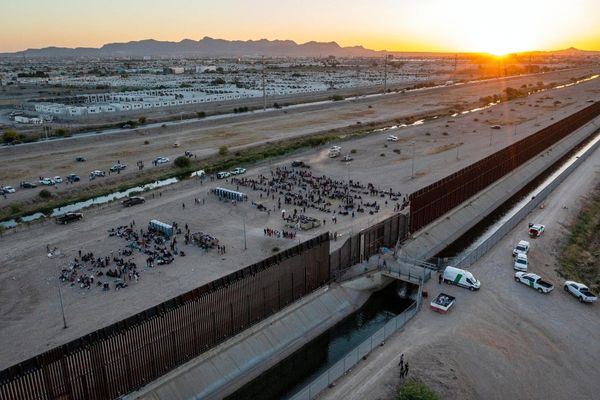
The hostility from residents of Playas de Tijuana was a surprise. But many were also struck by the high fencing along the border _ at times consisting of two or three layers of metal barriers of various sizes _ and the large contingent of U.S. Border Patrol officers lurking on the other side, monitoring developments.
"They are on horses, in trucks, on motorbikes," said Alejandra Hernandez, 26, who was seated in the beachside plaza in Playas de Tijuana with an expansive view of the Pacific, the border fence plunging into the surf and the gathered Border Patrol officers on the other side.
"I didn't expect it to be like this," said Hernandez, a Honduran who was traveling with her daughter, Joana, 7. "It looks like something on TV."
Both were suffering from minor colds, she said, a common ailment among the travelers.
Lines of migrants were walking along the highway from the beach toward the sports complex, about two miles away. In some cases police cruisers were trailing behind, monitoring their movement.
At the sports facility, about a block from the rusted border fence _ constructed of Vietnam War-era surplus metal _ the Hondurans and others were provided with orange identification bracelets. Many lingered outside the complex, discussing their next step after so many weeks of rough travel.
"I understand that many people here in Tijuana are nervous about us, but we didn't come here to cause any problems," said Edy Rivera, 37, a farmer from Honduras who said he hoped to find work in the United States and send money home to his wife and three children. "We are just passing through. We plan to get in line at the border and present ourselves legally. Hopefully, the American president will find it in his heart to let us in."