In company with many media historians, journalists and lecturers, I have been fascinated by the extraordinary events that occurred 30 years ago this week.
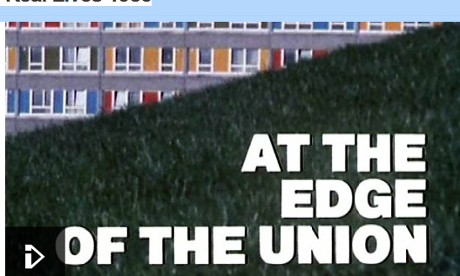
I refer to the 1985 attempt by the government to ban the broadcasting of a BBC TV documentary about Northern Ireland, Real Lives: At the edge of the union.
The programme was ordered to be pulled by the BBC’s governors after a protest by the government of Margaret Thatcher, who had declared the month before that the IRA should be starved of the “oxygen of publicity.”
She was outraged to discover that one of the major participants in Real Lives was Martin McGuinness, a member of Sinn Fein (and now, of course, deputy first minister in Northern Ireland).
Her home secretary, Leon Brittan, told the BBC that transmission and demanded that the programme be cancelled. The governors rejected the advice of senior BBC executives and ruled that it could not go out.
Widely interpreted as government censorship, the governors were faced by a day-long strike by staff. Eventually, the programme was broadcast with minor tweaks.
But it created a rift between the governors and the BBC’s management. In 2005, my colleague Lisa O’Carroll, using the freedom of information act (Foia), managed to obtain the minutes of the controversial board of governors’ meetings.
Now, after the passing of a further decade, Tony Harcup, who teaches journalism at Sheffield university, has worked alongside Press Gazette to obtain the board of management’s minutes, again using the Foia.
These cast further light on the depth of the crisis at the BBC. Bill Cotton, then in charge of BBC television, feared that the row would “destroy the corporation.”
At one of the meetings, Austen Kark, then in charge of the World Service, talked of “the grave international consequences for the BBC of any decision not to show the documentary.”
He warned of grievances among his staff, which were exemplified by the fact that on 7 August 1985 - the day Real Lives had been scheduled for transmission - the World Service carried no news for the first time in its history because of a strike called by the National Union of Journalists.
It was at the following day’s board of management meeting, attended unusually by the chairman of governors, Stuart Young Young, that Cotton aired his concerns.
Harcup quotes him as saying that “damage had been done by banning a programme which fundamentally told what was happening in Northern Ireland.” He then warned of the threat to the BBC’s existence.
The BBC’s director-general, Alasdair Milne, told the meeting “a breach had occurred and it must be healed”. He insisted this could only be done by transmitting the programme, which happened several weeks later.
*Tony Harcup is the author of Journalism: principles and practice (Sage, 2015) and the Oxford Dictionary of Journalism (OUP, 2014)