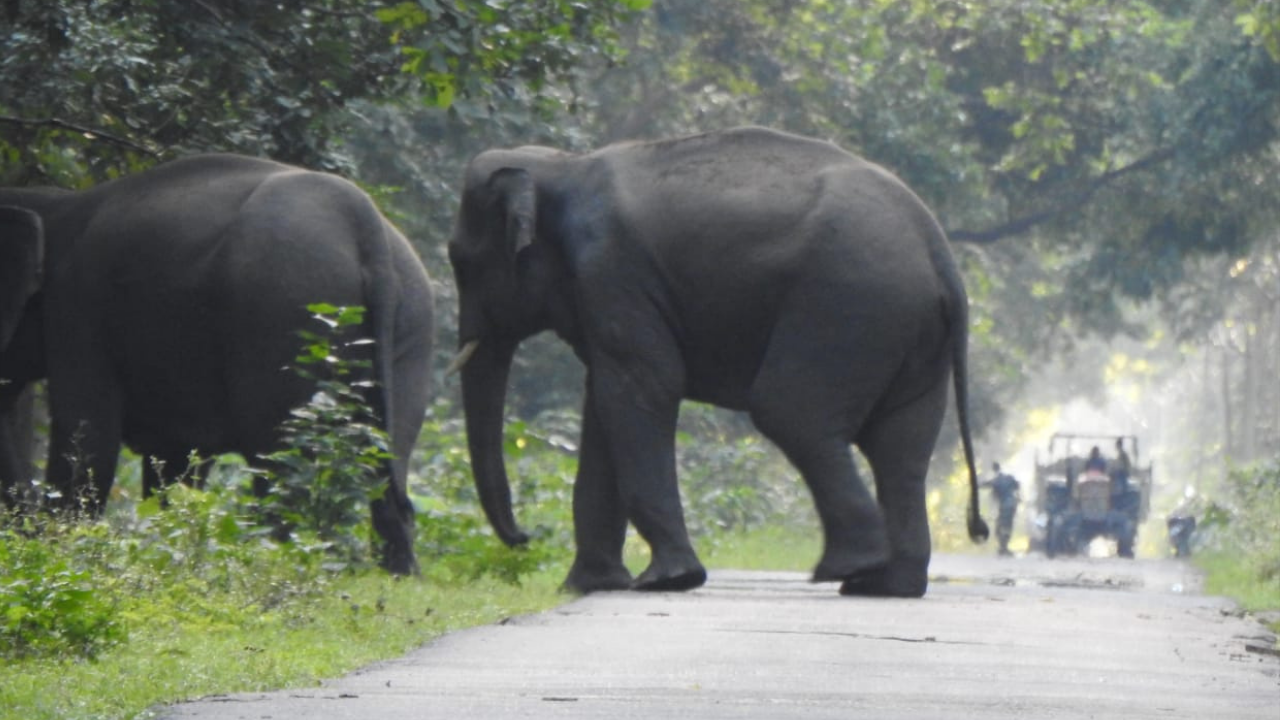
BAREILLY: Decades ago, a wildlife corridor ran through the forests of Mohammadi in UP’s Lakhimpur Kheri. The jungles gave way to habitation, the area became a social forestry zone and, now, it is a densely populated settlement. The corridor was lost.
But now, the elephants are back — about 30 of them — and forest officials are trying to understand why. “The last time an elephant herd was seen here was in the 1980s. It is possible that a member of the old herd is leading this one,” DFO Samir Kumar said. “We hope they return, as they have in the past.”
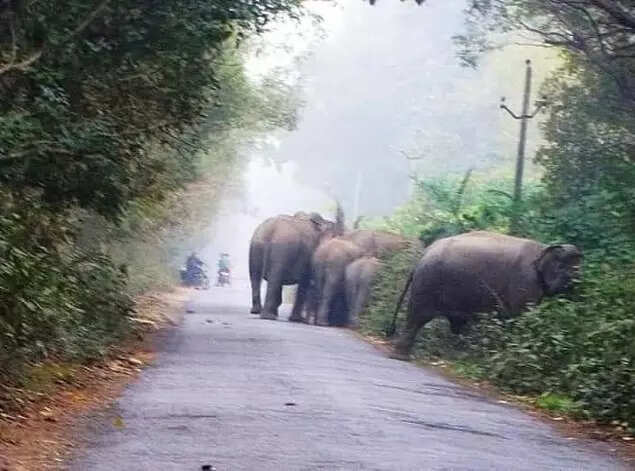
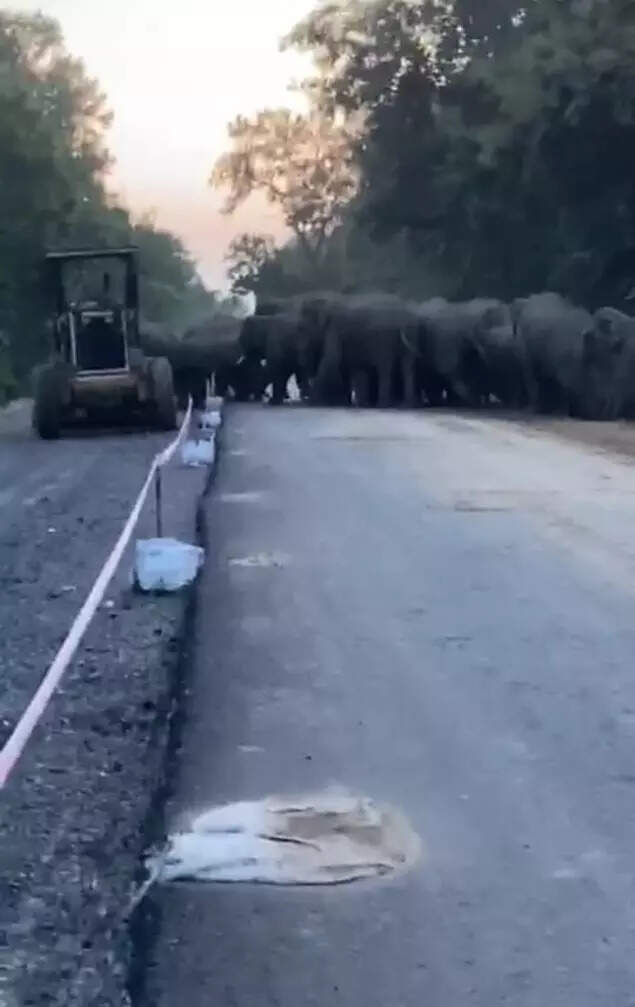
In July this year, seven elephants had been spotted at Mohammadi. Villagers were surprised and alarmed. But the herd went back 20 days later, travelling over 100km away to the Uttarakhand border through Pilibhit. The same herd is back — much larger. Videos of the long line of elephants crossing the under-construction Gola state highway were shared widely on Friday.
“We can confirm the presence of at least 22 elephants as seen in the videos,” Kumar said. Locals said there were about 30. “The herd is peaceful. We are not disturbing them. We have alerted senior officials in Lucknow (the direction in which they are headed).”
Experts suggest the reason could be one of many — “genetic memory” of a lost corridor, disrupted route to Uttarakhand or rising waters of the Sharada river.
“Genetic memory is inherited from one generation of elephants to the next. It is possible that an elephant corridor was used the reach the Ganga decades ago. As of now, there is a deadlock in Mohammadi and the movement of elephants is surprising,” Dr Mudit Gupta, state coordinator of WWF-India who has been working in the region for over a decade, told TOI. “Normally, elephants migrate towards Uttarakhand through the Surahi-Kilpura-Khatima corridor near Pilibhit. But they have returned from the Uttarakhand side twice this year. We need to make sure that the corridor is functional and there are no obstacles.”
The other possibility, wildlife expert Siddharth Singh said, could be one exacerbated by the presence of calves in the herd. “It rained heavily in the hills in September. The water level in the Sharada river (known as the Kaali in Nepal) rose. Elephants normally migrate to Nepal from India during this period. They cross the Sharada to reach the Lagga Bagga corridor, through which they get to the Shuklaphanta National Park in Nepal,” Singh added. “Since there are new calves in the herd, they may be reluctant to cross the river until the water level comes down and might be looking for other routes.”
Forest officials, meanwhile, are counting on the herd turning back. “It will be a big problem if they stay on,” the DFO said. Bagh Mitra (appointed by WWF-India to manage human-wildlife conflict) master trainer Anil Chauhan said the herd could turn aggressive because it is protective of its calves. “They have destroyed cane fields at Mallapur village. We are lighting fires outside the village, using acrid smoke with chillies, crackers and beating drums to keep them away.”
The herd has reached the Aonla beat, after which there are no forests in the direction they are moving. But they are marching on.