After postponing the decision for several years, Cuban leader Miguel Díaz-Canel announced on Thursday night the expected monetary unification between the island's two currencies will begin in January.
The Cuban peso will be the only local currency circulating as of Jan. 1, with an official exchange rate of 24 pesos to the dollar, Díaz-Canel said in a short video broadcast on state television that showed him seated next to Raúl Castro, the Communist Party's first secretary. The appointed president did not offer more details on how the process will be carried out. Castro made no remarks.
Monetary unification was a pending task that had already been approved by the Communist Party for several years, said Díaz-Canel, who added that the measure "was not a magic solution" to the island's woes but would allow the country to move forward.
With the monetary reform, the Cuban convertible peso, the CUC, will disappear.
Currently, Cuba has two currencies: the Cuban peso, in which state wages are paid, and the CUC, the local hard currency. One CUC is equivalent to 25 Cuban pesos for the population, but the government also maintained a fictitious parity with the dollar for state companies. For the state budget, many sectors also used a fictitious parity between the Cuban peso and the dollar.
The dollar was recently reintroduced into the Cuban economy. For the moment, it circulates in billsonly in the black market, but it can already be used through bank cards to buy in exclusive dollar-only stores.
According to the exchange rate announced by Díaz-Canel, the Cuban peso will not lose value against the dollar for the population, but it will for state companies. For years, economists have complained that the double currency obscured the accounting of state-owned companies, and it is expected that many will go bankrupt with the unification.
Also on Thursday, the government published raises for state salaries and pensions. The minimum monthly state salary was set at 2,100 Cuban pesos. The minimum social security monthly pensions will go from 300 pesos up to 1,520 Cuban pesos.
A salaried journalist working for state media would earn 3,610 pesos a month, less than a high school teacher who would make 4,010. Doctors with one specialty will make 5,560 pesos, but the government will reward directors of state entities and companies and those in the government apparatus with higher salaries up to 9,510 pesos.
But salary raises and a 24-to-1 exchange rate might not be enough to counter the increased costs of the basic food basket and the elimination of many subsidies, measures also announced by the government.
Unofficial data shared by Cuban economists shows plans to increase the value of subsidized food and basic services to around 1,500 pesos, in line with the minimum state pension, will leave the older population in a more vulnerable state.
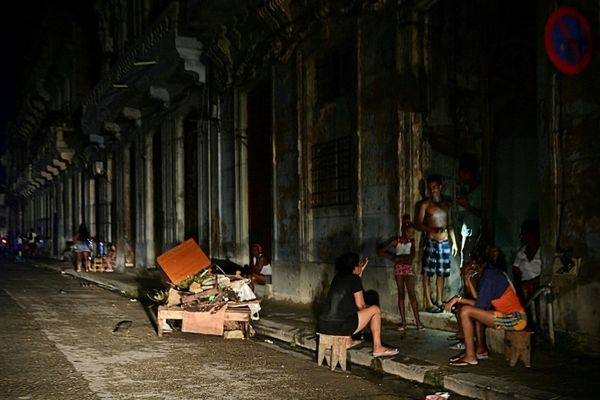
Together with the impact on the state sector, the measures could lead to higher inflation and losses in Cubans' purchasing power in one of the worst moments ever for the country's economy. The lack of productivity inherent in the planned socialist system has been made worse by the impact of the COVID-19 pandemic on tourism, the decrease in economic aid from Venezuela and the effect of U.S. sanctions.
Díaz-Canel said that uncontrolled inflation or "abusive prices would not be allowed. No one will be left helpless. In socialist Cuba, shock therapy will never be used against the people".
The CUC, introduced in 1994, remained in circulation in 2004 as the local hard currency when the government decided to end the dollarization that began during the economic crisis in the 1990s, known as the Special Period. But more than 15 years later, the dollar has returned to the country, and the CUC has lost its value against foreign currencies.
The ongoing economic crisis in the country, which has caused a shortage of food, medicine, and sanitary products, has forced the government to announce some reforms, such as allowing self-employed workers to import and export abroad as well as letting foreign companies have majority shares in tbeir investments in sectors such as tourism and biotechnology.