Get all your news in one place.
100’s of premium titles.
One app.
Start reading
Reuters
Reuters
Health
Wendell Roelf

Africans improvise sanitizers, masks to plug shortages

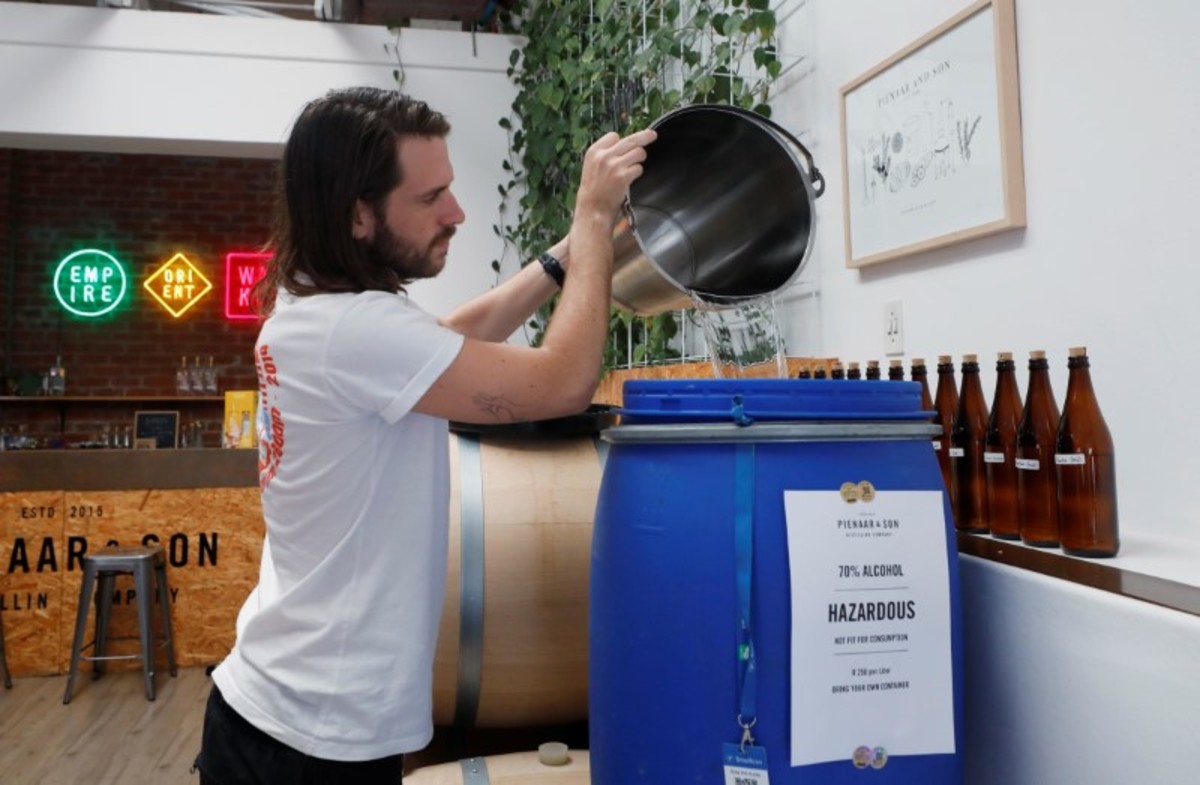
Distiller Andre Pienaar mixes up a batch of 70 percent alcohol, a by-product of the gin making process, which he makes available as hand sanitiser to restrict the outbreak of coronavirus disease (COVID-19) in Cape Town, South Africa, March 19, 2020. REUTERS/Mike Hutchings

When panic over the coronavirus spurred a run on hand sanitizer in Cape Town, gin maker Andre Pienaar realized there was something he could do with all the waste alcohol his small distillery produces.

He had 140 liters of the 70 percent ethanol waste - called "gin heads" in the trade - just sitting around, so he posted on social media that anyone who needed some could have it for free to turn into the hand wash at home.
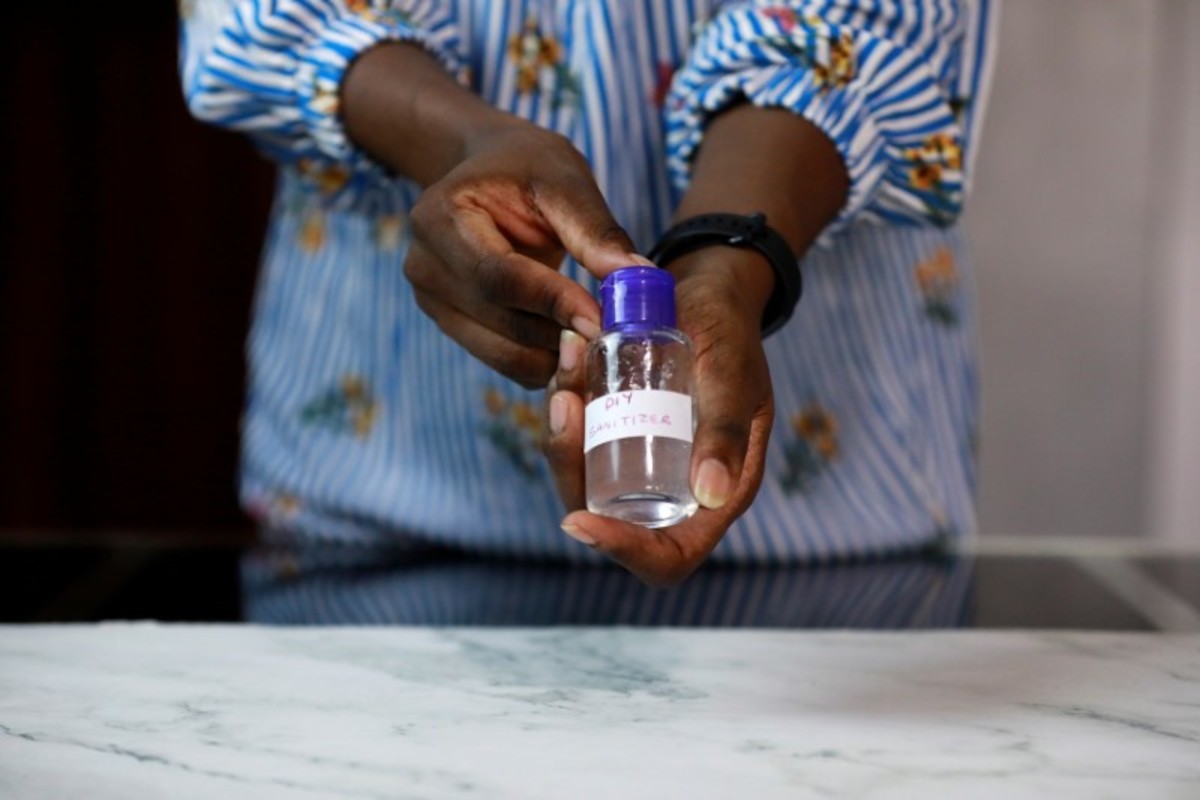
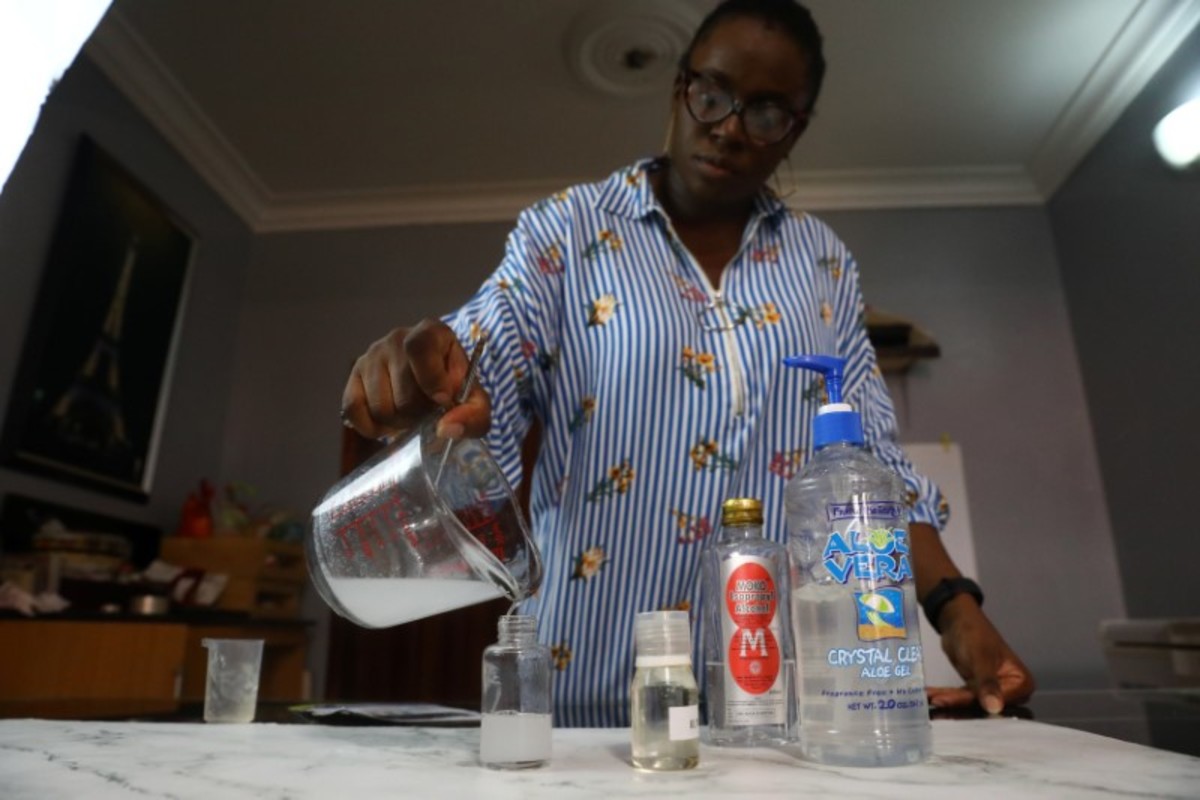
Moji Kusanu displays the finished product of the home-made hand sanitizer in her home amid precautions against coronavirus disease (COVID-19), in Lagos, Nigeria March 20, 2020. REUTERS/Temilade Adelaja

"The response was crazy. It was finished in three hours and there was a limit of one liter per person," he told Reuters. He has now started selling the ethanol his Pienaar and Son Distilling Company is still producing.

"There is nothing on the shelves for people other than soap at the moment. It is just another option to help protect people," he said.

Across Africa, dwindling supplies of sanitizer and surgical masks could prove a boon for entrepreneurs seeking to plug shortages. Amateur chemists in Nigeria and Kenya are mixing up hand wash, while enterprising tailors in Rwanda are sewing their own masks.
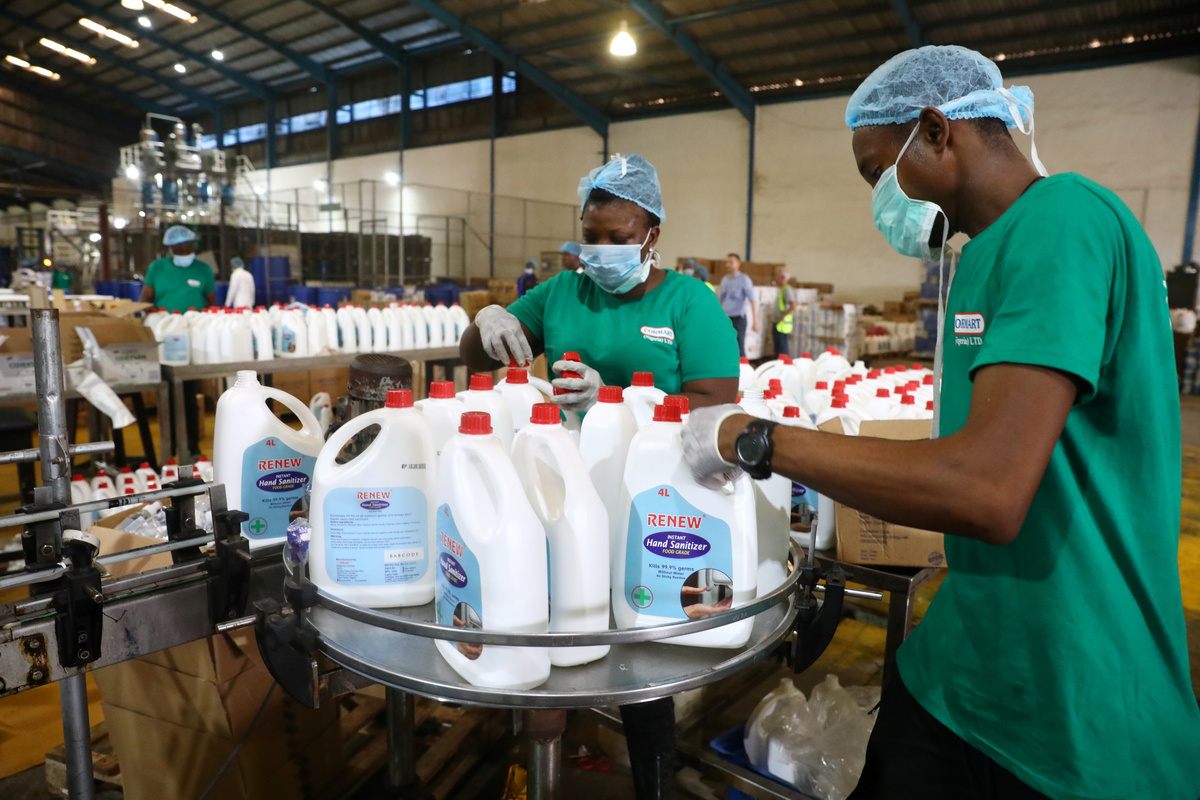
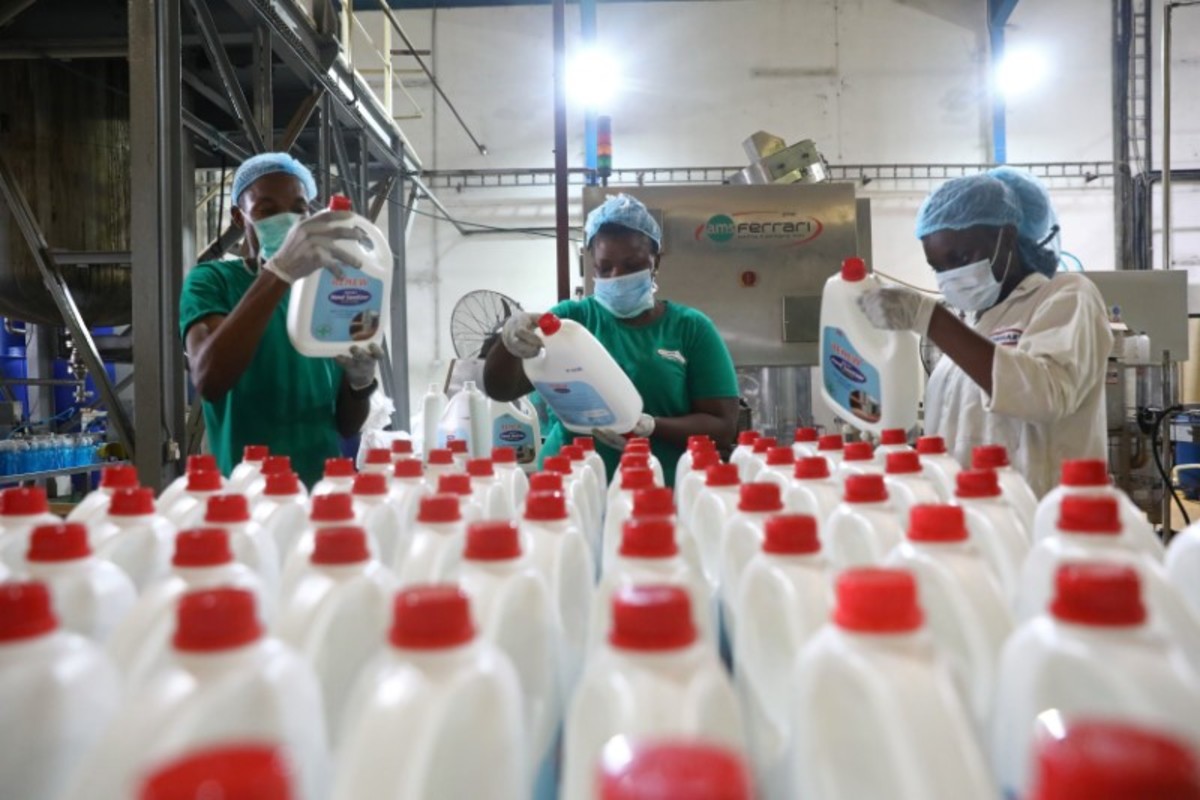
Employees inspect the production of hand sanitizers in Cormart factory as the company steps up production of hand sanitizers to prevent the spread of coronavirus disease (COVID-19), in the outskirts of Lagos, Nigeria March 19, 2020. Picture taken March 19, 2020. REUTERS/Temilade Adelaja

Health officials warn that wearing masks in public won't protect you from the virus, and say sanitizer only works if it's more than 60 percent alcohol - and even then soap and water are better.

But those warnings have not stopped customers flocking to Alexander Nshimiyimana, a tailor based in Kigali's main market. He is using kitenge, a kaleidoscopic local fabric, to make masks that are not only cheaper but much prettier than the standard hospital-style ones.

"It is a kind of opportunity to some people to make money. It is also (an) opportunity to innovate," Nshimiyimana said.
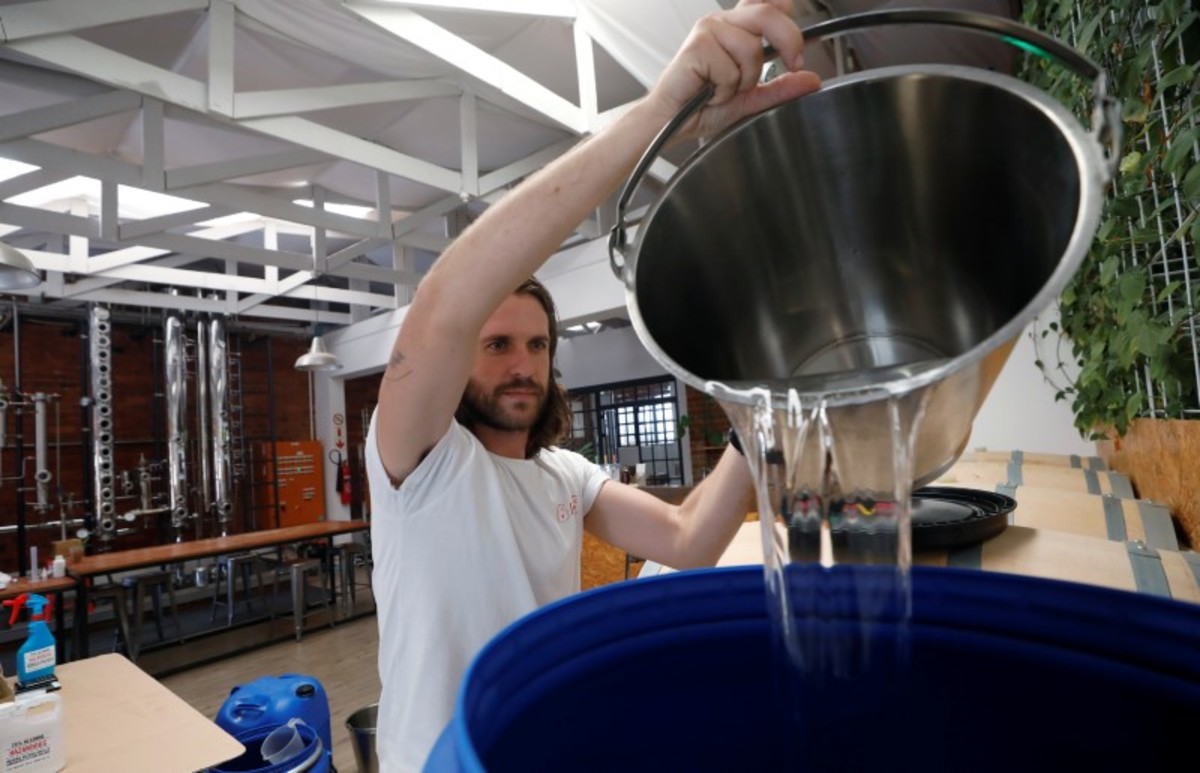
Distiller Andre Pienaar mixes up a batch of 70 percent alcohol, a by-product of the gin making process, which he makes available as hand sanitiser to restrict the outbreak of coronavirus disease (COVID-19) in Cape Town, South Africa, March 19, 2020. REUTERS/Mike Hutchings

The continent of 1.3 billion has recorded only around 1,100 cases in 43 countries, with 39 deaths, a fraction of the more than 305,000 people infected and more than 13,000 deaths worldwide. But there are concerns that Africa's creaky health infrastructure could be overrun as the virus spreads.

"A mask will not protect you from the infection, it will protect others if you wear it from getting infected should you have symptoms. So in this respect also a piece of cloth works," James Ayodele, spokesman of the Centre for Disease Control (CDC) Africa office.

Ayodele said that the CDC also advised against making sanitizer at home because it contains alcohol at a potentially dangerous high concentration.
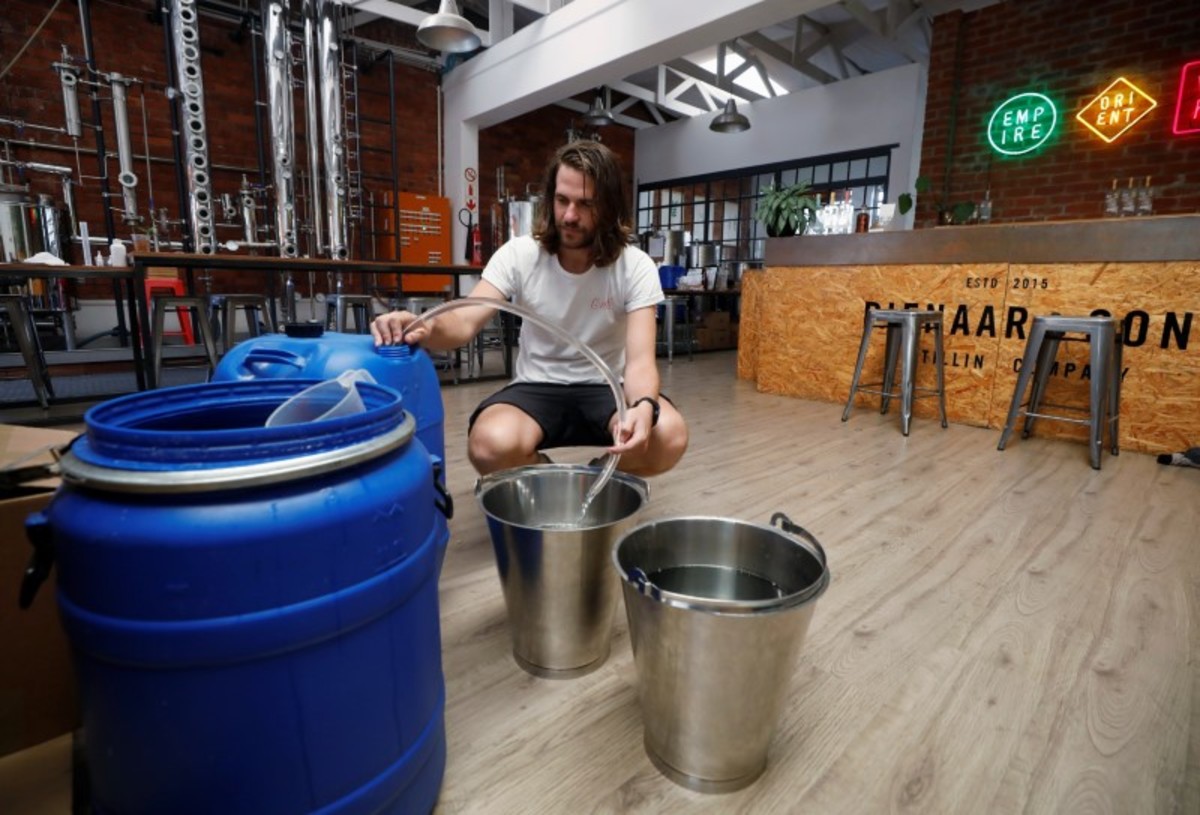
Distiller Andre Pienaar mixes up a batch of 70 percent alcohol, a by-product of the gin making process, which he makes available as hand sanitiser to restrict the outbreak of coronavirus disease (COVID-19) spread in Cape Town, South Africa, March 19, 2020. REUTERS/Mike Hutchings

But Moji Kusanu, a chef in Nigeria's commercial hub of Lagos, decided to respond to an obvious shortage - after prices shot up to 1,700 naira ($5.55) for a 200ml bottle, from 200 naira before.

She customized an online sanitizer recipe, which recommended mixing alcohol with aloe vera gel, by adding glycerine for extra moisturizing effect.

"Sometimes, when you are out you cannot wash your hands. sanitizers can ... make a difference," she said
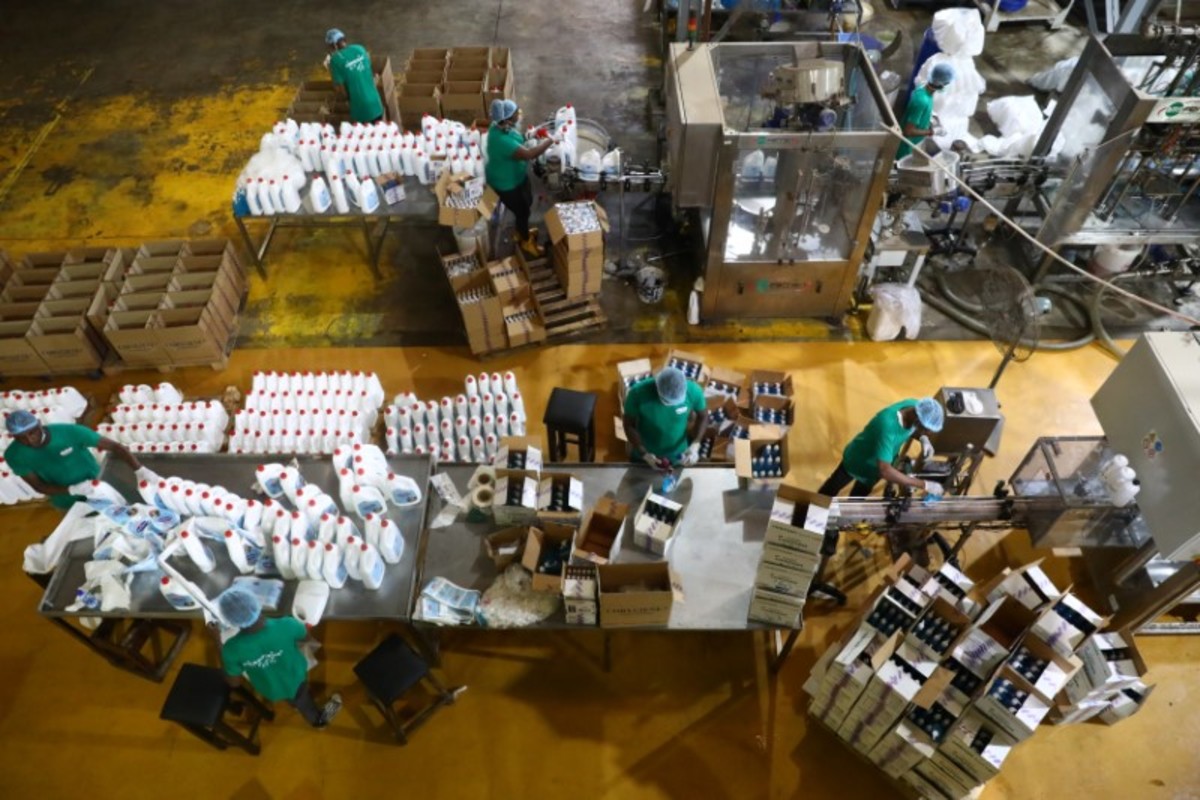
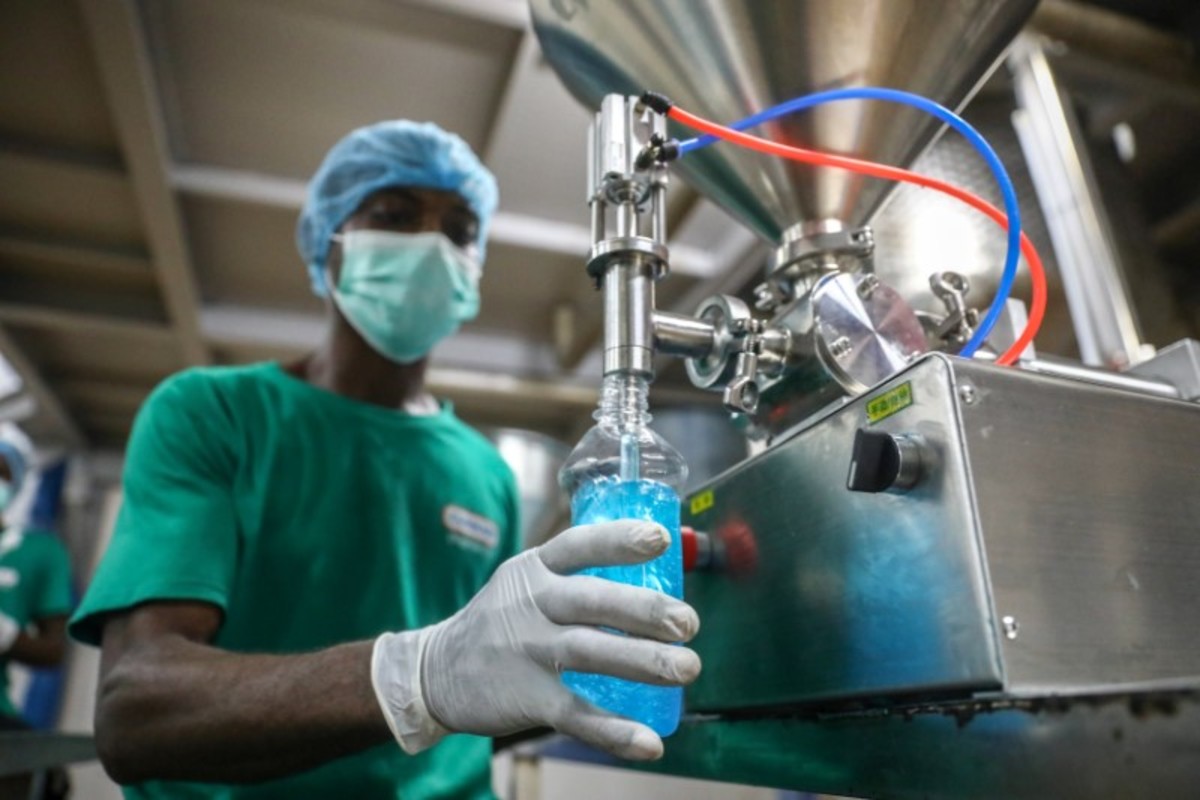
Employees work in Cormart factory as the company steps up production of hand sanitizers to prevent the spread of coronavirus disease (COVID-19), on the outskirts of Lagos, Nigeria March 19, 2020. Picture taken March 19, 2020. REUTERS/Temilade Adelaja

(Additional reporting by Themistocle Hakizimana and Jackson Njehia in Kigale, Angela Ukomadu in Lagos and Giulia Paravicini in Addis Ababa; Writing by Tim Cocks; Editing by Andrew Heavens)
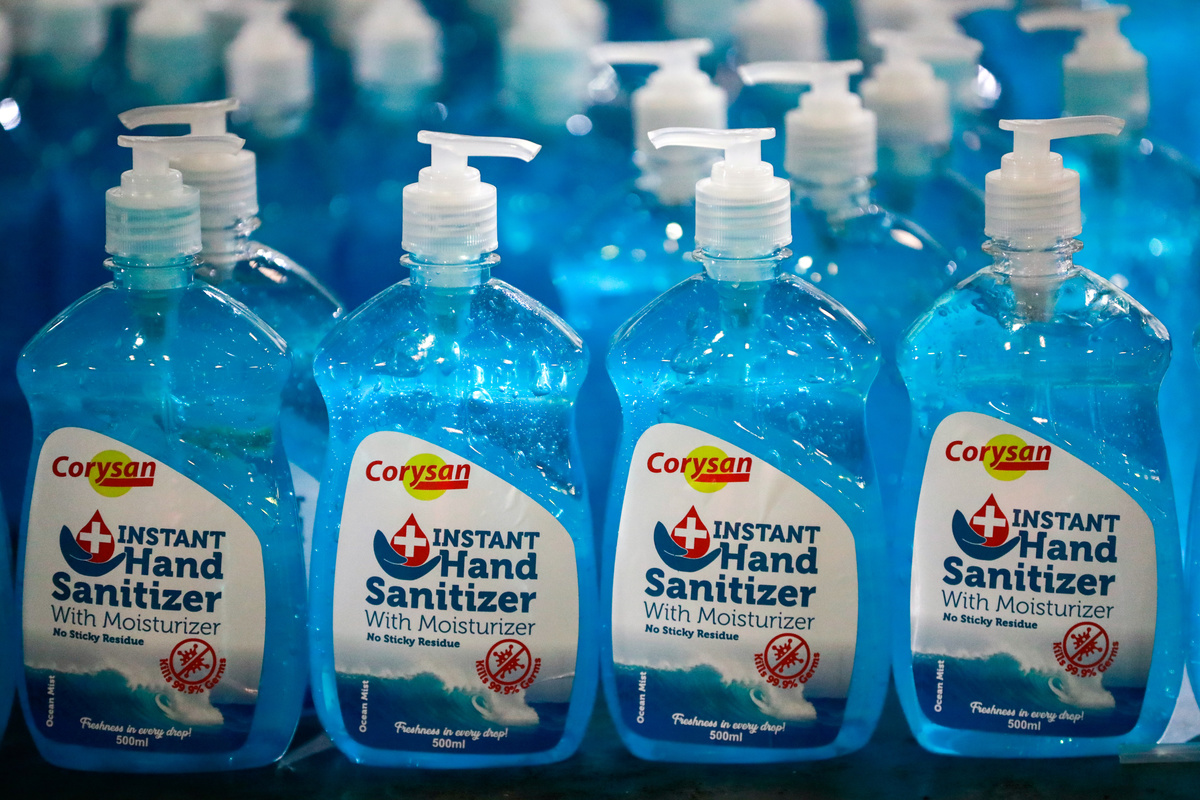
Freshly made hand sanitizers are pictured in Cormart factory, as the company steps up production to prevent the spread of coronavirus disease (COVID-19), on the outskirts of Lagos, Nigeria March 19, 2020. Picture taken March 19, 2020. REUTERS/Temilade Adelaja
Moji Kusanu pours the finished product of the home-made hand sanitizer into a bottle for use in her home amid precautions against coronavirus disease (COVID-19), in Lagos, Nigeria March 20, 2020. Picture taken March 20, 2020. REUTERS/Temilade Adelaja
Employees inspect the production of hand sanitizers in Cormart factory as the company steps up production of hand sanitizers to prevent the spread of coronavirus disease (COVID-19), on the outskirts of Lagos, Nigeria March 19, 2020. Picture taken March 19, 2020. REUTERS/Temilade Adelaja
An employee fills a bottle with hand sanitizer in Cormart factory as the company steps up production of hand sanitizers to prevent the spread of coronavirus disease (COVID-19), on the outskirts of Lagos, Nigeria March 19, 2020. Picture taken March 19, 2020. REUTERS/Temilade Adelaja
Sign up to read this article
Read news from 100’s of titles, curated specifically for you.
Already a member? Sign in here
Related Stories
Top stories on inkl right now
One subscription that gives you access to news from hundreds of sites
Already a member? Sign in here
Our Picks
Fourteen days free
Download the app
One app. One membership.
100+ trusted global sources.