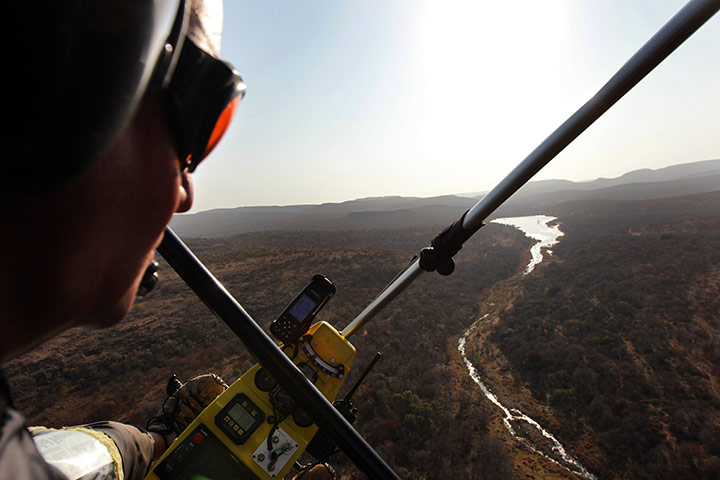
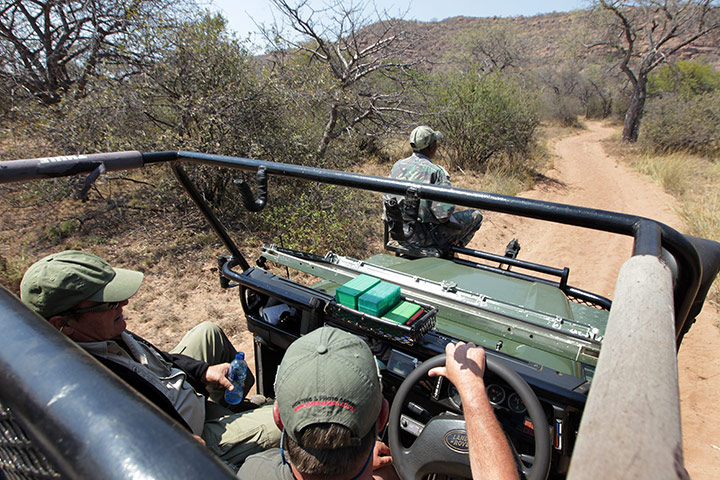
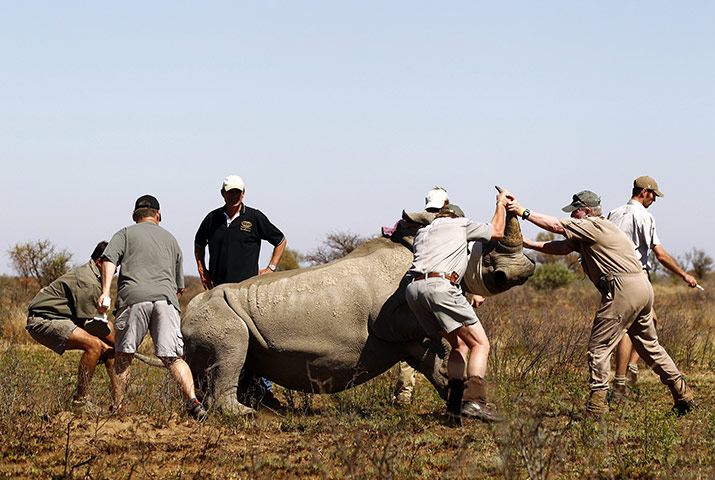
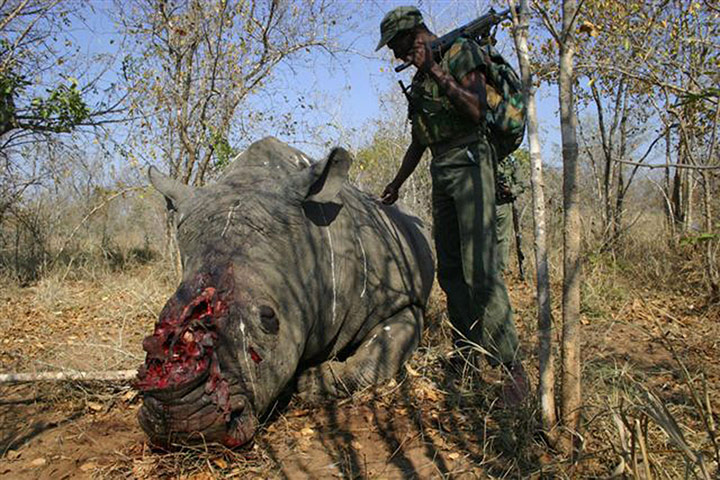
Nkwe Security staff stage a mock capture and arrest of 'poachers' on a game farm in the Waterberg district, South Africa, September 2010. Note the camouflage of the ranger on the right. Over the past two years, after three decades of painstaking work to rebuild the country's rhino population from a few hundred in the 1950s to around 21,000, black and white rhinos are severely under threat by a spike in poaching driven by demand in Asia for rhino hornPhotograph: Jon Hrusa/EPAAnti-poaching forces have been established to combat rhino poaching in South Africa. Here they look down from a gliderPhotograph: Jon Hrusa/EPAAnti-poaching forces patrol in a car in WaterbergPhotograph: Jon Hrusa/EPA
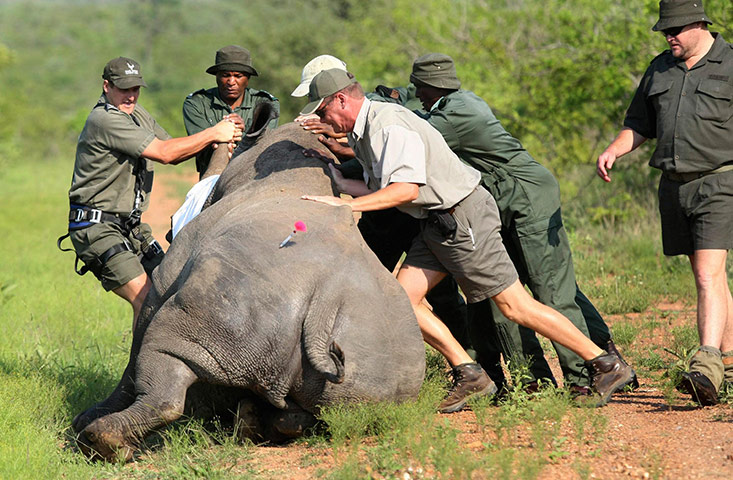
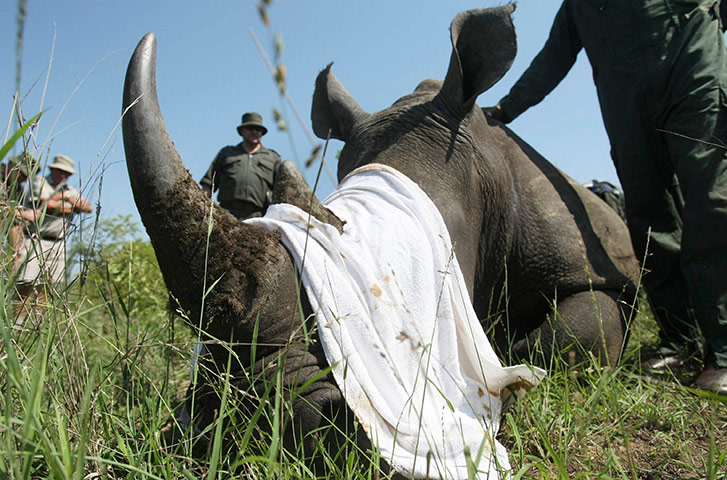
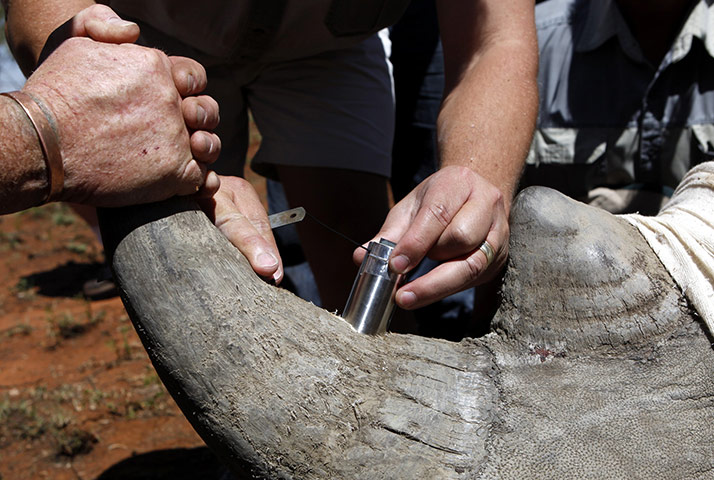
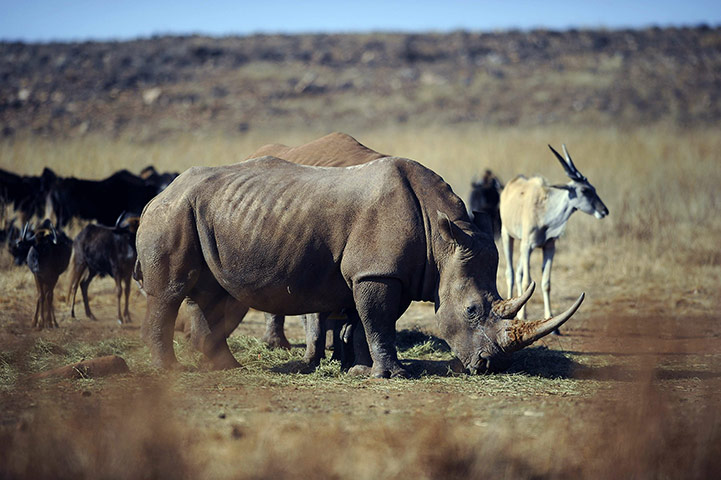
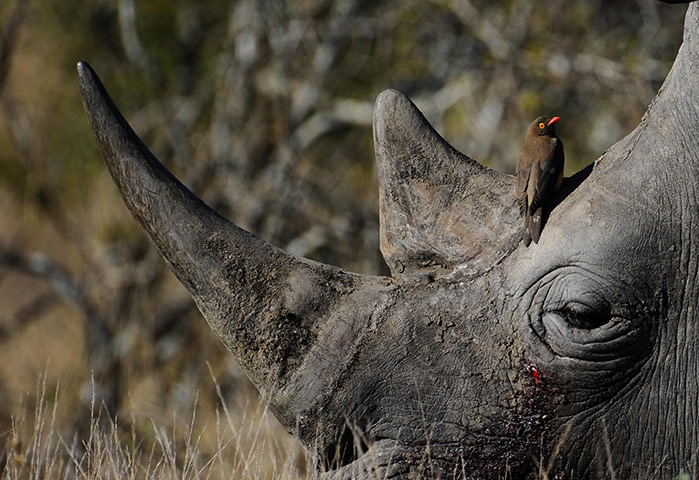
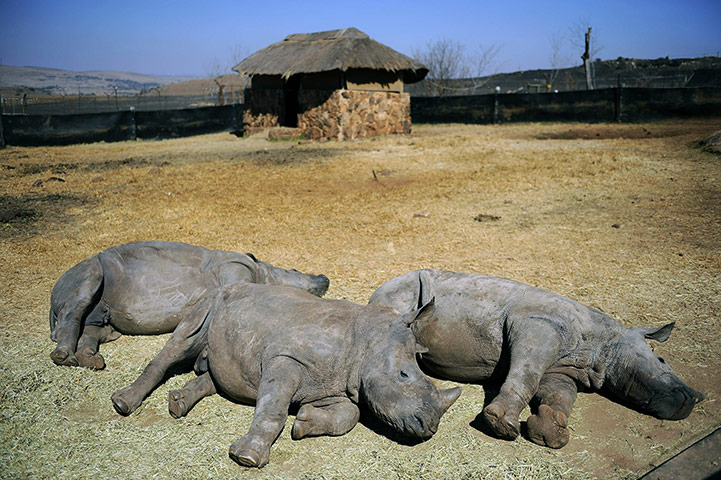
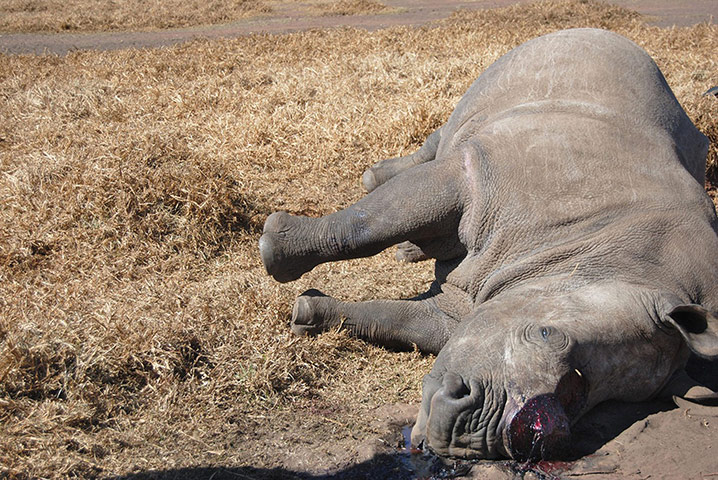
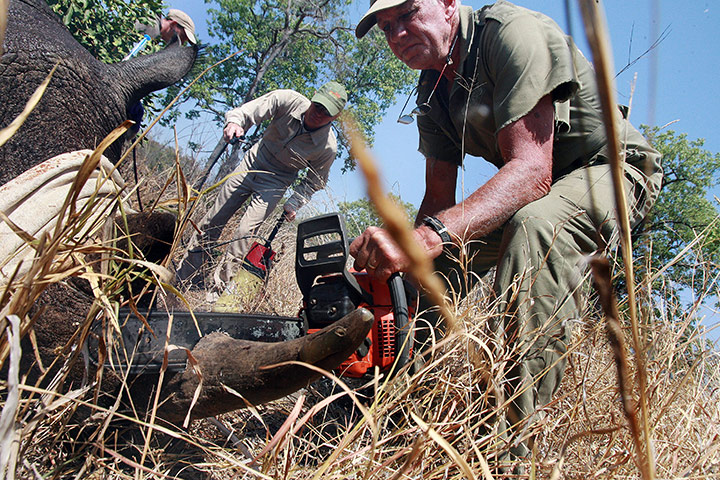
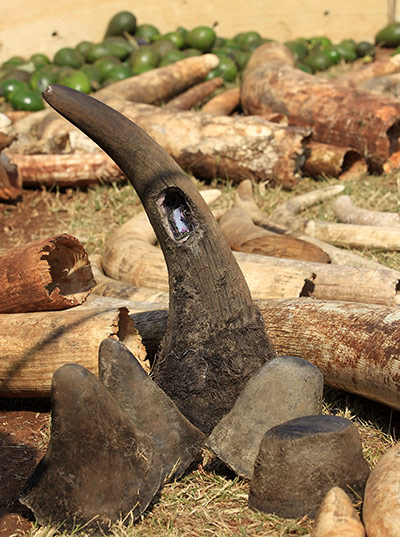
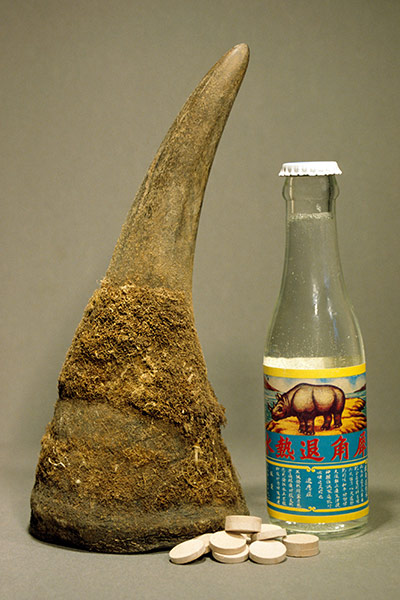
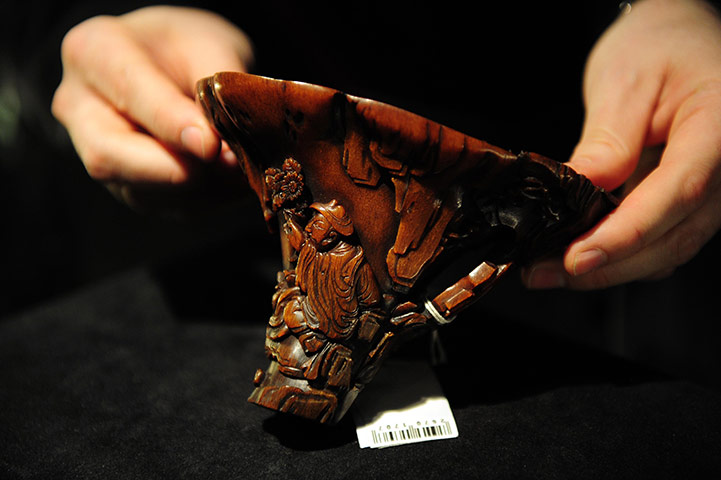
Park rangers manouevre a tranquilised rhino during an anti-poaching campaign in Kruger National Park last year. Authorities began to mark black and white rhinos in the park with electronic chips after losing 41 rhinos between January and October in 2008, reducing the total to 36Photograph: Gallo Images/Getty ImagesAnother rhino is tagged in Kruger National Park. According to Kobus de Wet, senior manager of South Africa National Parks' community criminal unit, authorities can, with the help of technology, see precisely where tagged rhinos are. Should one get shot, authorities can locate the rhino and see where the horns are transported. Most are moved to the Middle East via South African and Mozambique harbours and airports. A single horn can sell for up to R40,000 (£3,500) per kilogram on the black marketPhotograph: Gallo Images/Getty ImagesRangers insert a GPS on an eight-year-old rhino to keep track of its movements and attempts at poaching, at the Mafikeng Game Reserve in the North West province. The lightweight 40mm GPS device, which has a life span of up to three years, is inserted into the horn and was placed into at least eight rhinos last weekPhotograph: SIPHIWE SIBEKO/ReutersThe rhino wakes from its slumberPhotograph: Siphiwe Sibeko/ReutersA rhinoceros grazes in the private Rhino and Lion Nature Reserve in Krugersdorp, north of Johannesburg. South African officials were in Vietnam last month to discuss ways of curbing the illegal trade in rhino horns used in traditional Asian medicine, a conservation group saidPhotograph: Stephane De Sakutin/AFP/Getty ImagesA bird sits on the head of a white rhino at Kruger National ParkPhotograph: Pierre-philippe Marcou/AFPA nine-month-old rhino called Vuma (centre) rests with two others at the animal orphanage of the private Rhino and Lion Nature Reserve in July 2010. Vuma was orphaned after poachers cut off his mother's horn and left her deadPhotograph: Stephane De Sakutin/AFP/Getty ImagesThe corpse of a slaughtered rhino in a national park in South AfricaPhotograph: APA rhino lies dead in Krugersdorp Nature Reserve outside Johannesburg. Booming demand from increasingly rich Asian markets has led to a spike in rhino poaching in South Africa this year, officials say. This victim was found in July in Krugersdorp Nature Reserve, where the animal was downed with a tranquiliser dart, had its horn removed with a chain saw and bled to death on the dusty terrainPhotograph: HO/ReutersRhino poaching is not unique to South Africa. Here, Doctor Chris Forging cuts off a rhino horn last month in Chipinge National Park, situated 360km west of Harare. World Wildlife Fund (WWF) and Zimbabwe's National Parks have been de-horning rhinos to make them less vulnerable to poaching. At peak, Zimbabwe had 3,000 black and white rhinos but this has gone down to just over 700Photograph: Desmond Kwande/AFPKenya Wildlife Service (KWS) wardens insert a transmitter on a tranquillised male black rhino at the Lake Nakuru National park in Kenya's Rift Valley last month. After implanting radio transmitters into the horns to track the animals, and notching their ears, KWS is moving 10 black rhinos to the Tsavo National Park, southeast of Nairobi, to re-establish the populationPhotograph: Thomas Mukoya/ReutersA rhino horn previously fitted with a radio transmitter is seen among elephant tusks intercepted at the Jomo Kenyatta international airport in the capital Nairobi, August 2010. The smuggled consignment of 317 pieces of raw ivory and five rhino horns were intercepted by Kenyan authorities en route to Malaysia via Dubai, according to KWS director Julius Kipng'etich. Kenya remains opposed to the lifting of the international ivory trade banPhotograph: Thomas Mukoya/ReutersRhinoceros horn, pills and drink made from the samePhotograph: WILDLIFE GmbH/www.alamy.comA rhinoceros horn carving is displayed during a preview of Christie's Asian Art sales in New York, March 2010Photograph: Emmanuel Dunand/AFP
Sign up to read this article
Read news from 100’s of titles, curated specifically for you.