KABUL, Afghanistan _ War-weary Afghans offered cautious praise Tuesday for President Donald Trump's decision to boost the 16-year U.S. military effort in their country, with many expressing hope that more American troops could reverse Taliban insurgents' momentum and stem the mounting casualties suffered by Afghan security forces and civilians.
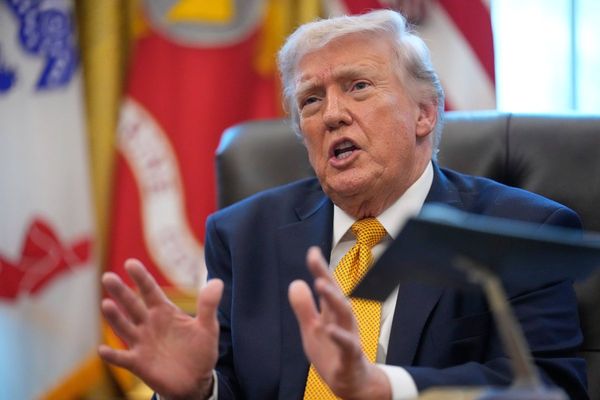
With the Taliban holding more territory than at any point since the U.S.-led invasion in 2001, Trump's announcement of a "fight to win" strategy _ though lacking in specifics _ soothed Afghans who worried the United States was abandoning its longest war as it had settled into a bloody stalemate.
"I am grateful to President Trump and the American people for this affirmation of support for our efforts to achieve self-reliance and for our joint struggle to rid the region from the threat of terrorism," Afghan President Ashraf Ghani said in a statement.
Many also cheered Trump's demand that neighboring Pakistan "change immediately" its policy of harboring the Taliban and other militant groups carrying out attacks in Afghanistan, a signal that the U.S. would get tougher on a troublesome ally that it has rewarded with billions of dollars in military assistance.
"I believe the U.S. has seen Pakistan in a better light than Afghanistan, so I would be optimistic and support the new strategy of the United States if it implements it honestly," said Nasir Karimi, a 22-year-old psychology student at Kabul University.
"Still," Karimi added, "I can't trust that the U.S. will be honest."
Afghans' wariness is rooted in a history of U.S. inconsistency in the country. U.S. forces quickly ousted the Taliban government from power in Afghanistan following the Sept. 11 terrorist attacks but then diverted troops and focus to the Iraq war, allowing Taliban fighters to stream back into the country.
President Barack Obama announced a troop surge in 2009 but, in the view of many Afghans, undermined the strategy by setting a withdrawal deadline that reassured the Taliban that it could simply lie in wait. Trump, too, once advocated for bringing all U.S. troops home before saying in his Monday night address that he had changed his mind after months of consultations with Cabinet and military officials.
As the U.S. troop presence dwindled from more than 100,000 to 8,400 today, the Taliban have regained control of large chunks of northern and southern Afghanistan while the government holds just 60 percent of the country's 407 districts, according to the most recent assessment by the Special Inspector General for Afghanistan Reconstruction.
Trump did not specify how many additional U.S. troops would be deployed, but Pentagon officials have said the number is expected to be about 4,000. They will be focused on "killing terrorists," Trump said, including the Taliban, Islamic State loyalists and remnants of Al Qaeda.
"President Trump has embraced a strategy that gives Afghanistan what it needs," said the Afghan ambassador to Washington, Hamdullah Mohib, including "a shift away from talking about timetables and numbers to letting conditions on the ground determine military strategy."
Pakistani Foreign Minister Khawaja Asif met Tuesday with the U.S. ambassador in Islamabad and "underlined Pakistan's continued desire to work with the international community to eliminate the menace of terrorism." But privately, Pakistani officials were stung by Trump's words _ particularly his embrace of rival India, which the U.S. has not often included in its Afghan strategy despite its being the largest country in the region.
Here, too, Pakistanis noted a whiff of inconsistency. Before his inauguration, Trump reportedly lavished praise on Pakistan in a call with then-Prime Minister Nawaz Sharif, who he said was "doing amazing work, which is visible in every way."
Trump's address Monday "has given a negative message to Pakistan," said Sherry Rehman, a lawmaker and former ambassador to Washington. "The best possible way forward is to promote peace and harmony in the region instead of dividing Pakistan and India."
Opposition leader Imran Khan lashed out on Twitter, saying Pakistan had lost tens of thousands of lives to terrorism and was "being made scapegoats for the policy failures of the U.S. and India."
Pakistan's military _ which denies allegations that it nurtures terror groups who attack India and Afghanistan _ appeared to anticipate Trump's criticism, holding a news conference on Monday to trumpet the success of Zarb-e-Azb, a years-long operation involving around 200,000 troops to eliminate militant havens in the northern tribal areas.
In between slides showing statistics _ officials say around 3,500 militants have been killed and thousands arrested _ the military played short films set to dramatic music showing Pakistani troops in the remote region.
Pakistan has carried out dozens of such offensives and has been accused of picking and choosing which militant groups it confronts. The Haqqani network, which U.S. officials blame for some of the deadliest attacks against its forces in Afghanistan, has largely escaped the effect of more than a decade of Pakistani military operations.
But Pakistani officials insist this time is different. They argue that terrorism-related deaths in Pakistan have fallen by about half since 2014. They blame several high-profile terror attacks on militants who, they say, enjoy safe havens in Afghanistan and the backing of Indian intelligence agencies.
"A militant resurgence is now out of the question," Pakistani military spokesman Maj. Gen. Asif Ghafoor told reporters Tuesday. "They want to regain lost influence, but it won't happen. It's too late for that."
Congress already has reduced funding for the Pakistani army and denied it the chance to purchase U.S.-made F-16 fighter jets at subsidized prices. But because U.S. strategic planners fear that Pakistan's nuclear weapons could fall into the hands of militants, Washington has been reluctant to exert too much pressure on the Pakistani security establishment.
"Anyone who thinks this shift in Pakistan strategy will be easy to implement, remember: Pakistan negotiates with a gun to its own head," tweeted Vipin Narang, an MIT political science professor who studies South Asia.
In his speech, Trump said that 20 organizations designed by the United States as terrorist groups are active in Afghanistan and Pakistan, "the highest concentration in any region anywhere in the world." Some observers noted that neither country is subject to Trump's travel ban on citizens from countries deemed prone to terrorism.
Trump's speech also provoked mixed reactions in India, where officials welcomed the promise to be tougher on Pakistan but questioned his call for New Delhi to play a greater role in building Afghanistan's economy.
The Indian foreign ministry issued a statement saying India "has been steadfast in extending reconstruction and development assistance to Afghanistan," which has included hundreds of millions of dollars in aid and constructing a new parliament building.
And Indian analysts chafed at Trump's reference to the U.S. trade deficit with India when he said that because "India makes billions of dollars in trade with the United States," it should "help us more with Afghanistan." Indian investment in Afghanistan is based on its own regional security and should not be tied to demands from Washington, said Kabir Taneja, associate fellow at Observer Research Foundation in New Delhi.
"I think President Trump needs to understand, or someone needs to explain to him, that everything cannot be equated to trade data," Taneja said.
"New Delhi does not act at America's behest on its Afghanistan policy. It knows better," he added. "Attaching possibilities of better joint cooperation over security in Afghanistan to some sort of trade (spreadsheet) is a self-defeating act for Washington."
(Special correspondent Faizy reported from Kabul and Times staff writer Bengali from New Delhi. Special correspondents Aoun Sahi and Umar Farooq contributed from Islamabad, Pakistan. Farooq's reporting is supported by the Pulitzer Center on Crisis Reporting.)