A few years ago, my flight crossed Afghanistan on a clear day. As I looked down on this hostile remote land with its harsh mountain and desert landscape, I wondered why, over time, so many of the world's empires wanted to conquer it.
The Afghan warlords have seen off Alexander the Great in 330BC, the British Empire in 1842, the Soviet Union in 1989 and America and its allies, including Australia, in 2021.
In his 1947 Pulitzer Prize-winning book Caravans, James A Michener provides a perceptive insight into the medieval warlord culture of the Afghans.
The British sent 60,000 troops through the Khyber Pass to take over the country in the 19th century. Only one returned to tell the tale.
Why have the great empires of the world taken such an interest in this remote, hostile country? It is because Afghanistan stands at the crossroads of Asia.
To the south is the Indian subcontinent, and to the north, Russia. It borders China in the east and Iran in the west.
So, over thousands of years, it has been at the fulcrum of the movement of goods and people, drugs and arms more recently.
Early in this century, following the 9/11 attack in the United States, the US military pursued Al-Qaeda terrorists and their leader Osama bin Laden into Afghanistan, where the Taliban government had sheltered them.
The US was joined by western allies, including Australia, in what was initially a noble cause. The quest was to eliminate terrorists and their training camps, which were the source of many attacks worldwide.
This mission was accomplished in May 2011, when Osama bin Laden was captured and killed.
So why did the foreign forces stay?
It appears "mission creep" had set in with the Americans changing their objective to building a modern Afghanistan.
This included assisting the fledgling Afghan government create democratic institutions. The US spent billions modernising infrastructure, including schools that would also give girls an education and jobs.
America and its allies, including Australia, trained and equipped its military to support a modern Afghanistan.
So why, with the Taliban takeover, did this powerful army give up without a fight?
Last week US President Joe Biden was imploring them "fight for your country", but when confronted by the Taliban forces, they just melted away.
Biden's fatal error was to withdraw America's superior air power. This could have dramatically slowed the Taliban advance.
His generals implored him to adopt this tactic, but Biden refused.
Without this protection from the air, the Afghan commanders realised they were facing defeat.
There is evidence that during the past few months in the provinces, deals were struck between the local protagonists on what would transpire as the Taliban took over.
So what is likely to happen next?
Will the Taliban reimpose their harsh 1990s medieval rule, or have they matured over the 20 years of occupation?
The western intervention into their country's affairs was anathema to the Taliban, whose origins were in the Muslim monasteries of northern Pakistan. Here, they were indoctrinated into a fundamentalist form of Islam that supported the harsh system of Sharia law and the suppression of women's rights.
The Taliban have recently issued reassuring statements supporting girls' education and employment. They will also permit women to wear the usual Muslim hijab headwear instead of the burqa.
But will it last?
Many Afghanis, especially those who helped the foreign forces, aren't convinced.
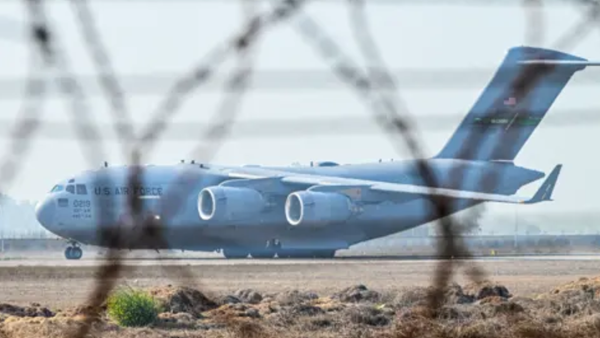
With horror, we watched the recent terrible scenes at Kabul airport, where thousands of panicked citizens were desperate to leave.
Now that the Taliban are in complete control of Afghanistan, how will this dramatic change affect world affairs?
The US and Australia have already closed their embassies in Kabul, but the Russians and Chinese haven't left.
The sudden withdrawal of the US military has left a massive power vacuum in the Middle East.
Not only will this empower the enemies of democracy, particularly China and Russia, there is a risk that we may see a revival of the Al-Qaeda terrorists and their training camps in Afghanistan.
This foreign policy disaster is on the heads of the two most recent US presidents. They together have entirely botched the US exit from Afghanistan with terrible consequences for its citizens.
Negotiated by Trump and executed by Biden, the superpower has now been defeated and humiliated.
In 2016, Trump was elected on a platform of "Make America Great Again".
Ironic, isn't it.