An Afghan woman has given birth while on board an evacuation aircraft that had just landed at a German air base.
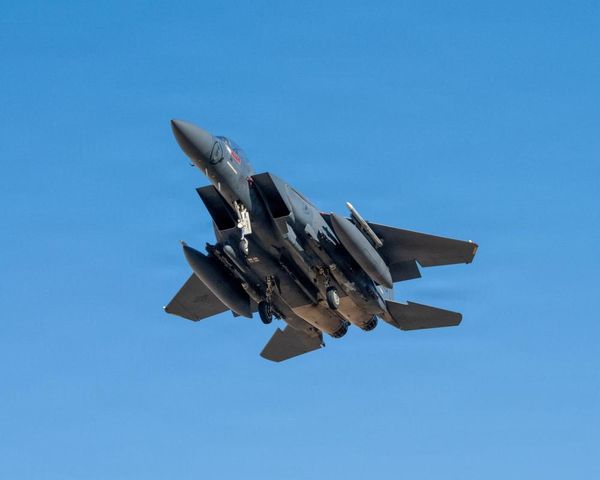
The mother, whose identity has been kept anonymous, was on the second leg of her journey after fleeing the Taliban takeover of Afghanistan, and was aboard a US military plane travelling from a staging base in the Middle East to the US Ramstein Air Base.
According to posts on social media by the US Air Mobility Command, the woman started going into labour while mid-flight on the C-17 transport aircraft. She started having complications at flight altitude, typically above 28,000 feet, due to the lower air pressure.
The posts on social media said: “The aircraft commander decided to descend in altitude to increase air pressure in the aircraft, which helped stabilise and save the mother’s life.

“Upon landing, airmen from the 86th Medical Group came aboard and delivered the child in the cargo bay of the aircraft.
The baby girl and mother were transported to a nearby medical facility and are in good condition.”
Ramstein Air Base, in southwestern Germany, has become an essential transit point for Afghan evacuees.
It currently has capacity for 5,000 people, but this is expected to soon be ramped up to 7,500.
According to the United Nations, roughly 400,000 people in Afghanistan have been forced to flee their homes since the start of the year, with up to 30,000 leaving the country each week.
The UK has agreed to take in 20,000 Afghan refugees who are fleeing the Taliban, but only 5,000 this year.
Setting out the plans last week, Prime Minister Boris Johnson said: “We owe a debt of gratitude to those who worked with us to make Afghanistan a better place over the last 20 years.
“Many of them, particularly women, are now in urgent need of our help.”
But the plans have been slated by many, and even one of Mr Johnson’s MP’s called the plans “woefully inadequate”.

Tory MP Tobias Ellwood, a former Army Captain, told the Mirror: “This is a woefully inadequate response given the scale of the refugee crisis we are about to face as a direct response to our withdrawal from Afghanistan.
“The Government really needs to see the bigger picture here and grasp the scale of the crisis we created.
“We are capping the numbers to 5,000 for the first year, when the threat is at its greatest. And obliging potential applicants to move to a refugee camp is fraught with danger.”