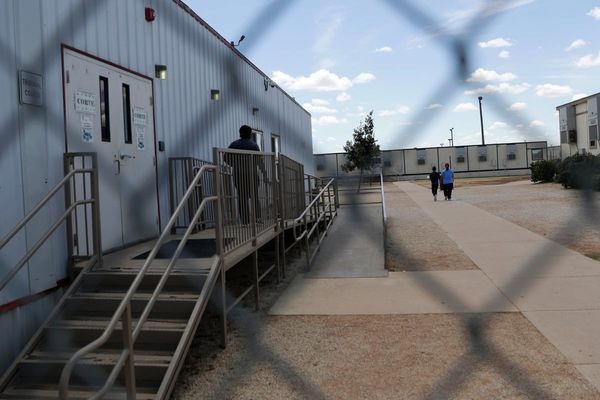
SAN FRANCISCO _ Modoc County, in the northeastern corner of California, is roughly the size of Connecticut. It's so sparsely populated, the entire county has just one stoplight. The nearest Wal-Mart is more than an hour's drive away, across the Oregon border. Same with hospitals that deliver babies.
Greta Elliott runs a tiny health clinic in Canby, on the edge of the national forest. "Rural" doesn't begin to describe the area, she says. This is "the frontier."
"There are more cows in Modoc than there are people," Elliott said.
There's a frontier mentality, too. People take care of each other, and they take care of themselves. They don't like being told what to do. Being forced to buy insurance made "Obamacare" a dirty word.
Even clinic administrator Elliott, who doesn't have job-based coverage, decided against buying it for herself.
"It's too expensive," she said. "I choose to put my money back into paying the bills of the whole family."
But now a coalition of clinics from across the northeastern corner of the state is lobbying local officials to take an unpopular position in this conservative land: defend the Affordable Care Act. And the right-leaning Shasta County Board of Supervisors took them up on it.
"We thought, 'Whoa! That is really bold,'" said Dean Germano, CEO of the Shasta Community Health Center. "I was surprised."
Overall, the Affordable Care Act helped 25,000 people in far Northern California buy health insurance through the state marketplace, Covered California. But the law helped three times as many people enroll in Medi-Cal, the state's Medicaid program that provides free health coverage for low-income residents.
"The data shows it's the rural communities that have greatly benefited from the Medicaid expansion. That's the irony," Germano said. "These are places that voted much more heavily for Donald Trump."
In Modoc and Lassen counties, 70 percent of people voted for Trump in the November election. In neighboring Shasta County, Trump won 64 percent of the vote.
Given the stakes, however, the Shasta County Board of Supervisors sent a letter in the spring to the local Republican congressman, Rep. Doug LaMalfa, asking him to vote against the initial GOP repeal and replace bill, because it would hurt local people.
"We have an obligation to say something," said Supervisor David Kehoe. "And if it may be mildly offensive from a political standpoint for some, well, we're not going to be intimidated by politics."
LaMalfa still voted in favor of dismantling the health care law.
He didn't return calls and emails for this story, but, in May, LaMalfa said KQED that skyrocketing premiums were the main driver behind his vote.
"Unfortunately, the reality is that too many young and healthy individuals are deciding they'd rather pay the penalty than sign up for care, citing financial barriers and lack of choice," he said in a statement. "A 28-year-old making $45,000 a year with no major health concerns is not going to pay upwards of $400 a month for a plan that does not even work for them."
When clinic representatives met with LaMalfa's staff, they were told the congressman's office was flooded with calls from middle-income consumers like this.
But poor people on Medi-Cal didn't call to say how much they appreciate the program. In fact, clinics struggled to get people to sign up for Medi-Cal, at first.
"They feel like it's a handout and they're too proud, they don't want to," said Carol Morris, an enrollment counselor for the Mountain Valleys health clinics in Shasta County.
One way clinic workers get around the stigma is to avoid calling it Medi-Cal. Instead, they promote the name of the insurer that manages the Medi-Cal contract in that region. People get a card for "Partnership Health Plan" and may not realize they're covered by a government program.
"It feels like it's more of an insurance," Morris said. "It's like a laminated, wallet-sized card that's got your numbers on it. It just looks exactly like an insurance card."
One patient at the Mountain Valleys clinic in Beiber, Kay Roope, 64, knew she had Medi-Cal, and she liked it.
"It did me good," she said.
Now she has a subsidized commercial plan through Covered California, with modest premiums and co-payments, and she likes that, too.
"It's OK. 'Cause I'm at the doctor's at least once a month," she said.
But when asked what she thinks of the Affordable Care Act, she said she doesn't like it.
"Because of Obama himself," she said. "I rest my case."
Confusion and the contradictions are common among patients, said Morris, the enrollment counselor.
"People just don't understand the different names," she said. "But, of course, it's the same thing."
Morris has seen the difference the health care law has made for people in the region. She's seen patients get treatment for diabetes and breast cancer, or get knee surgery that they otherwise wouldn't have had.
Those patients won't fight for the law, Morris said, so the clinics have to.