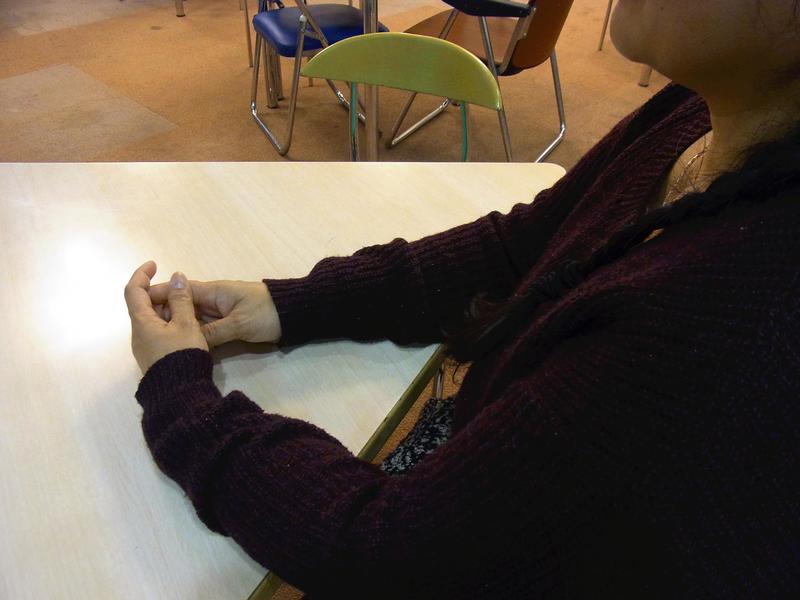
In response to a spate of complaints from foreign women saying, "My Japanese husband filed for divorce without my permission," or "I was tricked into signing [a divorce paper]," Rikon Alert, an association mainly comprising groups in the Kansai region that support foreigners, has released a manual to support women who have experienced such divorces.
In world terms, the Japanese legal system -- in which a divorce is legally granted as long as a document signed by the couple concerned is submitted to a municipal government office -- is rare, and many foreigners who don't understand the procedure often find themselves in trouble.
Rikon Alert's spokesperson said, "We want to expand support to save foreigners from serious harm."
Counterfeit signature
Late last month, a family court in the Kinki region ruled that a divorce notice submitted by a Japanese man without his wife's consent was invalid.
The complaint was filed by a woman in her 30s who is of foreign nationality. In 2013, the husband registered with a local government as the parental authority of their two children. The woman argued with him over the issue and moved out, which led to her not being able to see her children as often as she wanted. In 2017, the woman filed a lawsuit demanding the court nullify her divorce and hand over her children.
According to the ruling, the man forged the woman's signature by tracing the name she had written on another piece of paper. However, the court did not approve the handover of the children to the husband on the grounds that there was no problem in the nurturing environment.
"I was robbed of my precious children with a false signature. I can't make up the lost time," the woman laments.
Only a piece of paper
In Japan, 90% of divorces are amicable, where a husband and wife reach an agreement and their divorce is accepted as long as there are no flaws in the divorce papers, such as it having both parties's signatures.
According to Ritsumeikan University Prof. Shuhei Ninomiya, who specializes in family law, it is common in most foreign countries for the two parties concerned to actually visit a court or a public institution to undertake procedures for divorce.
"Since Japan does not confirm the intentions of both parties, forged signatures can end up being accepted," Ninomiya said.
In the case of foreigners, there are some cases where they sign their names because they do not understand the Japanese language well and they don't think divorce or parental authority can be completed with only a piece of paper.
A 49-year-old Filipino woman living in Osaka Prefecture came to Japan eight years ago with her two children after accepting a nursing care job posted by a Japanese company as she wished to live together as a family with her husband. She found the family register of her long-lost Japanese husband, only to learn that she was divorced from him.
"I want the Japanese divorce system to be revised so that no one will be sad like me," the woman said.
Introduction of preventive measures
According to a Health, Labor and Welfare Ministry vital statistics report, there were 21,852 international marriages and 11,044 international divorces in 2018. Foreign wives accounted for 70 percent of all couples.
Rikon Alert was formed in 2015 by 10 main organizations that support foreigners, and it promotes awareness by handing out brochures in 12 different languages. One of the participating groups, the Association for Toyonaka Multicultural Symbiosis (ATOMS) in Toyonaka, Osaka Prefecture, receives a total of about 100 consultations in a busy year.
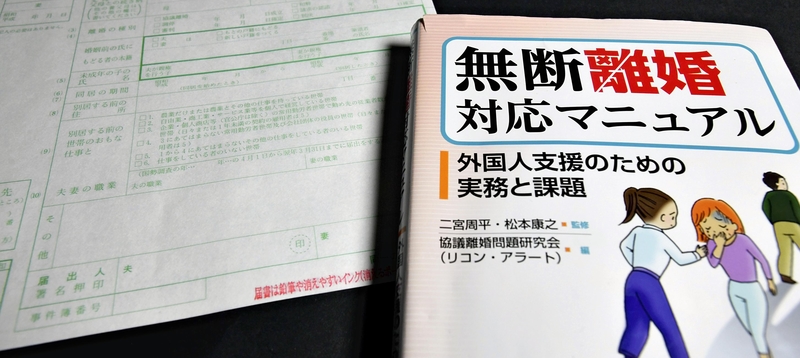
A book titled "Mudan Rikon Taio Manuaru" (Manual for unlawful divorce) published in September explains the various circumstances leading up to divorce without consent as well as problems foreign spouses face. It uses real-life examples to introduce problems such as losing the "spouse of a Japanese national" status of residence and being forced to return to one's home country.
As a preventive measure, the book lays out the legal procedures that can be taken to nullify a divorce or submit a request to a local government office to keep it from accepting a divorce paper turned in by someone other than the person concerned.
At a symposium held in Toyonaka on Dec. 7, those who have suffered divorce without consent talked about their cases.
An ATOMS counselor said, "It is essential to review the system and improve support."
Read more from The Japan News at https://japannews.yomiuri.co.jp/