1. Matisse: The Cut-Outs | Tate Modern, London
This show took us from the late 1930s to the artist’s death in 1954. At its heart was Matisse’s sinuous cutting and slicing, not just of paper but of space itself; the scissor-sharp separation of colour and blankness, flatness and depth. Given their simpleness, Matisse’s cut-outs had an extraordinary variety and inventiveness, yet the exhibition reminded us that the most expansive of them were made in a room that was both the artist’s studio and his bedchamber.
There, all the elements – pinned to the wall, piling up on desks and tables and doubtless the floor – were suspended in flux. Paper curled and drooped from the wall, trembled in draughts, and changed as light and shadows shifted round the walls. There is a flight from his infirmity and increasing physical limitations in these later works. They are so full of life.
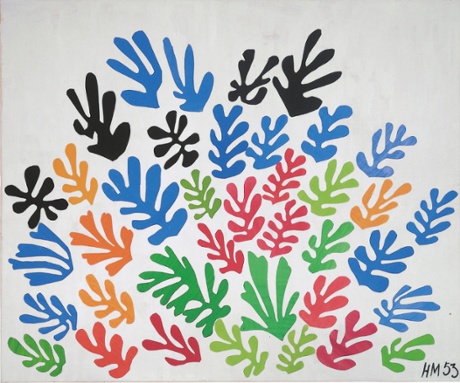
I imagine the sound as his big scissors carved through paper already stiffened by the gouache paint that had been applied to it. And Matisse, seated in a wheelchair, directing his assistants as they first helped him rotate the sheets as he cut the big shapes, then, under his direction, positioned them on the wall, hammering them to plaster with panel pins.
Matisse admitted that he started pinning such shapes to the wall without much idea where it was all heading, though the essence of the technique had been with him for decades, as an aid to his painting, his collages, prints and book designs. Yet he did have a prescient awareness of their implications. “It seems to me I am anticipating things to come,” he said. “It will only be much later that people will realise to what extent the work I am doing today is in step with the future.”
The simplicity of means led to something much more than picture-making, or what some mistakenly saw as the scrapbook play of an elderly artist’s second childhood. More fool them. Matisse had no time to spare in these late works, and nothing to prove. His awareness that time was limited gave these weightless works a paradoxical gravitas, as well as filling Tate Modern with the pulse of light and life, and the dance of the imagination. Loveliness proliferated.
2. Matthew Barney’s River of Fundament | English National Opera, London
Incomprehensible, fecal, funny and full of unforgettable visual set-pieces, Barney’s cinematic opera-cum-sculpture is a homage to art and artists, the collapse of the US car industry and Norman Mailer. More than five hours long, the film crosses America by way of a mythological Egypt, as described in Mailer’s novel Ancient Evenings. Barney surpassed himself in this collaboration with composer Jonathan Bepler, which came to the ENO in June. I was astonished and winded by it.
3. Pierre Huyghe: In. Border. Deep | Hauser & Wirth, London
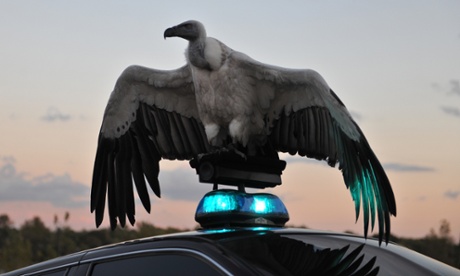
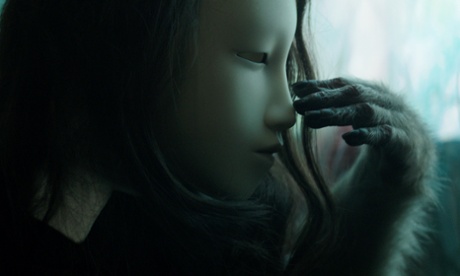
While Huyghe’s mystifying and magical mid-career retrospective tours from Paris to LA, a smaller show at Hauser & Wirth knocked me out with its tanks of lilies from Monet’s pond at Giverny, and a shocking film about a waitress, played by a macaque monkey, stranded in a post-tsunami restaurant in Fukushima. The most bizarre thing I saw all year, and unexpectedly the most heart-rending.
4. Marlene Dumas: The Image as Burden | Stedelijk Museum, Amsterdam
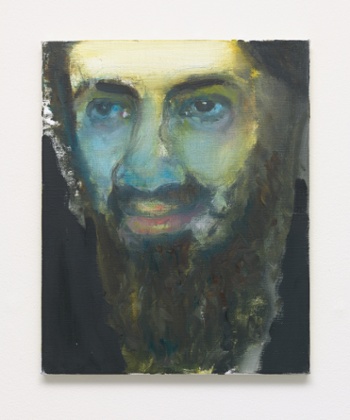
Marlene Dumas’s retrospective this autumn confirmed her place as one of the best painters around, whether she is painting self-portraits, her own daughter, Osama Bin Laden or the bewigged Phil Specter. Drawing is at the heart of her work, and given equal prominence in this marvellous exhibition. I can’t wait to get to grips with it again when it comes to Tate Modern in February.
5. Maria Lassnig | MoMA PS1, New York
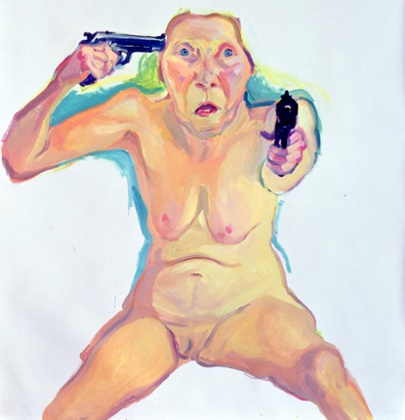
The death of Austrian painter Maria Lassnig (1919-2014) coincided with the opening of this terrific retrospective. It took us from her student days in Vienna during the second world war to the awkward candour, tenderness and violence of her later self-portraits – naked and pointing a gun at the audience, or with her head shrouded in a plastic bag.
6. Ed Atkins | Serpentine Sackler Gallery, London
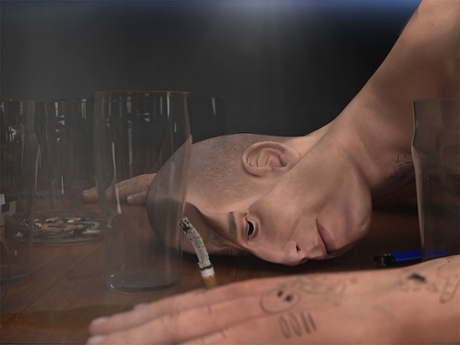
Atkins’s all-smoking, all-drinking CGI avatar Dave came to life at the Sackler gallery, then wouldn’t leave my head. Dave sang Randy Newman and Bach. While this protagonist maundered and wove knots in language, Atkins had us circling the gallery, peering through gloryholes and encountering Dave again and again in a show that was as melancholy as it was funny and horrible.
7. Richard Serra | Gagosian, London
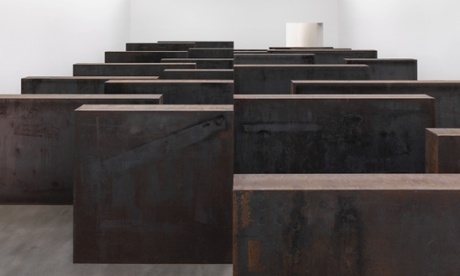
These four sculptures had me cowering beneath tons of steel in a landscape of slabs, taking a turn through a tunnel and measuring myself against a catafalque. Always the same, always different, Serra’s art is a mystery of gravity and invention. However overwhelming his creations, he never loses a sense of human scale.
8. Susan Philipsz: Part File Score | Hamburger Bahnhof, Berlin
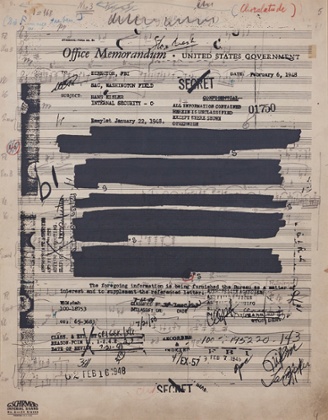
An exploration of the troubled life of composer Hanns Eisler via redacted FBI files and a soundscape, Philipsz’s work had the audience looking and listening right the way through this cavernous old railway station. Eissler’s music was banned by the Nazis, so he left for the US, only to be denounced as a communist by his own sister and wire-tapped. This was sound-sculpture as biography of a compelling subject, and a marriage of sensibilities.
9. Camille Henrot: The Pale Fox | Chisenhale Gallery, London
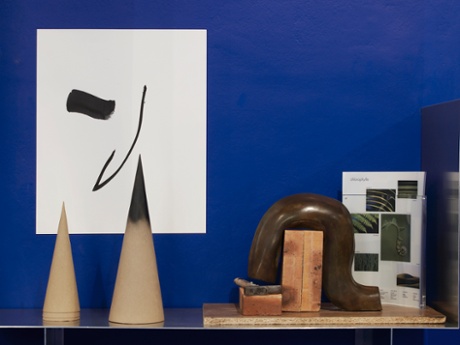
A mechanical snake chased me round this installation, which presented a history of the world and the human lifecycle via terrific little sculptures, bric-a-brac, drawings, detours into West African Dogon mythology, scrolling slideshows and much more besides. It was all done with great poise, atmosphere and inventiveness, and had the feel of a long and complex sentence unravelling round the gallery space.
10. Bill Drummond: The 25 Paintings | Eastside Projects, Birmingham
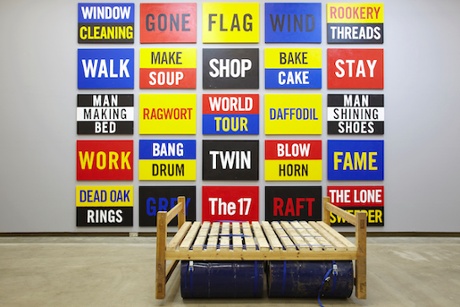
For almost three months, the ex-KLF frontman and art world irritant ferried daffodils beneath Spaghetti Junction, held knitting circles, shone shoes, swept roads, made soup, rang bells and talked his way round the city as part a mammoth world tour, due to continue until 2025. No, it wasn’t great art, but it was heartfelt, engaging, stupid and brilliant all the same.