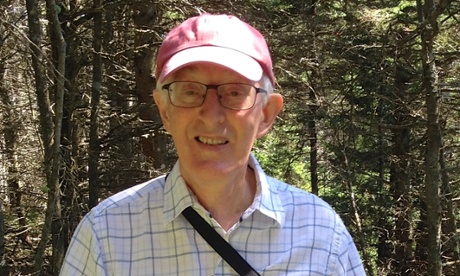
My husband, Adrian Grant, who has died aged 67 of ocular melanoma, had a distinguished career as an epidemiologist.
Initially an obstetrician, he was inspired by a course in medical demography in 1979 to join the newly created National Perinatal Epidemiology Unit in Oxford, under the charismatic Iain Chalmers. There Adrian established the Perinatal Trials Service with Diana Elbourne, who later became professor of healthcare evaluation at the London School of Hygiene and Tropical Medicine. Together they pioneered the most productive international perinatal trials research initiative in the world, enabling mothers, midwives and medics alike to base their practices around the time of birth on robustly researched evidence.
Adrian contributed to the 1,500-page Effective Care in Pregnancy and Childbirth (1989) and the regularly updated electronic Oxford Database of Perinatal Trials. This work led to the globally-renowned Cochrane Collaboration, which Adrian later co-chaired and which provides coherent and reliable results of systematic research, so that health professionals, patients and policy-makers can make choices based on the best evidence available.
In 1994 Adrian became director of the Health Services Research Unit (HSRU) at the University of Aberdeen. During his 13 years’ tenure, the unit trebled in size, carrying out studies in areas such as incontinence, hernia repair, hip replacement and the role of vitamin D in the prevention of fractures.
He also made a big contribution to the national Health Technology Assessment programme, which assesses the effectiveness of treatments. Through the achievements of the HSRU, Aberdeen rose to the top of the British health services research league table, and Adrian’s many accomplishments were recognised by his election as a fellow of the Royal Society of Edinburgh.
In 2006 Professor Dame Sally Davies appointed Adrian first director of the National Institute of Health Research’s Programme Grants for Applied Research. More than 150 awards were made under his leadership. Davies later wrote: “Adrian greatly advanced the value and reputation of health services research in both Scotland and England in ways that none would have thought possible 30 years ago.”
Adrian was born in Shrewsbury, the youngest of four children of Gregor Grant, a pathologist, and his wife, Cynthia (nee Carpendale). From Eton, Adrian went on to study medicine at Trinity College, Oxford, and St Thomas’ hospital, London. We married in 1981, having met many years before through my brother Malcolm, also at Trinity.
A man of great integrity and kindness, Adrian was deeply committed to mentoring younger researchers. He also loved cricket, Scottish music, ceilidhs and curling.
He is survived by me, our son, Tom, and daughter, Susannah, and four grandchildren.