Fast facts about Vince Digneo
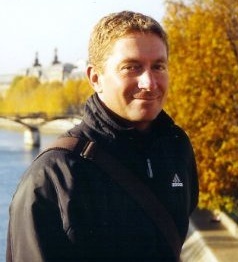
Job title: sustainability strategist at Adobe
Education: bachelor’s of science in chemistry from the University of New Mexico, MBA from the University of California at Berkeley’s Haas Graduate School of Business
First job: ski instructor at Ski Santa Fe, followed by research and development in protein biochemistry at HP Labs (now Agilent Technologies)
Who or what inspires me: I typically come up with my best ideas running on the trails near my home on the San Francisco Peninsula.
Weekend passion: walks with my wife and baby, and running on the trails and swimming with my Stanford Masters teammates
If I wasn’t doing this I would be ... I’m lucky to say that I’m doing what I really want to do!
What’s been your greatest accomplishment?
This question brings up a quote I remember from college by Ralph Waldo Emerson: “To be yourself in a world that is constantly trying to make you something else is the greatest accomplishment.”
I started at Adobe about a year ago and from the time I walked in the door, the world here has embraced me for being exactly who I am. This culture has made it possible for me to be a part of a number of significant accomplishments in a short time, particularly what we have been calling the “1-2-3”. This year, we were ranked the number one IT, number two US, and number three global company in Newsweek’s Green Rankings, as well as the technology leader in Trucost’s inaugural Natural Capital Leadership Indices.
Your biggest frustration?
One of my biggest frustrations is the overuse, and somewhat abuse, of the “green” label. It is a 30-year-old label that can polarize people and companies based on widely varying interpretations of what it means.
Your goal for the next year?
Our people are our greatest resource for positive change. Adobe’s green teams (I know, but “green” has its place) lead local sustainability initiatives in 23 of Adobe’s largest sites around the world. We incentivize them to reduce their air travel and use Adobe Connect instead. We are also introducing a carbon footprint offsetting and matching program to raise employees’ awareness of their personal carbon footprint. I want the employees to connect their sustainable, positive actions to their health and wellness.
Tell us a story that conveys a lesson you’d like to share
For a long time, I have been coaching endurance athletes (runners, triathletes, ultra-runners). I try to teach my athletes that they need to approach every athletic goal sustainably. If they use too much energy too early, there’s nothing left for them late in a workout, event or race. To win or at least do well in an endurance event, you have to pace properly, conserve your resources, optimize what you have, own what you can, and simply manage what you don’t own. It’s more of a metaphor than a story but I think athletic training, racing and coaching has made me a better sustainability professional.
Away from work, what do you do to live more sustainably?
I try to buy products that do not contain unnatural ingredients, but sometimes, I have no choice. I try to recycle everything, but not everything is recyclable. I pull all my colleagues and family’s “vampire plugs” and installed solar on my roof, but occasionally I use the air conditioner at night. I try to save every drop of water, but there is always some that goes down the drain. I try to walk, run, or bike everywhere, but I still drive a car. I believe that the most sustainable car is the one you don’t buy (but I would love a Tesla). If I keep it up, and help others do the same in a nonjudgmental way, we can all be better off.
More five minute interviews:
- Five questions for Paulette Frank of Johnson and Johnson
- Five questions for Amy Hargroves of Sprint’s sustainability program
-
Five questions for Marcus Chung of The Children’s Place apparel
The social-impact hub is funded by Anglo American. All content is editorially independent except for pieces labelled advertisement feature. Find out more here.