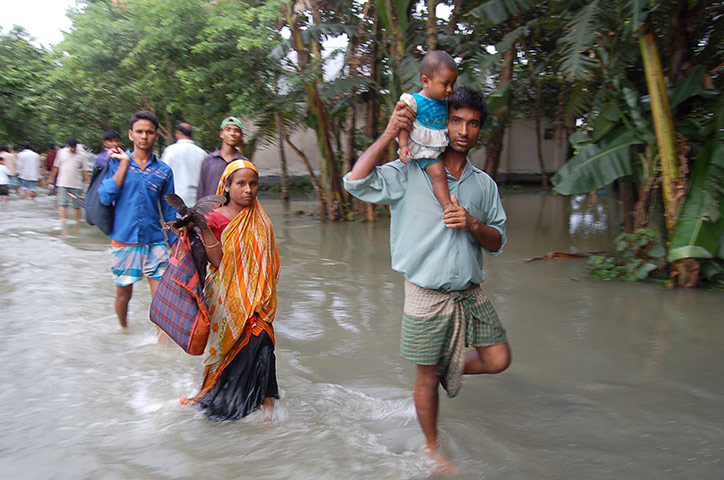
"During the last flood, my family survived by sheltering in the treetops for days, until the waters subsided. What will we do if the next flood is more severe?" says Hasna Mia. Lying in the delta of both the Brahmaputra and Ganges rivers, Bangladesh is prone to flooding. It is also one of the poorest countries in the world. This image shows the aftermath of the floods in July 2004 and the consequences of poverty combining with an extreme weather event. Entire homesteads were destroyed, resulting in the loss of vegetable gardens, paddy fields and fish farms. Flooding is an annual event here but is now often much more severe than experienced in previous decades. Serious problems emerge when one flood period extends and another begins early. With only brief dry periods between two floods, families can be left homeless and landless for months at a time Photograph: Practical Action Bangladesh/Practical Action
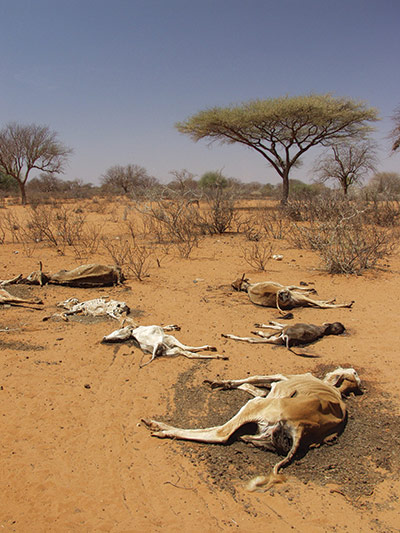
Animal carcasses lie strewn across the pathway in the southern Magadi district. “We have seen real changes over the last 10 years. Our livestock have died, our grazing fields have shrunk and our water sources have dried up," says Lore Kapisa. In recent years, rainfall has declined and there are few trees left with reachable leaves. These animals were once the livestock of a Maasai farmer and represent the loss of his livelihood. When their animals die, pastoralist families no longer have a source of income and often become dependent on food aid. More than 70% of livestock perished in the drought of 2005–06, when pasture shrivelled and water supplies dried up. Survival is a struggle now but if climate change is not halted soon, the Maasais’ future will look even bleaker Photograph: Simon Pope/Practical Action
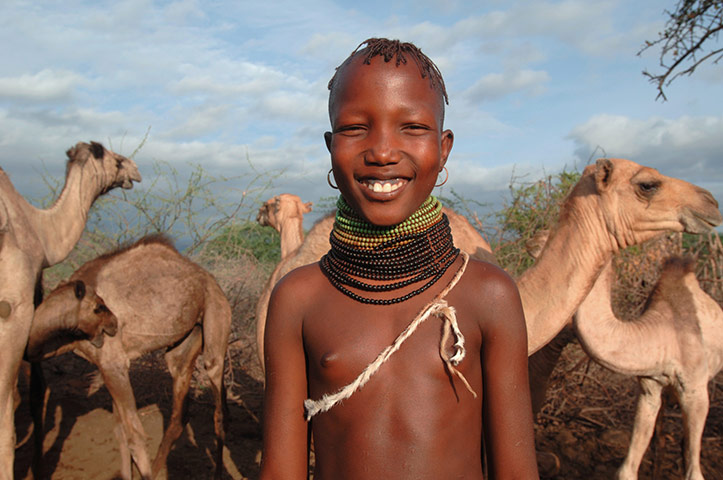
“Our cattle were sick and we went without food but we are human beings, capable of adapting," says Matthew Amojong. Lokwei Amojong's parents and the generations before them have passed down the knowledge needed to survive in Turkana, but current climatic changes are beyond anything they have experienced before. Serious water shortages, reduced biodiversity and loss of cattle led Practical Action to introduce camels across the area, which are capable of surviving long periods without water. While cattle and goats become emaciated in times of drought and no longer produce milk, camel milk provides a crucial source of nutrition. By herding camels, pastoralists are adapting and maintaining their traditional way of life. But if the causes of climate change are not curbed, Lokwei will be one of the first to know the true cost of a two degree rise in global temperatures Photograph: Georgina Cranston/Practical Action
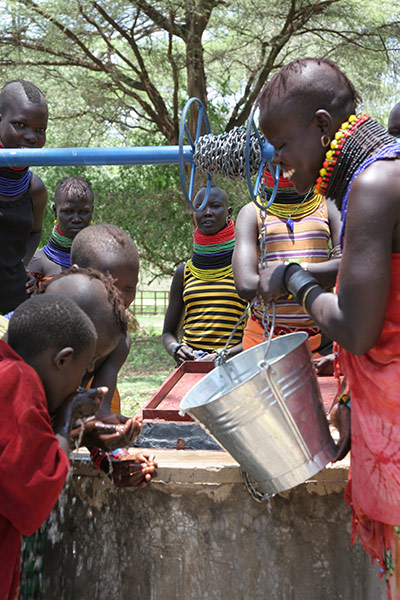
“This is making a difference; we used to scoop into the dry riverbeds for water. Now we have more, our children and animals are healthier," says Abduma Damaris. This shallow well at Lokiriama, near Lake Turkana, is usually only a back-up water supply in times of water shortage. Unfortunately, in recent decades these types of wells have had to become a main water source. More than 400,000 nomadic people are considered at risk in Turkana's water crisis. The major rivers - the Turkwel, Keio, Tarrach and Suguta - which used to meet the needs of whole communities no longer hold enough water. This well uses the simplest technology to ensure it can be maintained by the community, and provides a seasonal supply of safe, clean water Photograph: Practical Action
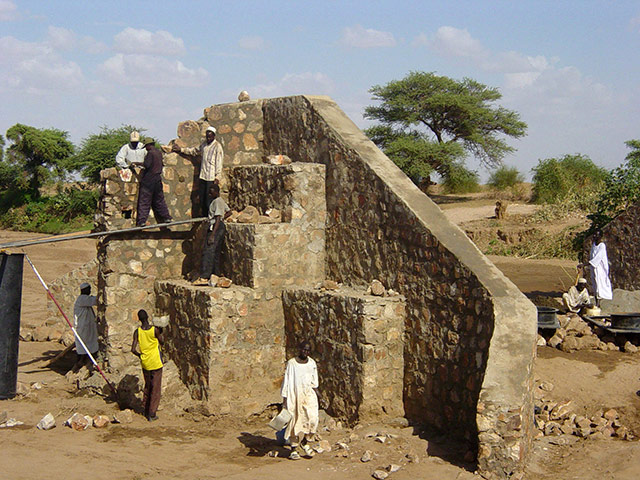
“Our lands are changing before my eyes. The rains may not fall so frequently, but I am beginning to see the landscape of my childhood returning," says Mohamed Adam Nor. Villagers in Umm Bronga, in conflict-hit north Darfur, are building an earth dam. This structure will capture the little rain that falls and then flood an area of 2,000 acres, making the land cultivable for the first time in decades. This area of Sudan is very dry, being out of the reach of the Nile, and is receiving less and less rainfall. The depletion of natural resources has exacerbated conflict in the area, yet despite the violence the communities building this dam have succeeded in improving their lives. Hundreds of families are now able to grow a wide variety of crops, and can be self-reliant, rather than dependent on food aid Photograph: Practical Action
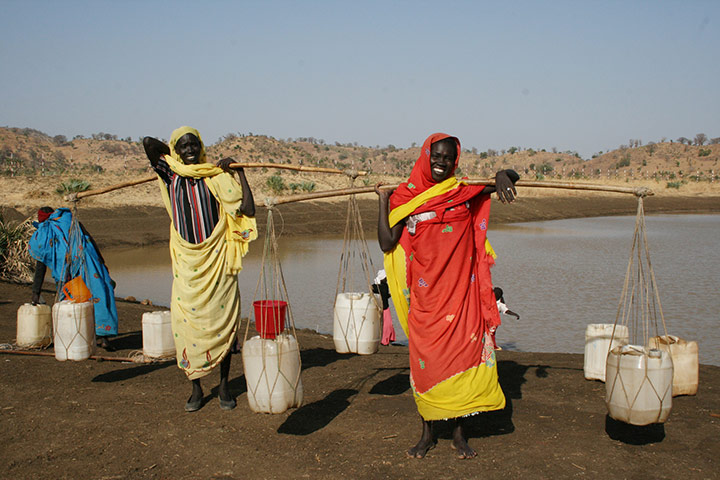
“During the rains, the haffir filled up. Many years we have water shortages but we do not think this will dry up before the rains come again," says Halima. As rainfall patterns become more erratic, haffirs, which collect and filter the rain, will help to ensure that women do not carry an unfair burden of climate change. Before this haffir was rehabilitated, women would have to collect water from neighbouring villages, often 10-12km away. The drudgery of this essential task has been drastically reduced. With access to this water source, what once took a whole day can now be completed in an hour. Some 700 families benefit from this technology, which represents the main water source in the area Photograph: Practical Action
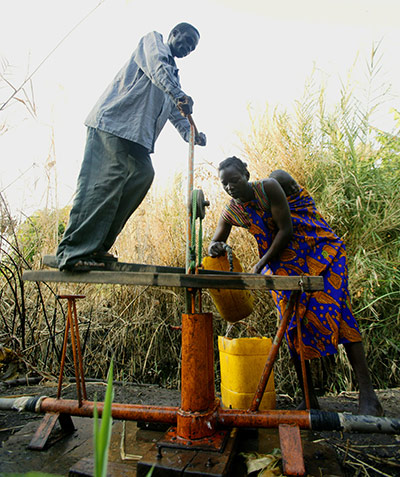
“Last year, my harvest failed. With irrigation I should see the difference. Perhaps my crops will survive this year," says Fremont Syabwanta. Fremont and Maureen use a foot pump to water their crops in Zambia's Sinazongwe region. On their small plot they grow mangoes, bananas, sweet potatoes and brassicas to feed their family, and sell any surplus at the local market. Living only 30km from Lake Kariba, they should not suffer from water shortages, but the pipeline which supplies the nearby town bypasses the Sinazongwe farmers. As rainfall becomes more erratic and infrequent, the family has known its crop to fail even during the wet season, and last year's harvest was dangerously low. This inexpensive pump will enable Fremont and Maureen to feed their family despite the changing climate Photograph: Practical Action
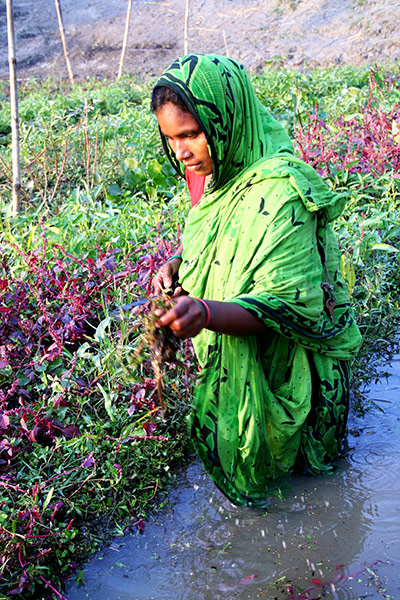
“Now, with these new gardens, times of flood can mean growth and life, not just loss," says Rina Begum. During the floods, when cultivating crops on land becomes impossible, "floating gardens" provide one opportunity to produce much-needed food. In this way, Rina and hundreds of other families across the Gaibanda district can survive. A raft is constructed, using aquatic weeds, on which vegetables can be grown and seedlings can be raised, ready to plant after the flood waters recede. At the end of the growing season, the raft is used as compost for land-based farming. This flood-friendly technology helps families to plan their futures without the fear of losing their livelihoods during the next monsoon Photograph: Practical Action
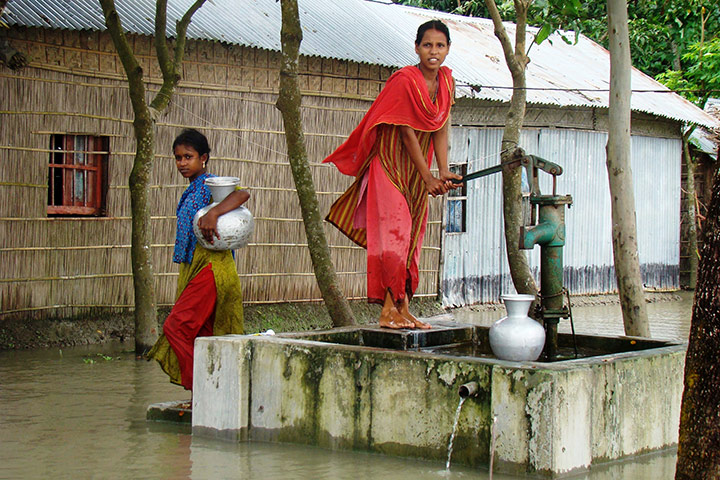
“The new well did not go under during the floods; every day 70 families collected their water here," says Moina Begum. In Bangladesh, 110,000 people die each year from diarrheal diseases - largely as a result of contaminated water. Tube wells, a source of clean water, are rapidly becoming more available, but in many cases they are built without taking account of flood levels. In the monsoon season, these wells are inundated and safe drinking water is in dangerously short supply. Practical Action has worked with Bangladeshi communities to elevate their wells, using raised platforms. Each one is built more than two feet (0.6m) above the highest recorded flood levels. In spite of the increasing probability of flooding, raising these wells will enable the most vulnerable families to become more resilient Photograph: Practical Action
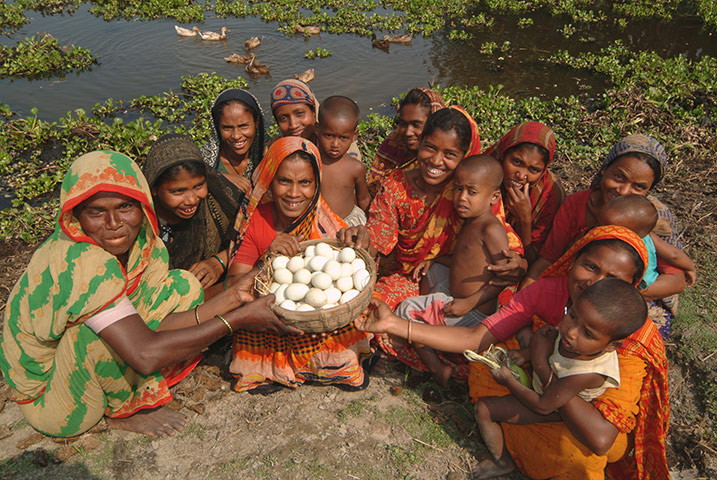
“The waters rise up more often now. These ducks can survive and help us to survive also," says Usha Hossain. Ducks are an ideal domestic livestock for areas prone to flooding, producing eggs in both dry and wet seasons. The women in this photo attended a three-day course and are now trained in how to feed, house and prevent disease among their ducks. When food is scarce, or hard to come by because land is flooded, rearing ducks provides a good source of protein for a family. Small changes, like rearing ducks instead of chickens, will help families to maintain a livelihood during the monsoon season Photograph: Zul Mukhida/Practical Action
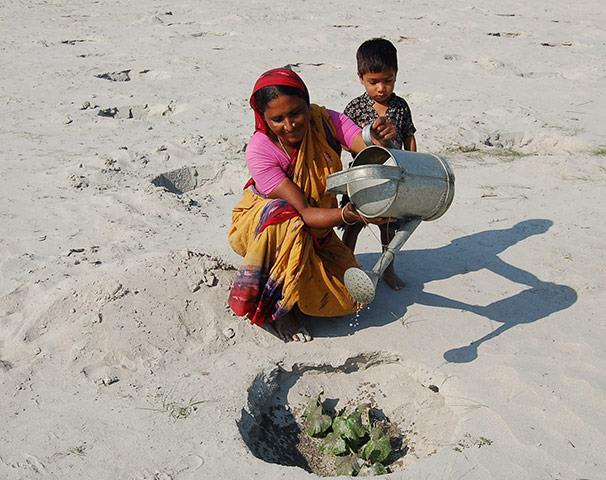
“At times I couldn’t even provide one meal a day for my family. Now we have three," says Mozahar Ali. Sandbars are large, barren lands made of the sand and silt deposited as rivers change their course. They are home to millions of mostly poor Bangladeshis. Traditionally seen as infertile, there is no competition for the use of this land. Growing crops on the sandbar therefore provides an opportunity for landless families to access common property resources. Poor farmers have been helped to develop techniques to grow pumpkins here, providing one solution to help them overcome 'monga' (the seasonal food crisis). It is hard to escape from or withstand a danger, such as a flood, without sufficient nourishment or income. Growing pumpkins provides a livelihood that can meet both these needs for residents of the sandbars Photograph: Rezaul Haque/Practical Action
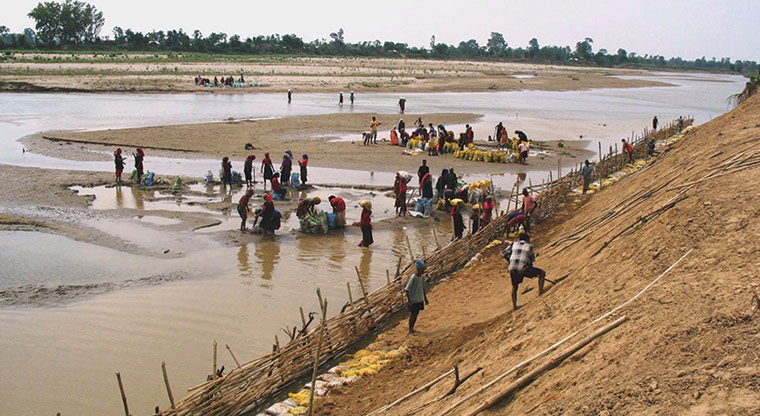
“We are working together to protect our village. For the first time, we will be ready for the floods," says Martha Lino. The topography of Nepal is one of the most diverse in the world, from the high Himalayas, to the flat Terai plains. Across this altitude range, the country also experiences five different climatic zones, from alpine to tropical. As a consequence, Nepal is prone to natural hazards, of which flooding is the most damaging and recurring. In recent decades, rainfall has become more intensive, and river levels are expected to rise further as glaciers melt. This combination increases the risk for villages in flood-prone areas. Here a community is building a flood barrier from local stones, reeds and wood, which will enable them to have a degree of control over the extent to which floods affect their lives Photograph: Shradha Giri Bohora/Practical Action
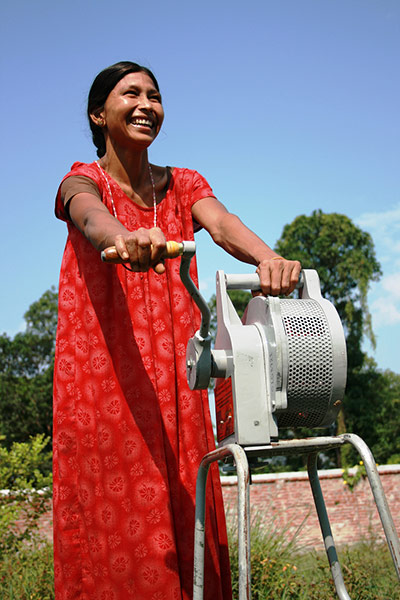
Megh Rani Chowdhari tests the siren that will inform families of an oncoming flood. River waters can rise from normal to dangerous levels in just hours. "Getting information before the flood will save our lives. We may not be able to rescue everything but at least my family will be alive," says Megh Rani. The siren is one part of an effective "early warning" system for relaying vital information about river levels. The most essential measure, however, is to build relationships between communities and the authorities who have access to information. In one example, a river monitoring station sent observations to Kathmandu and even Delhi, but not downstream to the villages at risk. Enabling people to prepare in advance of a disaster, to gather their family and belongings and be confident that they will have safe passage to a flood-free area, can change lives Photograph: Peter Crawford/Practical Action
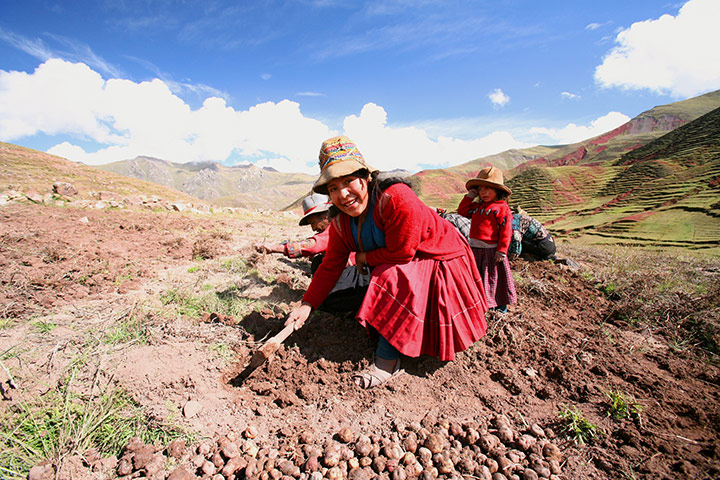
“In the past I had to make difficult decisions during the worst weather – should I feed my children or my alpacas? I could not always feed both," says Martha Lino. The Peruvian Andes may not bring to mind global warming: in fact, they are experiencing quite the opposite - extreme cold periods. The "Friaje" of recent winters - a phenomenon of intense, sudden cold - is challenging highland communities' ability to survive. In these conditions, many of the potato varieties that represent their staple diet and their livelihood cannot grow. There are, however, some native varieties that can flourish in the intense cold but, due to the isolation of these Andean communities (living at over 5,000m above sea level), farmers have no ready access to these hardier varieties. To help families become more food-secure, potatoes from communities which have continued to farm the more resilient varieties are being re-introduced Photograph: Suzanne Porter/Practical Action
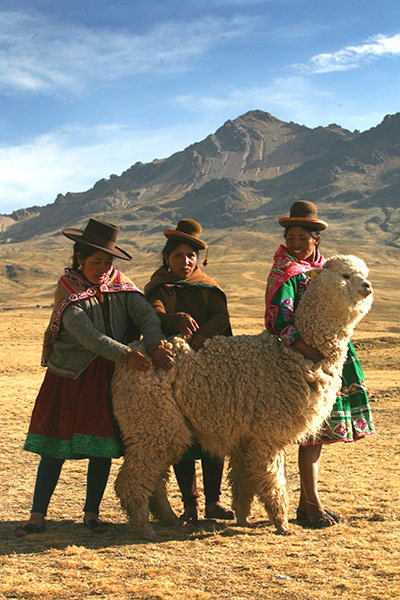
“Living on our lands is becoming more difficult as the years change, but by building a shelter my alpacas will be safe. That means my family will be too," says Victoria Canchis. Besides potatoes, alpacas are the other main livelihood for isolated Andean communities. But these animals, which produce the best quality wool at high altitudes, are poor foragers and struggle to find food in the snow and ice. In extreme conditions, pregnant alpacas miscarry, meaning that a family's herd and income is devastated. In 2003, when temperatures unexpectedly dropped to -35C, 70% of alpacas perished and many more were left exhausted and prone to disease. Families are being helped to protect their alpacas through the teaching of veterinary skills that increase animals' resistance to disease. They are also being shown techniques for building shelters out of local materials
Photograph: Ana Castaneda/Practical Action
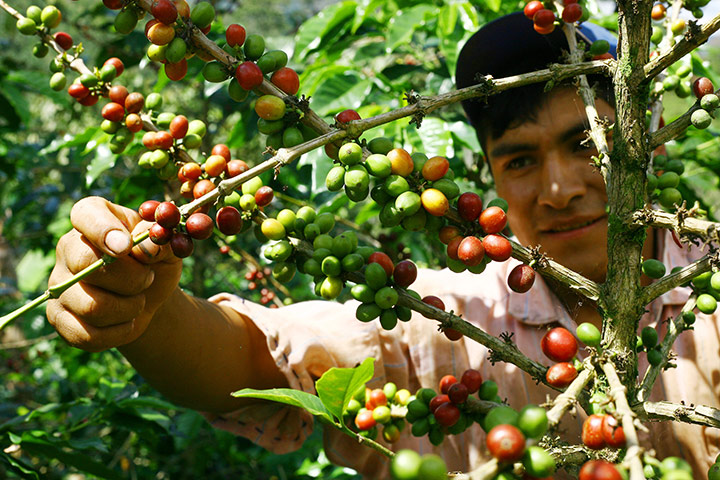
“It is many years since we heard wild birds singing or rain drop; now, with vegetation growing, we can hear them again," says Jaime Roberto Soto. In recent years, Peru has ranked as a top exporter of coffee. But this has been achieved at a price: each year, farmers indiscriminately cleared vast areas of the Amazon rainforest to establish new coffee plantations. Unknowingly, poor communities were sacrificing their long-term survival, and that of the forest, to meet their immediate needs. Having trained in agroecology, coffee growers now consider the forest to be their most valuable resource. They grow their coffee under the forest canopy, allowing them to be more productive while protecting their environment. As climate change puts pressure on our ecosystems, it is the small-scale farmers in many parts of the world who will lead the way in sustainable production Photograph: Practical Action
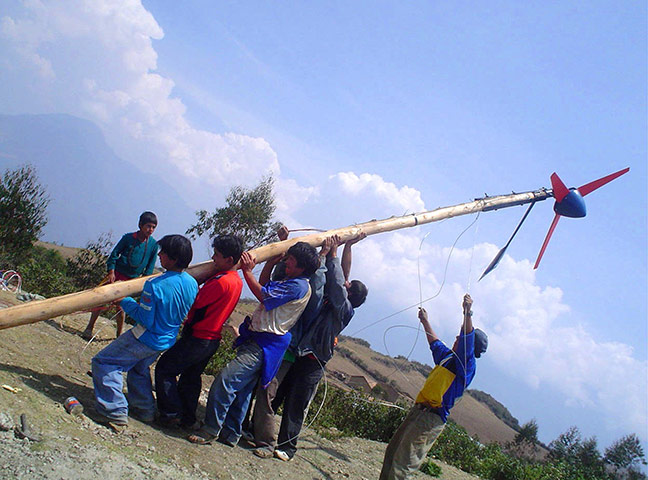
“I remember much of my life in darkness. With this light comes hope for the future,” says Francisco Sallas. With access to energy, whole communities have the opportunity to develop and challenge their poverty. The most basic activities - from lighting a house to producing and processing food - require access to energy. It is also a prerequisite for meeting the majority of the millennium development goals. Families are better placed to adapt to climate change with the range of services that energy can supply – good communication systems, fridges for vaccines and alternative income sources. Yet, despite being essential to everyday life, access to electricity remains unavailable to 1.5 billion people worldwide. This community in Peru are not connected to the grid system, but are working together to erect a wind turbine that will meet their basic energy needs Photograph: Practical Action
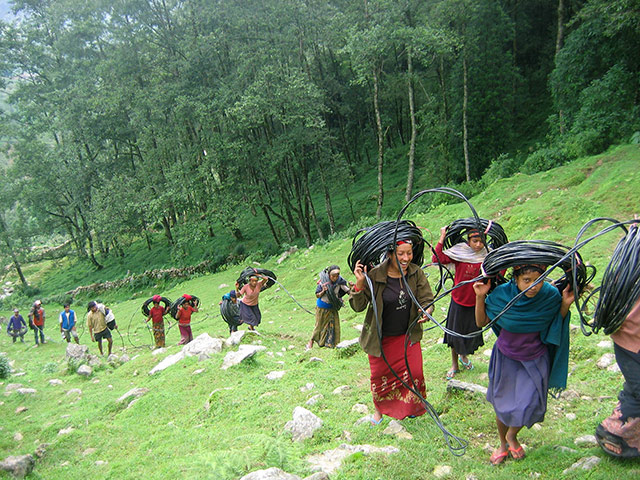
“I never thought I would see our whole village light up at night. This energy will change our community," says Maya Chepang. For many thousands of families across Nepal, access to electricity is as distant a prospect as it was decades ago. Each day, as the light fades, so too does the possibility of adults working into the evening, children studying and families cooking in well-lit, clean and safe homes. Here, women in Gatlang province are transporting the transmission cable for a micro hydro scheme. With the help of this renewable energy system, local people now spend much less of their income on expensive and harmful fuels and control their own energy access. The power to challenge poverty and adapt to climate change is now in the hands of the community Photograph: Rakesh Shrestha/Practical Action