What happened to the classic three course meal? Not so long ago it was the gold standard found everywhere from fancy restaurants to the weeknight dinner table. It’s time to bring it back in from the cold.
The three course meal dates back to ninth century Spain, when Persian polymath Ziryab no doubt infuriated the Emirati court in Cordoba by insisting meals be served as a soup, followed by a main dish, finishing with a sweet dessert. His fastidiousness aside, the idea certainly caught on, and it held near-complete dominance over how the western world ate for more than a thousand years.
In the last few decades the three course meal has fallen on hard times. We began to obsess over convenience at home, and the idea of cooking more than one thing a day became the stuff of nightmares. Restaurants wanting to stand out from the crowd started serving a bewildering array of degustations, mini-degustations, small plates, big plates, sharing plates and tasting plates.
It’s getting confusing, and now whenever a waiter approaches my table to “explain how the menu works” I let out a silent scream, the curmudgeon in me longing for a simpler time.
It’s understandable why restaurants have distanced themselves from the tradition – new menu structures allow chefs to control ordering, reduce waste and increase how much the customer spends. And at home our the mindset has changed so that we now want to spend as little of our lives cooking as possible, leaving us more time to watch other people cooking on the telly.
It almost seems like the three course meal is doomed, relegated to once-in-a-blue-moon Saturday night dinner parties, and hokey tourist traps in Paris’s sixth arrondissement.
Even the darlings of the neo-bistrot movement, touted as the resurgence of French cuisine, seem to have left behind the prix fixe holy trinity of entree-plat-dessert. The likes of Le Chateaubriand, Frenchie and Bones all opt for four or five course menus in search of that little extra je ne sais quoi.
I don’t think wanting three courses is simple nostalgia. There’s something very human about it. Playwrights and dramatists have followed the three-act structure of setup, confrontation and resolution for thousands of years, so perfect is its clarity of message.
A three course meal tells a story with a beginning, a middle and an end, and when done well it resonates like the perfect pitch of a tuning fork. I rarely finish a good three-courser feeling anything other than comfortably satisfied.
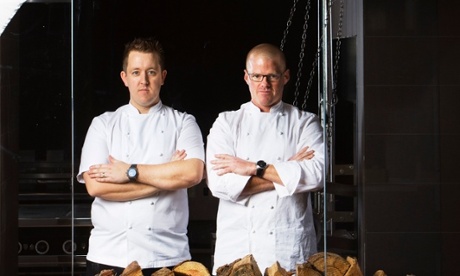
All is not lost. One champion of the three-course meal is London’s Dinner by Heston, Blumenthal’s throwback concept to the glory days of British food, such as they were, and it’s heartening to see how eagerly the dining public have taken to it.
It’s soared up world restaurant rankings on the back of rave reviews and now outranks his flagship, the Fat Duck. Another Dinner outpost will open in Melbourne in the coming months.
Sydney’s latest big opening, Peter Gilmore’s Bennelong at the Sydney Opera House, is distinguished by its three course a la carte offering giving theatre-goers the pleasure of a fine meal while finishing in time to see the curtain come up.
Dinner’s runaway success could indicate that the three-course meal is not yet dead. We might still love the idea of sitting down to a meal with familiar structure, where food is served to please you rather than dazzle you.
Whether at a nice restaurant, down the pub or in your own kitchen, it would be a great shame if the institution of the three-course meal were to quietly slip away undefended. It’s time to bring it back.
Adam’s three tips for making three course meals at home:
1. Cook in reverse
If I’m making a three course meal at home, I’ll start by making a dessert that can be served straight from the fridge at room temperature, then a main course that can hold in the oven or on the stove. Finally I’ll prepare the entree just before it’s time to eat. It’s all about planning.
2. Spread it out
If you’re going to eat three courses instead of one, you need to reduce the portion size for each course. If you’re used to eating a 300g steak for a one course dinner, try half that size for a three course main. I work on a 30:50:20 rule – 30% of the meal for the entree, 50% for the main course and 20% for dessert.
3. Learn the basics
With a few basics up your sleeve, putting together three dishes is dead easy. Just add a meringue, and a few berries and cream become an Eton mess. A simple short pastry can turn anything in your fridge into a pie or tart. A vinaigrette dresses a few vegetables up as a perfect entree. The basics are what make ordinary ingredients a meal.