A short stroll from the hermetically sealed bubble of the Republican presidential debate at Colorado University, a political gulf is opening up between the party’s leaders and one of the most electorally important demographic groups in the US.
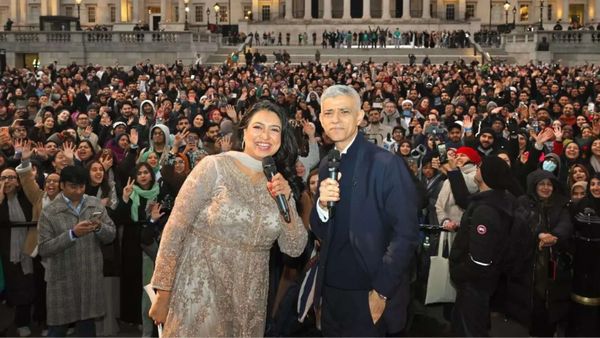
While many of the candidates inside the wire fencing and security cordon have roused their supporters with fierce anti-immigration rhetoric, a group of campaigners on the other side of campus are holding a rally to protest what they see as an alarmingly xenophobic tone to the Republican primary.
At the heart of the dispute is, of course, the controversial figure of Donald Trump, whose characterisation of Mexican immigrants in particular as “rapists and criminals”, along with images of immigration protesters being dragged from his campaign events, has incensed many Americans, on the right and the left.
But activists representing the estimated 11 million undocumented immigrants in the US believe Trump’s influence has also weakened support for their cause among previously sympathetic Republicans such as Marco Rubio and claim Trump is only marginally more extreme than other frontrunners such as Ben Carson.
“On this issue, Donald Trump is the face of the Republican party,” says Dolores Huerta, co-founder of the United Farm Workers Union and a civil rights activist who is one of 20 speakers at Wednesday’s rally.
“His anti-immigrant rhetoric and anti-Mexican rhetoric specifically has dragged the other candidates to the right,” she adds. “Even Ben Carson says he would like people to stay here as guest workers, so they would not have rights or a path to citizenship. It’s really just a step up from slavery.”
It would be tempting to dismiss the event – complete with banners proclaiming “stand up to anti-immigrant politicians” – as an entirely partisan affair, designed to shore up support for Democrats and paint Republicans in the most extreme light possible.
But the debate’s presence in Colorado, a so-called “purple” state with a tradition of teetering between Republicans and Democrats and a fast-growing Latino population, points to a demographic reality that the party of Lincoln arguably cannot afford to ignore.
Soon after the last presidential election in 2012, when Barack Obama trounced Mitt Romney among non-white voters, Republican strategists commissioned a report to seek ways of appealing to Latino communities.
Even at the midterm elections in 2014, the failure of sympathetic Republicans to drive immigration reform through Congress did not stop successful Senate candidates such as Cory Gardner in Colorado from seeking to distance themselves from more extreme views in their party.
But many in the state are surprised at the extent to which what they say is “vile and hateful rhetoric” has been allowed to taint the Republican brand in recent months.
“Latinos in Colorado are a key swing vote in close elections,” says Federico Peña, a former Democratic mayor of Denver. “I believe you can’t win a presidential election without at least 35 to 40% of Latino voters nationwide, and I think many serious Republicans know that too.”
Not of all the presidential candidates have distanced themselves from immigration reform. Jeb Bush, for example, has used his support for a path to citizenship for some undocumented immigrants who came to the US as children as a way to distance himself from Trump.
And not all activists see the other party as an automatic friend of immigration reform, either.
“Even among Democrats, there have been times in the past when they haven’t been good to us, so we have a message for both parties,” says Lynn Tramonte, deputy director of the advocacy group America’s Voice and an organiser of the Boulder rally.
“Every four years, the Latino population grows and it’s horrifically damaging for Republicans,” she adds. “They have got their heads in the sand thinking they can somehow pull off a miracle, insult groups of voters, talk badly about their family members and friends and somehow win elections.”
But increasingly, the tone of the debate within the Republican party is providing a clarifying moment for the immigration campaigners and a rallying point for Democrats.
Organisers of the event outside Wednesday’s debate say it now has two purposes: one is to “speak out against misrepresentation of the Latino community” and the other is to provide an outlet for people to do something about it.
“We are going to harness the anger and encourage people to register to vote,” says Peña.