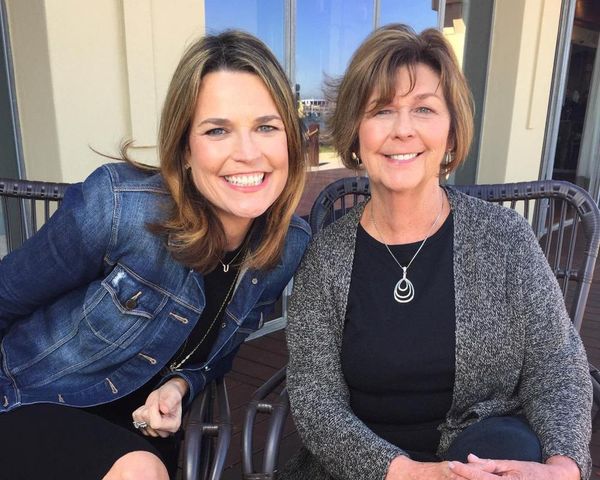
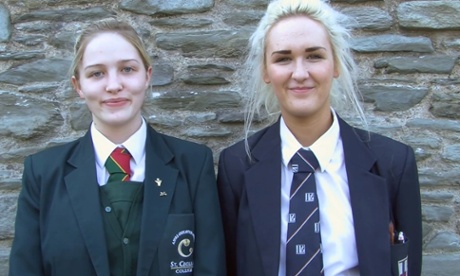
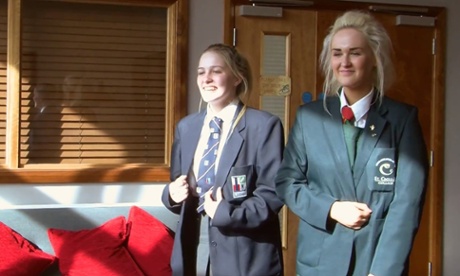
No actor could act – and no writer could script – the charming but poignant scene when two 17-year-olds from either side of divided County Derry in Northern Ireland switch school uniforms and behold themselves, and each other, in a mirror.
The gesture is simple and effervescent, but utterly subversive. Courtney Cooke is from Lisneal college, in the loyalist Waterside, on the Protestant east bank of the river Foyle; Yvonne Weir attends Catholic St Cecilia’s college across the river in Creggan, fortress estate of republican Bogside, once the IRA-controlled “Free Derry”.
The defiance was the schoolgirls’ own idea for a short film, In Peace Apart, in which, having changed uniforms, they walk through the city and demonstrate how their lives hitherto have been almost entirely segregated. In a small place, they have never set eyes on each other’s schools, or barely crossed the river Foyle, which in the film is described as the walled city’s “biggest wall”.
The film has been entered for a competition next year in Boston. Whether it wins or not, their idea could – and certainly should – go viral. Already, a group from Derry plans to challenge Palestinian and Israeli children to do the equivalent – swap a hijab for a skullcap – at an international schools encounter in Genoa.
The film forms part of the work by a project that has done more than anything politicians could ever devise to sow peace in Northern Ireland. Teaching Divided Histories was born out of an arts hub, the Nerve Centre, which came to the fore during Derry’s year as UK city of culture in 2013.
The Nerve Centre opened in 1990, before the Good Friday agreement, the brainchild of Martin Melarkey and John Peto, who then launched the teaching project, setting out to “end the taboo”, as Melarkey puts it, “and help teachers in our schools educate children about what happened here, rather than sweep it all under the carpet. We see it as the only way to end the segregation that still persists, despite the peace process.”
Modules were developed, using digital technology, to teach the civil rights movement and the Troubles, as well as the 1916 Easter Rising, the battle of the Somme and international conflict, with the intent of forging a common, agreed, factual story.
On the 20th anniversary of the IRA ceasefire in August, a 16-year-old girl from Belfast, Aobh Sharvin, said it herself: “Peace is here. You can’t compare the situation now with what was happening then, but teachers are still trained separately, and that has an impact on people of my age. Education has a lot to do with keeping sectarian stuff going. I suppose people do need to talk about the Troubles, but they don’t need to do it in such a hushed manner. I think we need to find a more open way to speak about that time.”
Classroom sessions were devised on South Africa, Lebanon and wars in West Africa. “This is raw stuff, we’re trying to do,” says Peto. “There are all sorts of barriers, and sometimes it can be easier to start by teaching conflict that is distant, geographically and in time, before getting to our own.” The project bloomed, going international itself. Teachers were brought to Derry from Kashmir, Lebanon, South Africa and Sierra Leone for an extraordinary conference in Derry as part of the city of culture. This year, teaming up with the British Council, Teaching Divided Histories sent its own training staff to those countries, to install its ideas, materials and initiatives. Incredibly, for all its endeavour and efficacy, the project is currently fighting proposed government funding cuts.
During the city of culture year, the film director Paul Greengrass spent time at the Nerve Centre watching Teaching Divided Histories at work – a visit of which he says: “It was fantastic. They were showing photographic exhibitions and films that reflected the Troubles back at all of us. News reports, documentaries and photographs, which have embedded those images of the city among its youth. But now the young people themselves are manipulating those images and playing with sound in a very sophisticated way.
“And they’re not just trying to make films about the Troubles: one kid showed me a remake he’d done of The Bourne Supremacy [a Greengrass film about a CIA assassin] lasting 60 seconds. It was a piss-take of course, but very clever, very skilful.”
.jpg?w=600)