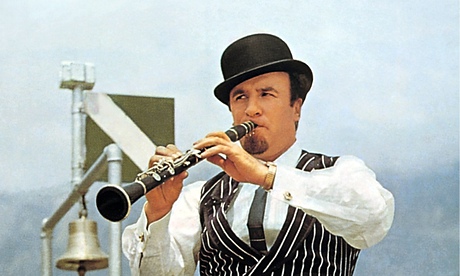
The celebrated jazz clarinettist Acker Bilk has died aged 85.
Bilk was perhaps best known for his 1961 song Stranger on the Shore and was one of the most important figures in the revival of traditional jazz in the middle of the last century.
“He was vastly important to the jazz movement, he could play the clarinet like nobody else, he had a special tone and vibrato – other musicians would tell you that,” his manager, Pamela Sutton, said.
Sutton, who worked with Bilk for 45 years, said: “His life was music and performing. He only gave it up because his age caught up with him and he couldn’t perform any more.”
Bilk’s last performance was in August 2013 at the Brecon jazz festival in Wales.
Sutton said: “He was a charming person to be with and he was famous worldwide, especially in Australia.
“He was a brilliant musician. He had a great sense of humour in every way. He just loved life.”
She said that he died around 2pm with his wife Jean by his side. “I am very happy that so many people have called [since news of his death broke]. As he was 85, age had just caught up with him. He was in some pain from different things that were going wrong.”
He also leaves two children, Peter and Jenny.
Bilk, who was made an MBE in the New Year honours list of 2001, had previously overcome throat cancer.
Poet Ian McMillan tweeted: “Goodbye Acker Bilk, creator of one of the great earworms. That shore was strange, but memorable.”
He was born Bernard Stanley Bilk and raised in Somerset, and soon took the name Acker – a local expression meaning “friend” or “mate”.
Bilk’s uniform of garish waistcoat and bowler hat set the tone for onstage outfits for anyone performing in that genre.
He was 18 when he took up the clarinet while in the Royal Engineers during his national service. Posted to Egypt, he found himself with plenty of spare time in the desert and borrowed a marching clarinet, learning by copying recordings.