Minnesotans have a reputation for toughing out the snow and cold each winter, but even this US state had trouble in 2013-2014. Record lows put heating systems to the test.
But while many commercial buildings required more energy to keep tenants comfortable, one private school actually saved money. Saint John’s University, an all-male, Benedictine school in the town of Collegeville, undertook a heating system retrofit just in time.
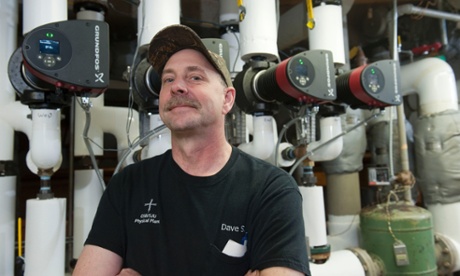
“We were approached by our local wholesaler, Ferguson Enterprises, with the suggestion that we should consider replacing the pumps in the Peter Engel Science Centre with Grundfos MAGNA3 smart circulator pumps,” says David Schlumpberger, campus HVAC service technician. “The existing pumps were nearing the end of their lives so we decided to do something more efficient.”
Energy efficiency is important on every campus, but environmental stewardship is a core Benedictine tradition at St John’s, which boasts an office of sustainability and sits on 2,700 acres that range from wetlands to lakes, and prairies to forests.
“The MAGNA3 smart technology is a really good fit for a school that teaches students a respect for the land,” Schlumpberger says.
A logical solution
Although the MAGNA3 costs more than most conventional circulators, its powerful performance produced fast payback on that investment at St John’s. The MAGNA3 has the ability to cut power consumption up to 85% — the highest energy efficiency rating of circulators in its class.
“These pumps adapt to existing situations and can be adjusted accordingly,” says Brian Soderholm, a Grundfos sales representative who worked on the St John’s project. “Grundfos is the only manufacturer that offers a pump that has an integrated logic algorithm to learn the varying energy usage patterns of any application. This was a huge improvement over the science centre’s antiquated pumps.”
Increased efficiency with MAGNA3
Replacing the four older pumps with the MAGNA3 increased efficiency and improved building comfort. With its four building wings, the Peter Engel Science Centre runs heat from fall through to spring. It was built in the 1960s of concrete, typical of that era and of the construction style found throughout the rural campus.
“We had a feeling the old pumps were oversized, but there was no way to tell — until we did the replacement,” Schlumpberger says.
Initially, Schlumpberger and his team thought the outdated pumps were on a variable flow system, meaning that the pump speed is adjusted based on the needed flow in the pump. “But after the pumps were installed and we started it up, we realised that the system was not variable. It was a fixed flow,” he says.
Since the building was not zoned and no variable frequency drives were installed, the entire system was operating at full power throughout the heating season.
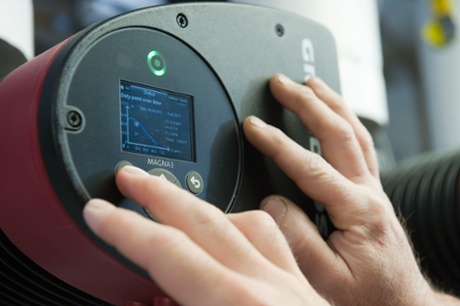
The intelligent technology of the four new MAGNA3 minimises energy costs. The pump has a built in energy meter and a flow limiting function. Even at reduced loads, these circulators save energy when compared to conventional circulators.
Encouraging results
It’s an efficient system designed to cut energy use, says Soderholm. When comparing the MAGNA3 units with another brand in its class, the payback for the science centre will be under three years for three of the new circulators and just slightly longer for the fourth. That translates into an estimated annual savings of $693 (£461).
“It can tell itself to slow down or speed up based on current demand,” says Schlumpberger. “We just had the coldest winter in 30 years and we were running pumps at 25% of the heat that the old pumps had, while keeping the building warm. In other words, we’re actually able to run the system at the original designed flow rate, using less power, less energy and at less cost.”
Find out more about the pump system at Saint John’s University.
Content on this page is paid for and provided by Grundfos, sponsor of the water hub