Last month, insurgents killed more than 60 people in north-east Kenya. This is only the latest in a wave of violent incidents heightening insecurity along the remote Somali-Kenyan border.
The north-east is one of the poorest regions in Kenya. Weak infrastructure and limited public services are exacerbated by banditry and insurgency. The national primary school enrolment rate is over 90%, but in the north-east it is below 40%.
It is clear that despite insecurity, development and investment must continue. But how can donors be confident their money is well spent if locations are inaccessible to most implementing partners? If donors can’t see results, they are unlikely to reinvest.
Remote and insecure locations are often the areas with the greatest (and most critical) needs. As such, there is an urgent demand for improved monitoring tools that give insight into the effectiveness of aid in challenging environments. A possible answer is the use of technology. Smartphone captured photographs with embedded software that can record dates and locations offer a simple but effective solution.
Such images contain a wealth of information hard to falsify, such as coordinates, dates and a history of data manipulation. With over 1bn smart phone users, it has never been easier to capture and transmit data in real time. Governments, communities and other stakeholders are able to document projects in their area, encouraging participation and ownership.
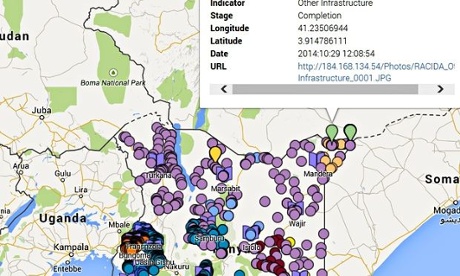
Adam Smith International is currently piloting a remote monitoring system for a Department for International Development (DFID) funded education programme in Kenya. Photographs taken using Global Positioning System (GPS) enabled smart phones are emailed and automatically uploaded onto a central management and mapping system which enables Adam Smith International and DFID to access and easily analyse data.
The system is monitoring the results of 15 implementing partners and their projects. Many of the projects include classroom construction. Data-enabled photos taken by the community and partners clearly show donors the various stages of construction, which are collated, mapped and compared against targets.
Whilst remote data collection should not be an alternative to direct engagement, it is a robust management tool when direct donor engagement is not possible.
Content managed and produced by Adam Smith International