I miss many things about the north: regulated late-afternoon tea times; strangers talking to each other in the street without a prickle of panic-sweat appearing on their brow; the correct pronunciation of vowels. More specifically to my home town, I miss the difficult art of sneaking a Greggs steak bake into Costa, instead of relying on the coffee shop’s toasted paninis – a skill I brush up on every time I go back. But, even though I have lived outside the north for almost as long as I lived in it, homesickness continues to appear at unexpected intervals, and I miss things I didn’t know I missed because I forgot they were normal in the first place.
A couple of weeks ago, there was an event at the BFI on the South Bank, in London, called Vanishing Queer Spaces. It was timely, because on the same day, one of my favourite gay pubs in the capital joined many of my other favourite gay pubs in the capital and announced that it was being put up for sale; rising rents have made it unsustainable as a business. The screening consisted of a collection of clips shot inside gay pubs and clubs from the 1960s up until now, beginning in a basement lesbian bar where the women were asked earnestly by a presenter in tight RP tones if they would rather be “normal”, and ending in an East End club in the early 90s, where men danced to acid house in acid-wash jeans. There were coos of recognition from the audience for almost all of the footage and, after the event, everyone spilled out into the bar to talk of nostalgia. And, just as they did in the long-gone venues captured in the films, different generations mixed, mingled and hung out. It was sadly unfamiliar.
Those ghostly newsreels and the drinks afterwards looked so unlike the city nightlife I know now where pubs and clubs crawl with homogenised customers separated by a decade, at most, who shop in the same sort of places and wear the same sort of clothes, who watch the same shows on Netflix and listen to the same sort of music, whose lives are at broadly similar stages – without kids, maybe, but with the odd wedding on the horizon: enough to make adult life seem like it is happening when, really, it’s half-suspended in perpetual youth. In one of the BFI’s films, a drag queen in his early 20s strutted across the bar of a pub while a cartoonish grandma gleefully raised a pint glass to his lip-syncing prowess. Age was irrelevant.
To my surprise, however, those underground gay venues now banished to history were recognisable in some ways because they looked like home. Leather queens and go-go dancers aside – although perhaps when I visit my parents I am not going to the right places – they reminded me of nights out in the small, largely working-class town that made me, where going for a drink is what everyone does, together.
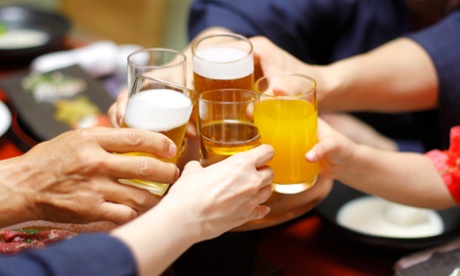
Last time I took a friend (a southerner) home for the weekend, we ended up in one of the town’s handful of pubs, where we ran into my dad and his girlfriend and my uncle and his friends. My mum turned up with my sister. We sat around the table – there’s no dancing licence in this particular joint, despite the endless cycle of David Guetta bangers being pumped into the room, daring you to break the rules – and I could not remember the last time I had been in a group that wasn’t made up of people all loosely the same age. We sat there, late teens to early 60s, and got drunk together, like normal. In fact, in my life away from home, the only place where different generations seem to mix with any regularity is a wedding, where, if you’re not dancing to a late-90s pop hit with a stranger’s relative by 8pm, the whole thing is officially a let down.
Perhaps this generational jumble is a necessity in a small town, where there are simply not enough people to segregate themselves by age. Or perhaps metropolitan types have become increasingly myopic and self-involved. Have we forgotten – us big-city interlopers, the people not born here who will never quite belong – how to interact with people who do not share our current life experiences? I worry that we have. The people who have moved away, as I did, from our home towns and our families, who turn our friends into the people with whom we have Sunday dinner (which will never be Sunday lunch), who we ask to feed the cat and water the plants, who we call on for a consolatory drink when summer has been washed away by the Spanish plume (which we now know is not an exotic dancer from a long-lost Bond film, but the destroyer of August’s dreams).
Our substitute families are being made from our peers, in our image and, as a result, they’re all a bit samey. What a shame that is. It makes me homesick for variety. And a Greggs steak bake.


.png?w=600)