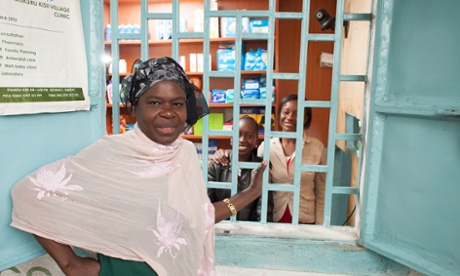
Nairobi, 6 April, 2015 - Some 15,000 residents of Nairobi’s slums will gain access to quality healthcare following a commitment by Kenyan social enterprise Access Afya to the Business Call to Action (BCtA). The company has innovated a high-tech healthcare system that provides consistent, quality service and medication to low-income Kenyans in both micro-clinic and school settings.
Access Afya (Access Health in Swahili) was founded on the principles of customer engagement, planning for growth, working through trusted community partners and utilising low-cost technologies to provide reliable, affordable healthcare in low-income urban areas.
“Access Afya’s commitment to the Business Call to Action demonstrates a real innovation in extending affordable quality care to communities with limited access,” stated Suba Sivakumaran, BCtA programme manager. “It addresses a real need in low-income communities: a safe, accessible entry point into the healthcare system, which is crucial for identifying and treating ailments that could otherwise be fatal.”
BCtA is a global initiative that encourages companies to fight poverty through innovative business models, supported by the United Nations Development Programme (UNDP) and other international organisations.
Within Nairobi’s slums, health is a serious concern: the majority of residents suffer from preventable diseases and diarrhea as a result of poor sanitation, contaminated water, overcrowding and malnutrition. The limited healthcare options available to slum residents include informal pharmacies with sub-standard medications, and public facilities that lack proper supplies or qualified staff.
Previously, health clinics in these areas were inconvenient and unreliable. To tap into this market’s demand for quality care, Access Afya developed the micro-clinic concept, which integrates quality clinical care into communities’ daily lives. This novel delivery model relies on small community spaces, rigorous quality and customer care, digital information systems, and – critically – community engagement and education to create demand for products and services.
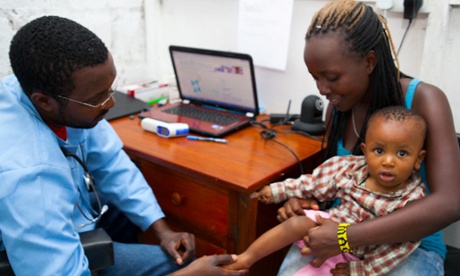
Another of Access Afya’s innovations is marketing healthcare directly to schools: The Healthy Schools program provides check-ups for children and teachers, health report cards, deworming, hand-washing education and nutrition counseling within schools. This program not only improves child health, it increases school attendance – a powerful tool for lifting children out of poverty.
“At Access Afya, we believe the future of health is decentralised care in convenient community locations”, according to founder and CEO Melissa Menke. “Our model addresses problems earlier, teaches prevention, and meets patients where they already are. This is an essential missing link in the current care system: combining last-mile distribution with quality control and affordable treatment.”
The company runs two community micro-clinics and a primary care program in two schools in the Mukuru slum of Nairobi, with plans to scale up quickly. As part of a growth strategy focused on integrated health and wellness, the company’s Doorstep Health program is designed to maximise health outcomes in low-income communities while creating innovative service-based revenue streams for the company.
It has adapted the traditional clinic concept to areas where space is a challenge, education is limited and the trust of communities is crucial – partnerships with local leaders ensure positive working relationships.
The company’s new phase of growth includes plans to expand to nine clinics and ten schools by the end of 2016, and develop an in-house comprehensive information management system for patient records to improve efficiency and reduce operating costs.
Access Afya also plans to pilot a membership plan for its primary healthcare centres, targeting 200 clients in the first year.
For More Information:
BCtA: Tatiana Bessarabova, tatiana.bessarabova@undp.org
Access Afya: Jaclyn Boland, jaclyn@accessafya.com
BCtA is a global initiative that aims to support private sector efforts to fight poverty through companies’ core business. It is supported by five key donor governments and is hosted by the United Nations Development Programme. For more information, please visit www.businesscalltoaction.org or join the conversation on Twitter at @BCtAInitiative.
Copy on this page is provided by Business Call to Action, supporter of the role of business in development hub.