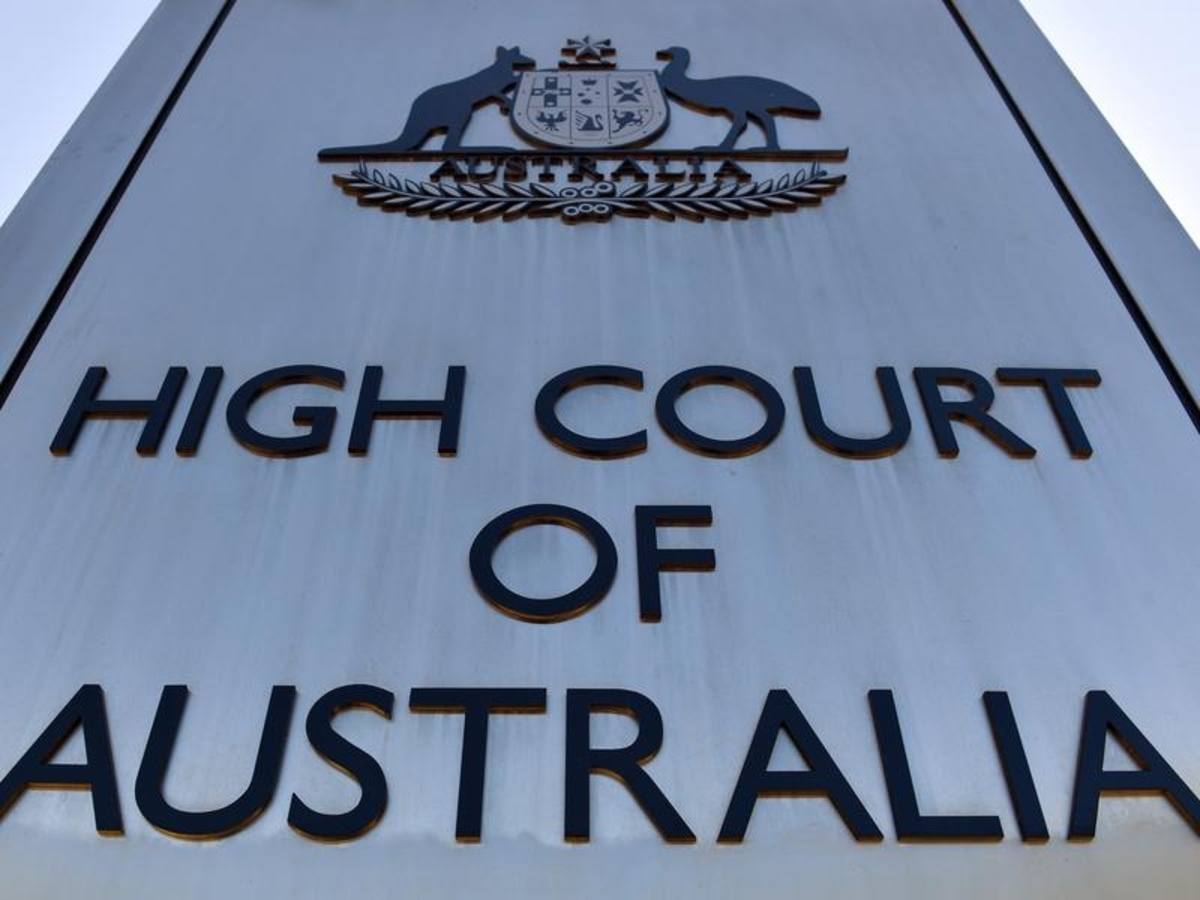
A former James Cook University academic has lost his High Court appeal following his sacking after publicly questioning research raising the alarm about the Great Barrier Reef.
Peter Ridd's employment was terminated by JCU in May 2018 for "serious misconduct" under the university's enterprise agreement.
In the years prior, Dr Ridd had questioned the scientific research by high profile institutions including the Great Barrier Reef Marine Park Authority and Australian Research Council Centre of Excellence for Coral Reef Studies, a timeline submitted to the court says.
In 2017, Dr Ridd told Sky News that although scientists "genuinely believe that there are problems with the reef ... I think they're emotionally attached to their subject" and "you can no longer trust their stuff".
JCU believed the Sky interview may have constituted a case of misconduct and directed Dr Ridd to maintain confidentiality about disciplinary action, including two censures, before his ultimate dismissal.
The High Court battle was an "all-or-nothing" case in which JCU claimed all of the findings against Dr Ridd were justified, while he considered none of them valid.
Argument centred on whether intellectual freedom should be qualified by a requirement to "afford respect and courtesy to others ... in one's field of competence" under the university's enterprise agreement.
In unanimously dismissing the appeal, the High Court held that the intellectual freedom protected by the enterprise agreement was not "a general freedom of speech", and subject to code of conduct constraints.
"These constraints ... include respect for the legal rights of others, and required that an expression of disagreement with University decision-making be in accordance with applicable processes, including confidentiality obligations," Wednesday's judgment says.
"The exercise of intellectual freedom was not constrained by other Code of Conduct undertakings, such as respect or courtesy."
The judgment found the first censure and part of the second censure against Dr Ridd were "unjustified" as they related to views he held honestly that were within his academic expertise.
"The Final Censure was justified only insofar as it relied upon expressions of opinion unrelated to Dr Ridd's academic expertise, and findings that he repeatedly failed to comply with his confidentiality obligations," the High Court says.
"Since Dr Ridd ran his case on an all-or-nothing basis, the termination decision was justified in its reliance upon conduct of Dr Ridd which was the subject of 18 findings of serious misconduct which were not protected by cl 14 (the intellectual freedom clause)."
Dr Ridd was employed by the university for 27 years and had been ranked by ResearchGate within the top five per cent of researchers globally.
In previous proceedings in the Federal court, he won compensation and penalties before an appeal was allowed that concluded "none of the actions of the University were contrary to the Enterprise Agreement".