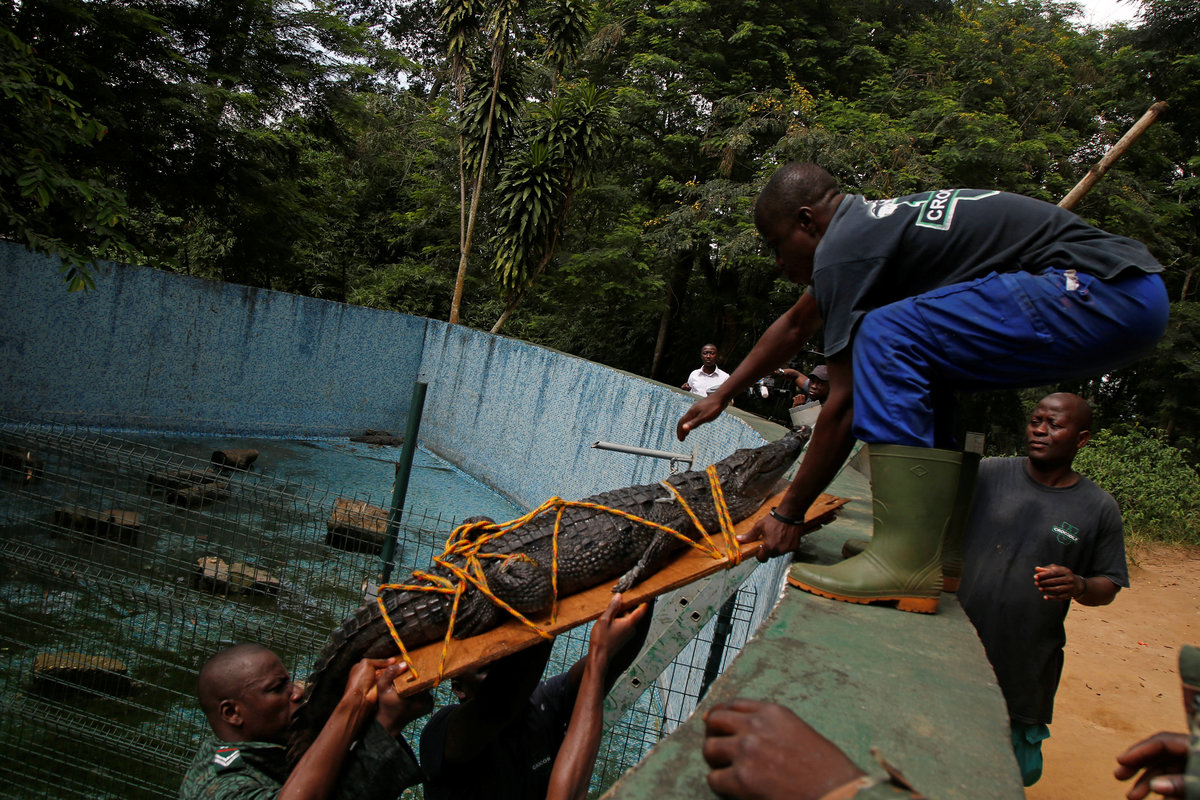
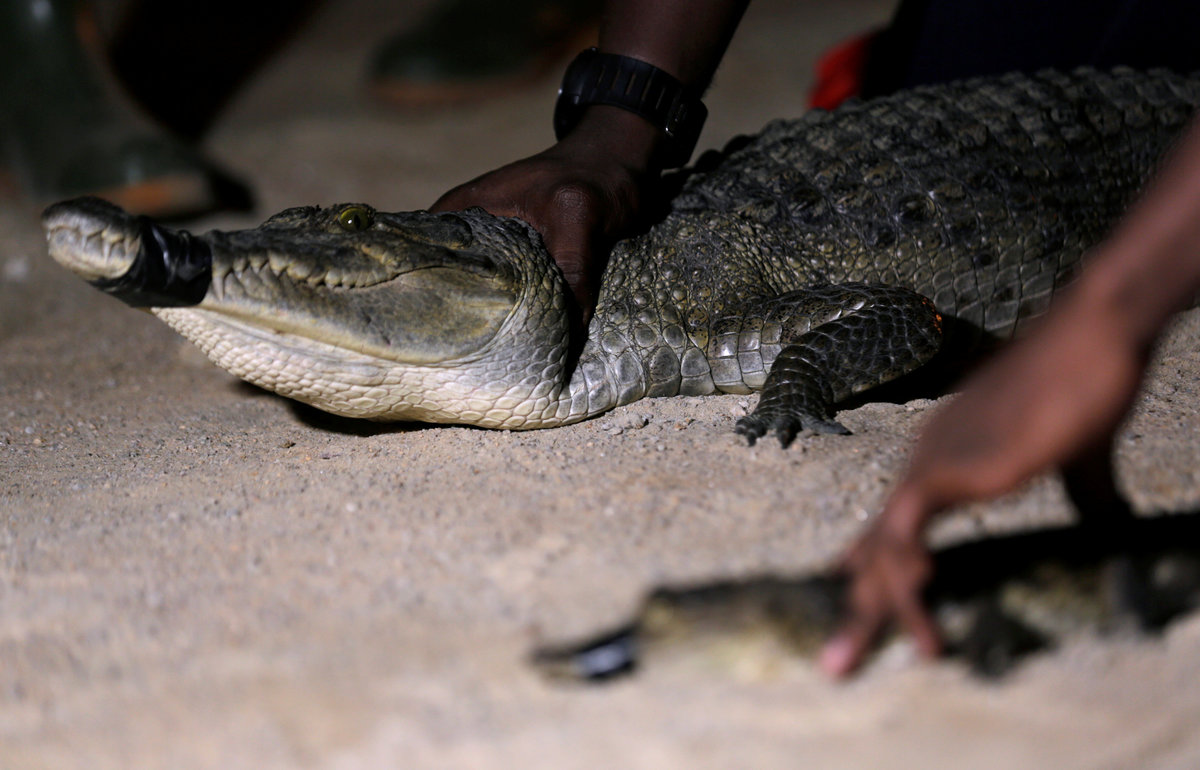
ABIDJAN (Reuters) - "It's not my first time," fireman Patrick Obite said with an air of confidence as, kneeling, he straddled a meter-long crocodile in the carpark of a building site in Ivory Coast's main city Abidjan.
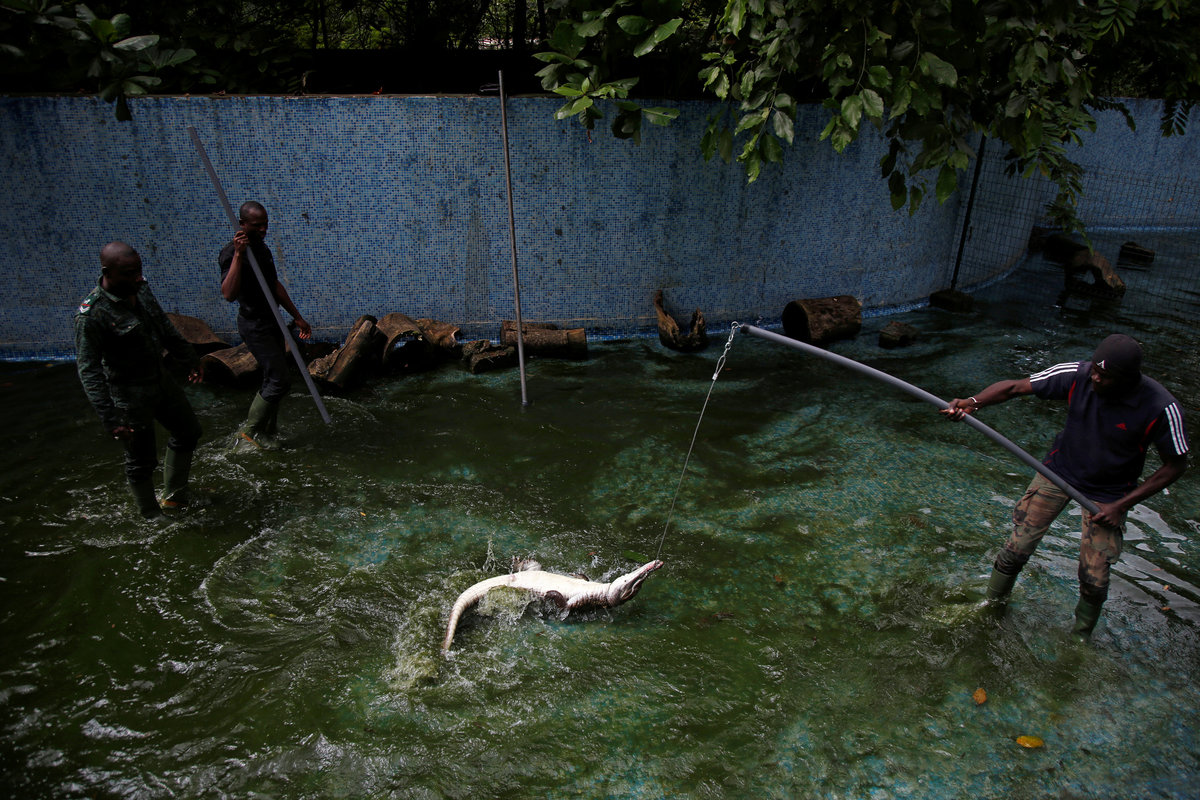
"There was a first session yesterday at the zoo when we got used to them," he added, smiling.
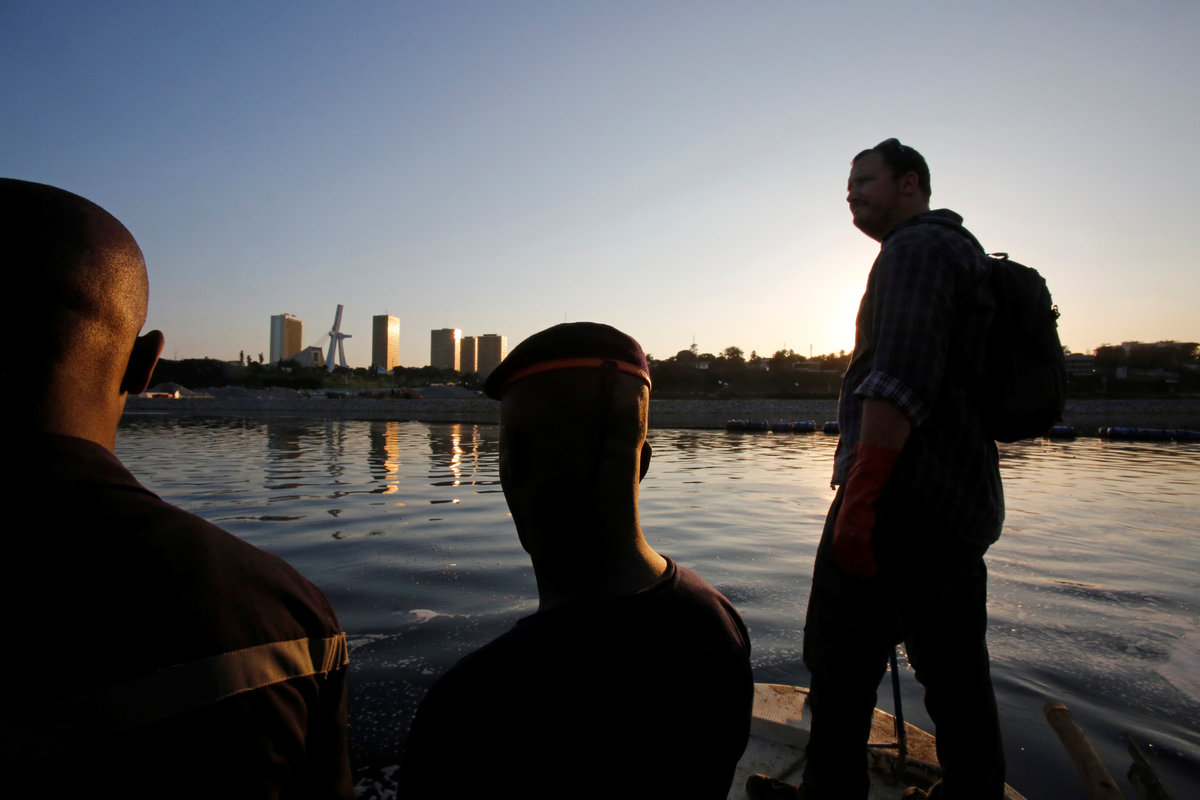
Africa's fastest growing economy, Ivory Coast, is now in the midst of a construction boom that is changing the face of the lagoon-side city, bringing new hotels, offices and homes ever closer to the water's edge.
But Abidjan's 5 million human residents are not the only ones experiencing an urban renaissance and rapid growth risks setting them on a collision course with the area's oldest inhabitants, said American conservation biologist Matt Shirley.
"As the city has become bigger and bigger and the people here become less dependent upon fishing and hunting, crocodiles have found the lagoon system to be a tranquil retreat and they're repopulating the area," he said.
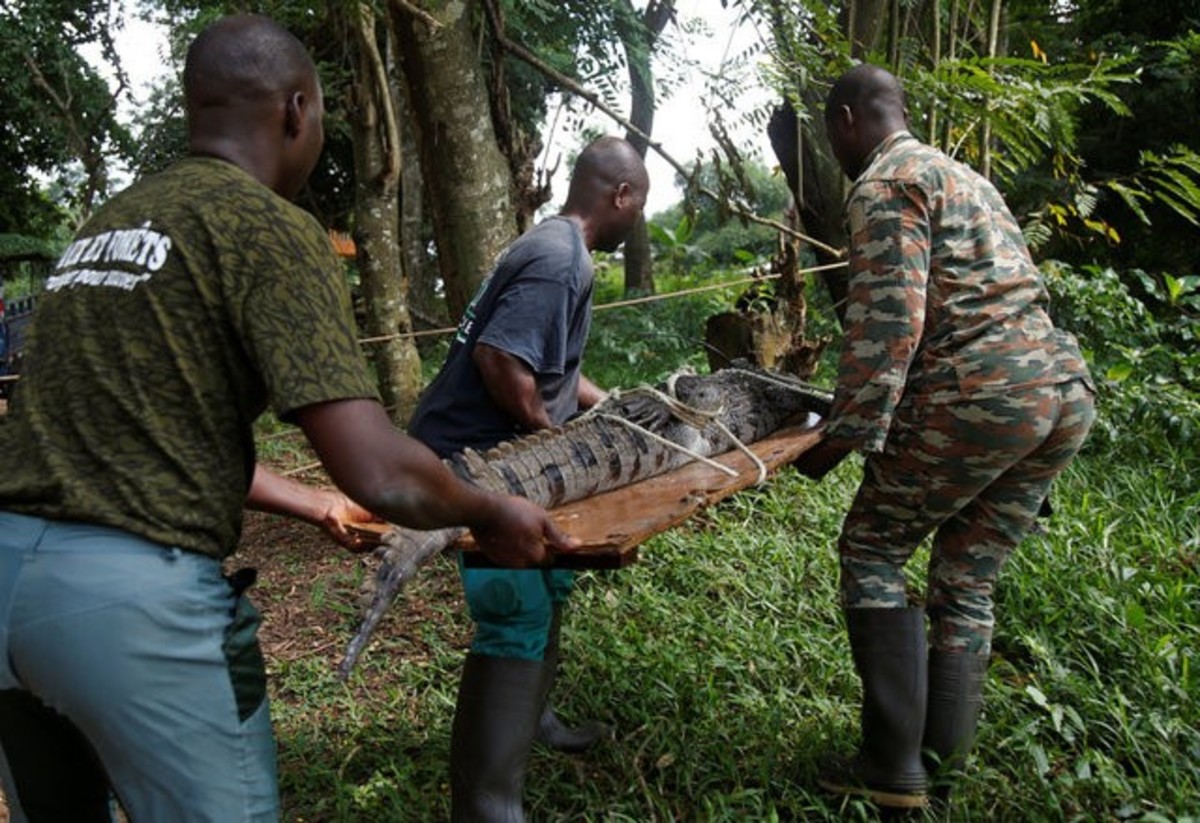
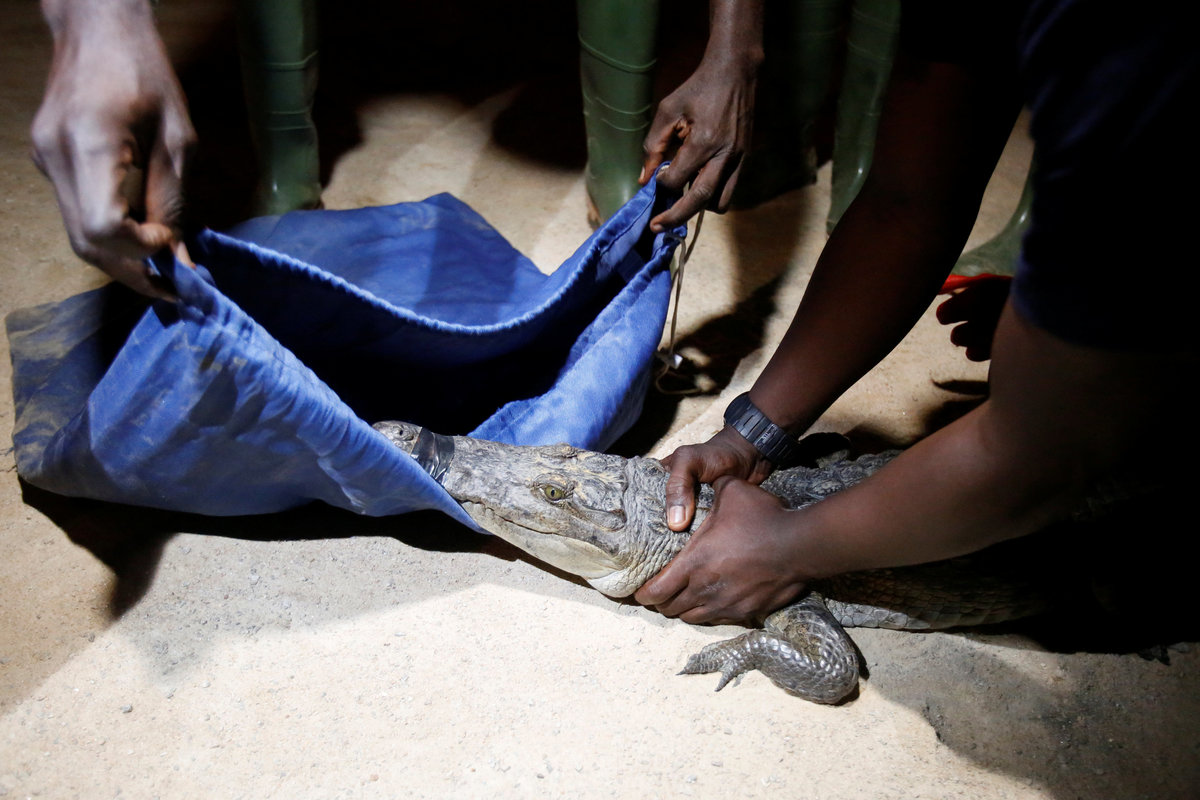
In an effort to head off the risk of confrontation, Shirley is leading a government-backed program teaching rescue workers and forestry agents how to humanely capture and relocate the reptiles, which are protected under Ivorian law.
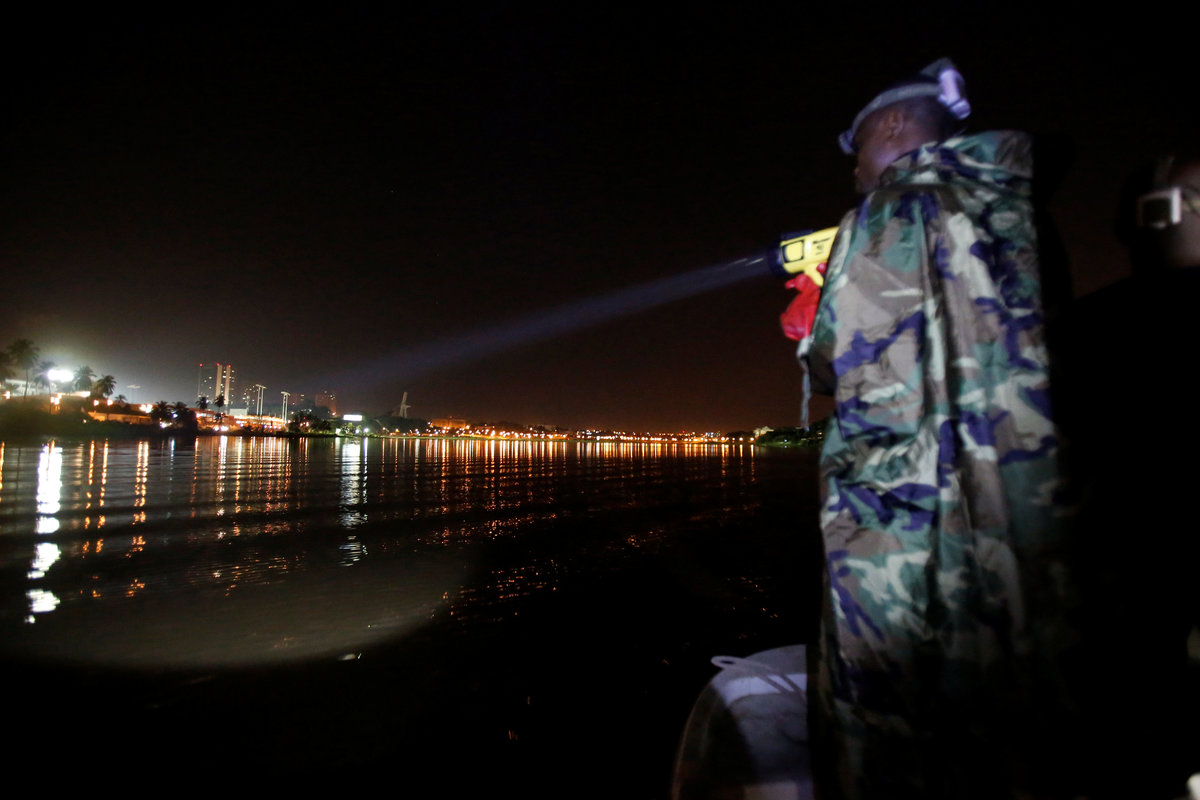
On a recent moonlit night, he and a half dozen of his team slowly cruised the shoreline in a corner of the lagoon that a half billion dollar development project plans to transform into high-end real estate complete with a marina for luxury yachts.
"You see him. He's over there. You can see his eyes," one of the men said, aiming a high-powered torch across the bay at two red-orange orbs shining on the surface of the black water.
There hasn't been a crocodile attack on a human recorded in Abidjan in decades, and Shirley views the risk to the city's residents as largely psychological.
But rescue worker Fabrice Boko, among those who have dealt with crocodiles in the past, witnessed first-hand the effect they can have when he was called in to remove one from a storm drain.
"They were going crazy. They were panicking," he said of the residents living in the area. "People aren't used to crocodiles."
There's a fear that kind of reaction could provoke a violent backlash against the crocodiles.
At the end of the 10-day training program, the team, which will go on to teach their colleagues across the country, released 17 crocodiles in a national park an hour outside the city.
"When there's a conflict between man and the crocodiles, they're going to call us," Boko said. "I'm not going to say I'll never be afraid, but I'll be able to get over it. No matter the crocodile, I'll go."
(Reporting by Joe Bavier; editing by Ken Ferris)