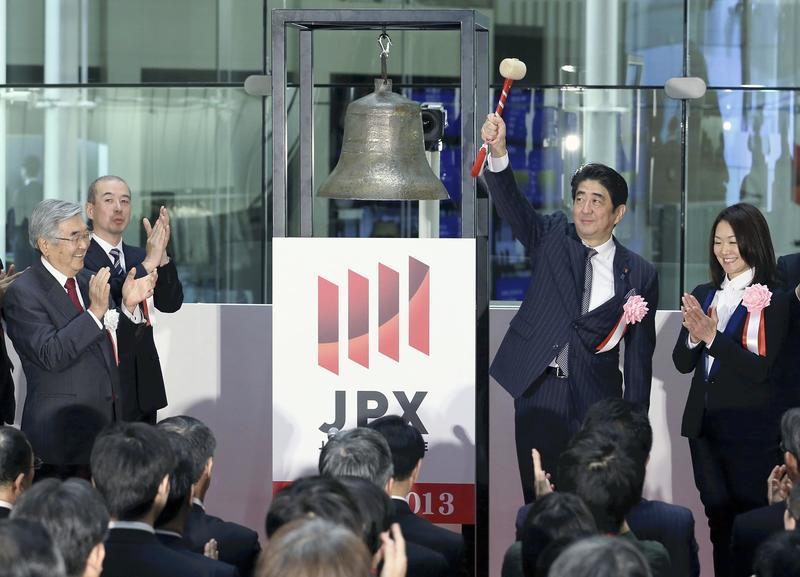
Monday marked the 2,799th day of the current administration of Prime Minister Shinzo Abe, making him Japan's longest continuously serving prime minister. Started in late 2012 with the inauguration of his second administration, Abe has now passed the record previously held by Eisaku Sato.
Abe's current term as Liberal Democratic Party president has a little more than one year remaining, as it is set to expire at the end of September next year. In this series, The Yomiuri Shimbun will look back on the policies his administration has taken up, and explore issues that lie ahead.
"The economy is bad all over the world. The problem is how to prevent the spread of infections," Such was the way Abe described the situation to those around him earlier this month, as if he had thrown in the towel.
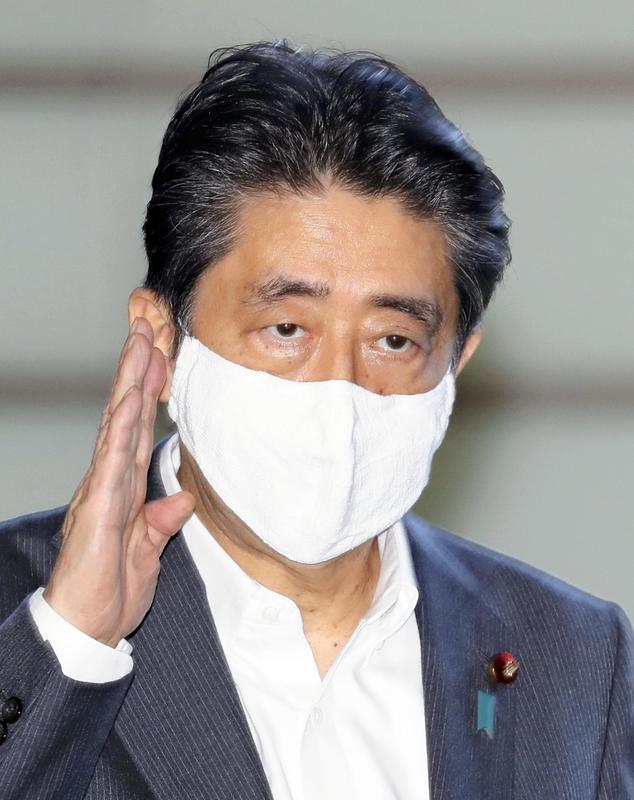
The novel coronavirus, which can be labeled as a "once-in-a-century" crisis, has taken a great toll on Japan. The country's gross domestic product announced last Monday for this year's April-June quarter decreased by 7.8% in real terms disregarding price fluctuations from the previous quarter, and by 27.8% on an annualized basis. This was the biggest drop since the end of World War II. In nominal terms, the GDP is 506 trillion yen, a return to the level of seven years ago.
"It is not a surprise. A downturn was expected when a state of emergency was declared and the economy was halted," a source close to the Prime Minister's Office said.
A few days before the release of the GDP report, a drop of 20-29% was said to have been predicted at a meeting with the prime minister.
Even so, the slowdown in the economy could wipe out gains made by Abenomics. It is certain that the government will drastically reduce its estimated fiscal 2020 tax revenues, which it had expected to be a record 63 trillion yen. Some economists expect the figure to fall to between 50 trillion yen and 55 trillion yen. That would put tax revenues on a level of six years ago. More than 45,000 workers were either fired or had their hiring terminated, including those that are expected. The prime minister's mantra that "Abenomics increased employment" has been shaken to its core.
Komeito leader Natsuo Yamaguchi sympathized with Abe and has told those around him: "Abenomics is the prime minister's biggest achievement. He revived the Japanese economy. But then this happened. Frankly speaking, it's also a pity."
As he shoulders the heavy burden of rebuilding the economy from ravages of the coronavirus, Abe is trying to finish what he started with Abenomics.
--Almost record economic growth
In January 2019, the government announced such a projection: The economic recovery that began at the same time as when Shinzo Abe made his comeback as prime minister in December 2012 will surpass the 73-month Izanami boom, setting a record for the longest postwar economic expansion.
"Using the three arrows of the Abenomics economic policy package, we brought Japan to a situation that is no longer deflationary," Abe so praised himself during Diet deliberations at the time. "The economic recovery that has continued since my administration was formed has lasted 74 months. It is highly likely to mark the record-long postwar economic expansion."
But in July this year, the Cabinet Office's Working Group of Indexes of Business Conditions, headed by Rissho University President Hiroshi Yoshikawa, concluded that the recovery phase actually ended in October 2018.
The record-long postwar economic expansion brought about by Abenomics was an illusion.
The Abenomics economic policy package, which is struggling from the direct impact of the novel coronavirus, had in reality reached its peak effect well before the latest pandemic and had begun declining while Abe had been praising himself.
During a press conference, Yoshikawa summarized the characteristics of the latest streak of economic expansion brought about by Abenomics that lasted 71 months: "Consumption did not increase as much as the earnings of large companies. Yet another thing is that wages did not rise, somehow, despite the labor shortage."
--Uneven effects
Thanks to Abenomics' three arrows of monetary easing, government spending and growth strategy, "there is no doubt that the economy had turned upward," said Yoshiki Shinke, chief economist at Dai-Ichi Life Research Institute Inc.
Due to the "different-dimension" monetary easing, the yen's value, which was at the 80 yen level against the dollar, was corrected, which helped business performance to increase and employment to rise markedly.
The Nikkei Stock Average, which closed at 10,230 on Dec. 26, 2012, the day when the second Abe administration was formed, has risen to a level twice as much thereafter. The nominal gross domestic product at an annualized rate increased to as much as 557 trillion yen during the July-September quarter of 2019.
"We have, without doubt, achieved results. Those that have not achieved results are either unfortunate by far or their managers are incompetent," Finance Minister Taro Aso quipped at one time.
Yet as many economists, including Yoshikawa, have pointed out, the ripple effects of economic growth have been limited when it comes mainly to households earning middle-class wages or less.
While the government exerted influence on the nation's business circles for raising wages through the "government-led wage offensive," the minimum hourly wage was raised from 749 yen (weighted average wage in fiscal 2012) to 902 yen (weighted average wage in fiscal 2020). But wage increases did not catch up with price increases, with more people seeing their real wages decline from the previous year.
On the other hand, according to Nomura Research Institute, Ltd., rich people with financial assets over 100 million yen and those super-rich people with more than 500 million yen in such assets totaled 1.27 million households in 2017, up about 460,000 households from 2011.
A view has taken hold that the growth strategy, which was considered as the most important among the three arrows of Abenomics, has not sufficiently achieved results. Abe was once enthusiastic about regulatory reforms by saying, "Any sort of vested interests cannot come off unscathed from my jackhammer." But the reforms in the areas of nursing care and medical care services have only been made halfway.
According to the Cabinet Office, the potential growth rate even during the latest phase of the economic recovery remained less than 1% a year.
In line with the development of information technology, new global enterprises have arisen one after another in the United States and China, while in Japan there have been no such businesses formed that can compete well in the international arena.
In the ranking of top global companies by market capitalization, in 1989 Japanese companies accounted for more than half of the top 10. Now, only Toyota Motor Corp. would be listed in the top 50 global firms.
"When there was some surplus strength, structural reforms should have been implemented to enhance the productivity of businesses and fiscal reconstruction should have been advanced," said Takahide Kiuchi, an executive economist at Nomura Research Institute. "Having been directly hit by the impact of the novel coronavirus, however, Japan has come to a situation in which no effective policy can be taken."
There is no enthusiasm for giving the finishing touches to Abenomics.
--An overall finish
To realize an economic revitalization from the coronavirus calamity, the government is considering compiling the third supplementary budget for fiscal 2020. But the aggregate amount of expenditures for fiscal 2020, with the passage of two large-scale supplementary budgets, has now swollen to 160.3 trillion yen, while the amount of government bonds issued this fiscal year has totaled 90.2 trillion yen. The debt issuance dependency ratio has reached a record high of 56.3%.
While the government championed that "without economic growth, there will be no fiscal reconstruction," and achieved increases in tax revenues thanks to Abenomics, the fiscal rebuilding has become ever more difficult to realize.
The Fiscal System Council, an advisory panel to the Finance Minister chaired by Sadayuki Sakakibara, had pointed out, "The importance of making progress in putting finances on healthy footing in normal times has been recognized anew." But it is too late now.
The initial budget draft for fiscal 2021, whose compilation work is advancing toward the yearend, will be the last initial budget for Abe, who will tackle it while he is in office as president of the ruling Liberal Democratic Party until the end of September 2021. The Finance Ministry would normally be preoccupied with relevant tasks this time of the year, when the deadline for budgetary requests to be made by ministries is approaching. As the deadline this year has been put off until the end of next month, due to the impact of the novel coronavirus, there have been few movements even among senior officials of the ministry.
"Supplementary budgets were drawn up based on resources coming from deficit-financing government bonds, and they were compiled under such a circumstance that any requests would be allowed. It will be a chorus of calls for 'more expenditures,' even from autumn onward, by having budgets linked with the measures to deal with the novel coronavirus," a senior official of the Finance Ministry said coolly.
Read more from The Japan News at https://japannews.yomiuri.co.jp/