US drugmaker AbbVie is beefing up its cancer portfolio with the $21bn takeover of California-based Pharmacyclics.
The deal comes six months after a US crackdown on tax inversion deals scuppered AbbVie’s $54bn acquisition of London-listed Shire. The move will reduce the Chicago drugmaker’s reliance on its anti-inflammatory drug Humira, which treats rheumatoid arthritis and Crohn’s disease. It is the world’s best-selling drug at present and accounts for the bulk of AbbVie sales, but will lose patent protection in late 2016.
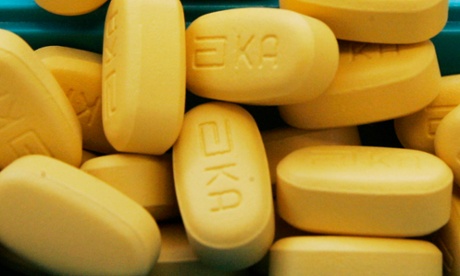
Pharmacyclics’ flagship product is Imbruvica, which is approved in more than 40 countries and has US approvals for three different types of blood cancer, including the most common form of leukemia.
The company expects sales, which amounted to $548m last year, to rise to $1bn in the US this year. But Pharmacyclics only gets half the sales because it signed a partnership with Johnson & Johnson before the treatment (a pill) was approved. The global blood cancer market is worth $24bn.
AbbVie chief executive Richard Gonzalez said: “Imbruvica is not only complementary to AbbVie’s oncology pipeline, it has demonstrated strong clinical efficacy across a broad range of hematologic malignancies.”
AbbVie, which was spun out of Abbott Laboratories in 2013, beat off competition to the Pharmacyclics purchase from Johnson & Johnson and Novartis. It will pay $261.25 per share in cash and shares. The boards of both companies have approved the deal, which is expected to complete this summer.
RBC Capital analyst Michael Yee said AbbVie is paying seven times the projected Imbruvica peak sales of $6bn – more than any recent takeover of a biotech firm. He explained: “There is scarcity value for drugs that ‘move the needle’ and those command a premium.”
The takeover is the latest in a series of Big Pharma deals. Last month Viagra maker Pfizer agreed a $15bn deal to acquire generic drugmaker Hospira, its biggest purchase since the spectacular failure of its £69bn bid for Britain’s AstraZeneca last year. AstraZeneca, for its part, snapped up Actavis’ branded respiratory business in the US and Canada. Meanwhile, Canada’s Valeant Pharmaceuticals is buying Salix Pharmaceuticals for $10bn – after its $54bn hostile offer for Botox maker Allergan was trumped by a $66bn bid from Actavis, one of the world’s largest generic drug companies.
Dublin-based Shire, which is best known for its hyperactivity drugs but now focuses on rare diseases, clinched a $5.2bn deal in January to buy NPS Pharma, whose main product concerns bowel disease.
Shire, which was founded in the UK, is partly funding the takeover with a $1.7bn break-up fee it received from AbbVie after their agreed deal fell apart in October. AbbVie wanted to use the acquisition to move its headquarters to the UK to reduce its tax bill, but made a sudden U-turn following changes in US law to stop tax inversion deals, which President Barack Obama labelled “corporate desertion”.





.jpg?w=600)