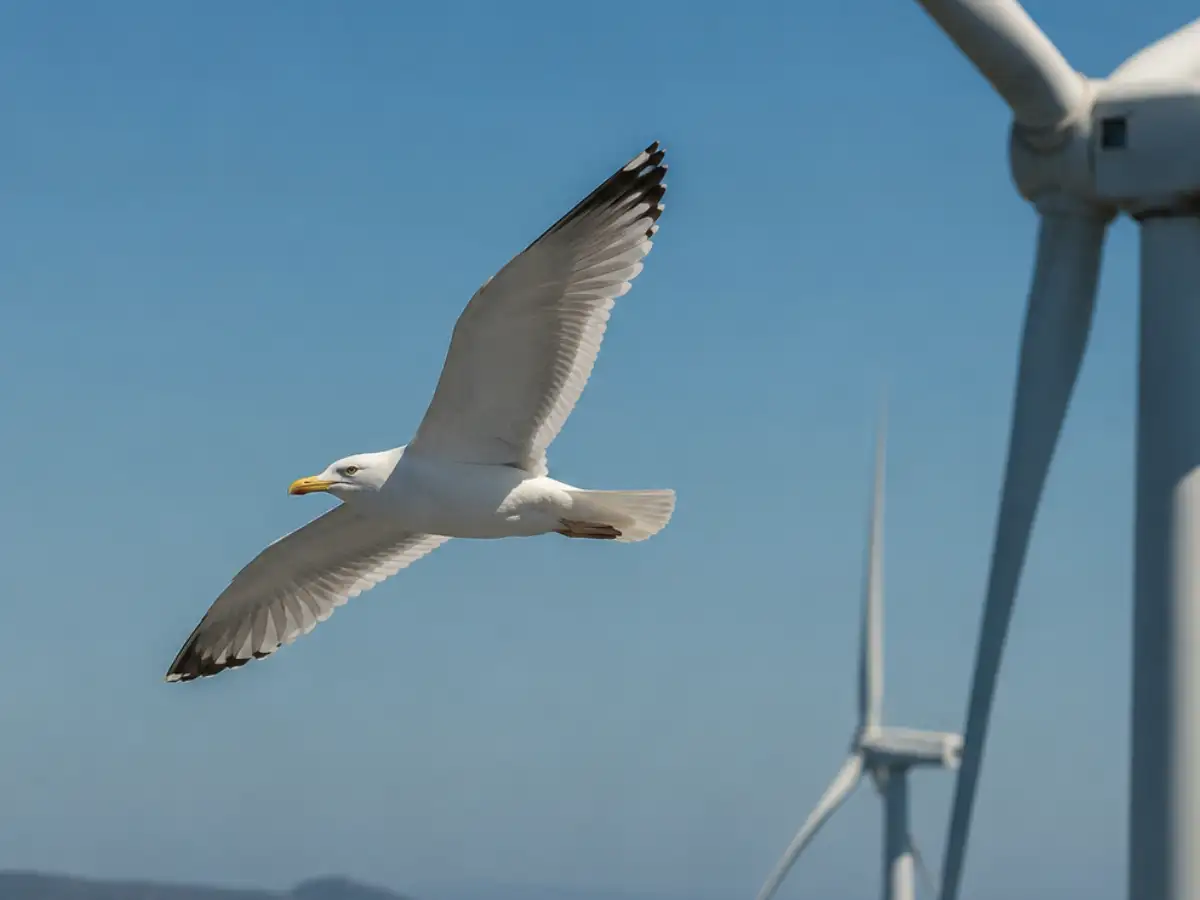
A wind farm in Poland was so loud that the nearby birds did something remarkable. They didn’t leave; they adapted. They sang louder, changed their calls, pushed their voices through the steady mechanical hum just to be heard. It’s a very interesting tale of survival, but it is also a warning, a big one as the US builds more wind farms than ever before.
Why birdsong is about survival, not scenery
Birds do not sing for pleasure. Every call is important information: find me, follow me, stay away, danger is near. They depend on precise acoustic signals for almost everything: finding a mate, defending territory, warning their young when a predator is near. Disrupt that signal, and you disrupt survival.
Large commercial wind turbines emit a steady, low-frequency hum that radiates outward, blanketing the surrounding landscape. It is not a dramatic sound. But for birds that rely on acoustic cues for nearly every aspect of their lives, it is devastating. A rotor could drown out a warning call before a juvenile bird hears its parent. If a male cannot project his song past the mechanical interference, he loses his chance at a mate.
Birds are changing how they sing, and it's costing them
This is where it gets really interesting and scary. Not all bird species near wind farms are leaving. They’re adapting. They’re getting louder, changing the pitch and structure of their calls to be heard over the noise.
In a study in Environmental Pollution, Gomez-Catasus and colleagues studied Dupont’s lark, a threatened passerine bird with a heavy dependence on vocal communication, at sites with different levels of wind turbine noise. The researchers found that males changed the structure of their calls to turbine noise, altering the dominant note and the length and minimum frequency of certain sounds. It was, in effect, the equivalent of shouting at a loud party, but for birds.