A short week of sharp contrasts at the Paris special criminal court where the trial is taking place of those suspected of involvement in the November 2015 terrorist killings in the French capital.
With the 11 November national holiday, and the court closed on 12 November to mark the sixth anniversary of the Paris attacks, there were only two days of hearings this week. The atmosphere could hardly have been more different on each of those days.
On Tuesday, two anonymous police investigators shared a closed circuit television link to give the court an overview of the history of Islamic jihad.
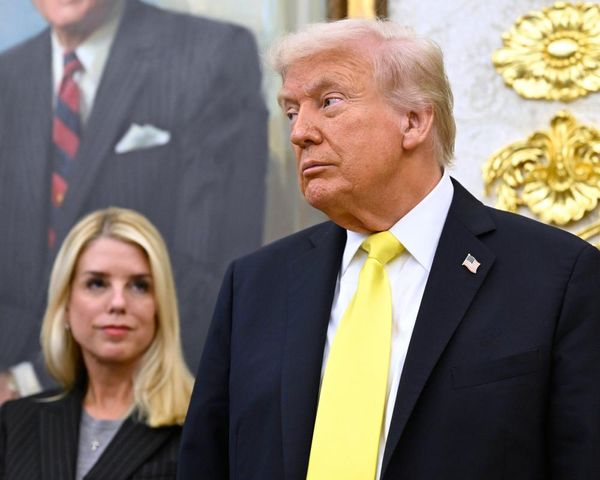
By Wednesday, it was the turn of Francois Hollande, president of the French republic at the time of the attacks, to appear in person and explain his own experience of the terrible night, and also to justify the decisions made by his administration, before and after the tragic events.
To protect their identities, the two policemen testified invisibly. All the court could see was a deliberately blurred video image relayed from a separate room in the central Paris courtroom where the trial is being held. The men were identified by numerical codes.
- Surprises and similarities as Paris attacks suspects reveal their backgrounds
- The police medics forced to make life-and-death choices on the Bataclan floor
Reflections on the origin of jihad
The history lesson began in the year 750, at which stage the personal struggle against evil . . . the original meaning of "jihad" . . . first assumed a public, political aspect and became synonymous with "holy war".
In recent years, the wars in Afghanistan, Algeria, Yugoslavia and Chechnya created a small international army of well-trained, highly motivated fighters, many of whom returned to their native countries determined to continue the struggle against the unbeliever on home soil. Hence the emergence of Islamic terrorism in Europe and the United States.
The war in Syria-Iraq and the attempt by Islamic State to establish a "Muslim nation" in the Middle East shifted the priorities. When France joined the international coalition to fight that extremist effort, the French Republic and its citizens became legitimate targets. Hence the tragic sequence of attacks on French soil over the past decade.
« C’est ce message qui est le plus fort vis-à-vis des terroristes : nous sommes les plus forts parce que nous sommes une démocratie, capable d’organiser un procès où il n’y a pas vengeance, où les accusés ont des avocats, où un ancien Président vient pour témoigner » @Qofficiel pic.twitter.com/4W1UY0x50R
— François Hollande (@fhollande) November 11, 2021
Hollande unequivocal
Former president Francois Hollande had no doubts about his personal role.
He insisted before the families of the victims and many of the injured survivors that he had done the right thing in sending French aircraft to fight in coalition ranks. "They attacked our way of life. We had to take a stand against barbarity and terror.
"If I had to do it all over again," the former leader said, "I would do exactly the same thing."
And he rejected the claim, made by the Bataclan attackers, by defendant Salah Abdeslam, and by Islamic State propaganda, that the Paris attacks were an attempt to "avenge" civilian deaths in Syria. Hollande told the court that the first French raids in Syria were on 27 September 2015, at which stage planning for the Paris attacks would already have been well advanced.
The trial continues.