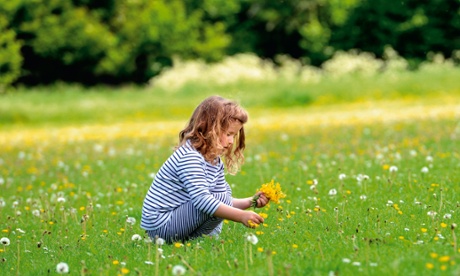
They’re some of the most magical natural spaces in the British Isles, but also some of the most threatened – we’ve lost more than 97% of our meadows since the 1940s. Those that do survive, however, are a haven for bees and other wildlife and an important part of our ecosystem, shaping the look and feel of the countryside.
Dr Trevor Dines, a botanical specialist with the charity Plantlife, which works to restore meadows, has stood in his fair share of these precious spots. “There’s nothing quite like being in a meadow on a sunny summer morning,” he says. “You get the scent of the wildflowers and grasses, like orchids and clovers, filling the air. You can see the bees and butterflies busying themselves between the blooms, and hear the sound of grasshoppers chirping and skylarks singing. It’s an exciting and unparalleled experience.”
Thriving meadows are home to over 160 different species of wild flower, with common spotted orchids, green-winged orchids and oxeye daisies among the loveliest. But when meadows struggle or are destroyed, it can badly affect the local ecosystem. “The rich diversity of meadows is the lifeblood of much of our farmland wildlife,” says Dines. “Much of the decline of our bees, for example, is down to the loss of wildflowers for them to feed on.”
Cattle grazing plays an essential part in the meadow system. Traditionally, wildflower meadows are left alone in spring, when the flowers grow and set seed. After the hay is cut in summer, grazing cows eat the remaining grass. If it wasn’t for the cows, these gorgeous fields would be overgrown with coarse vegetation and eventually turn into scrub.
Just as cows help to maintain meadows, so the meadows give back. More than a rich natural habitat for bees, small mammals, insects and birds, they have also been used to maintain the health of the herd. “In mid-Wales, farms often had a meadow ‘hospital field’ where any sick or recovering animals would be put out to graze. The farmers knew the flower-rich diet would help livestock recover more quickly.”
In Ireland, where funding is available for farmers who support traditional hay meadows, Kerrygold cows are free to roam and graze lush green pastures and meadows for much of the year. Their grass-based diet produces meadow milk, rich in beta-carotene, which gives Kerrygold butter its rich golden colour, and unsaturated fatty acids, which contribute to a creamy taste. If you want to make like a cow and spend some time in a magical meadow, grab our cut-out meadow wildlife guide and tread with care. Just don’t eat the grass.
A Kerrygold tale: pure and simple
The Kerrygold story is a simple one. “We work with small co-operative farms where small herds are free to graze on lush Irish meadows. It means Kerrygold cows are healthy and happy, free to roam outside. It’s these cows, and countless generations of dairy knowhow, that makes our butter taste so good. We always know where all of our milk comes from, which is why we promise to only produce the most delicious, golden dairy, pure and simple.”