Ten years ago, there were fears Wyclif Kukiriza could be orphaned because both his parents were HIV-positive and not receiving treatment. Five years later, things looked more promising, with both parents on antiretrovirals (ARVs) and Wyclif starting school with dreams of becoming a pilot.
But three years ago, his father suddenly walked out. His mother had to move to a smaller home and take Wyclif out of the government school he was attending. Now he spends his days collecting water, doing chores around the house and helping his mother to wash clothes to earn money for the family.
When Robert, his father, decided to leave, it had a profound effect on the family’s fortunes. Wyclif’s mother, Deborah, was forced to move her three children from their two-bedroom bungalow to a small, one-room brick home in Bwaise, a poor suburb of Uganda’s capital, Kampala, referred to locally as a slum.
As well as washing clothes, Deborah sells second-hand shoes to support herself and her three children – Wyclif, his brother Precious, three, and Jackie, 16, her daughter from a previous relationship.
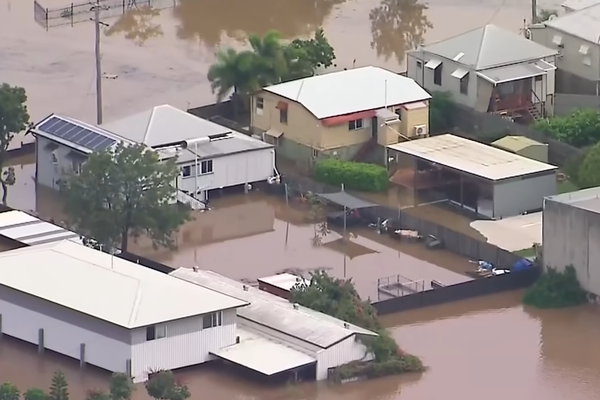
The move meant Wyclif had to leave school; because there is no government school where they live, he now stays at home with his mother during the day. The school closed a few years ago because heavy flooding in the area rendered it too dangerous for children. A campaign to reopen it has not borne fruit and the government appears not to have done anything to provide an alternative for children in Bwaise.
The nearest school is a private institution, where money is needed for fees, transport, books and uniform, making it unaffordable for Deborah.
Wyclif may also need specialist support at school as he finds it hard to concentrate. He didn’t talk until the age of four, and his speech at the age of 10 is slow, while his pronunciation can be unclear and he sometimes struggles to form sentences.
When the Guardian visited the family five years ago, Wyclif was described as bright and confident. Today, he seems unsure and withdrawn. He doesn’t easily understand simple questions, and his face doesn’t light up in any conversations, even when the subject turns to his favourite football team, Manchester United.
As we step over the gulley of water that divides their house from the neighbour’s property, and walk under the hanging washing, past the rows of yams that grow easily in this boggy area of the city, Wyclif barely acknowledges his young friends who join us, or the football that is passed in his direction. His smile seems forced. It’s as though a weight hangs on his small shoulders.
The one room the family share is tiny – barely bigger than the kiosks that sell clothes or offer haircuts along many of Kampala’s roads. The green paint on the walls is flaking. The room is divided in two by a lace curtain, behind which is the bed that Deborah and the three children share at night.
By the door is a small sofa; utensils and food are stored opposite. There’s a shelf on which a few toys sit. Lace cloths cover the sofa and the utensils, and a strip of material covers the outside of the wooden door. A brightly coloured bamboo mat lies in the middle of the floor. Deborah says she tries to keep her house looking nice.

To the sound of Sunday morning singing at a nearby church, Deborah tells me she pays 80,000 shillings (£17) a month in rent. There is no electricity, and when it rains water leaks through holes in the tin roof. A 20-litre jerrycan of water from the tap round the corner costs 200 shillings. The family uses four or five of these a day.
Food in Bwaise is a little cheaper than in the neighbouring suburbs, where a 2kg of rice costs 11,000 shillings and a loaf of bread 4,200. This is a suburb dominated by poor single mothers and widows.
Deborah has continued her ARV regime, collecting the free tablets every two months from the local health centre. Money is a constant source of stress. “I sometimes can’t get up in the morning because I’m consumed by thoughts of how I am going to get through the day, what am I going to do,” she says.
She has learned tailoring from Tusitukirewamu (United We Stand), a local organisation that offers support to families living with HIV. But she can’t afford the cost of a sewing machine to start her own business.
Since he left, Robert has not offered Deborah any financial help. She last spoke to him three months ago, to talk about getting Wyclif back to school. He said he’d get back to her, but hasn’t done so yet.
Deborah is desperate for Wyclif to get back into education. “I feel bad the child is not going to school,” she says, adding that he feels sad when he sees his friends head off to school every morning.
Uganda has made great strides towards meeting the second millennium development goal, achieving universal primary education. A 2013 report published by the UN Development Programme put the net enrolment rate at 83% in 2010, with Unicef reporting increases over subsequent years. But dropout rates are high. According to the UNDP, the number of children who complete the full seven years of primary schooling is just 54%. The figure is a conservative estimate.
Poverty is a major factor in children leaving school early. Although the cost of tuition is free, parents often have to find the money for pens, books, uniforms and transport.
Wyclif is one of those dropout statistics – a child who doesn’t have a government school nearby and whose mother can’t afford the fees of the local private school, especially one that could provide the specialist care her son might need.
Wyclif says he wants to be a doctor when he grows up. Five years ago, he wanted to be a pilot. But without education there is a worry that his development will stall, and getting any job in the future will be a distant dream.
Factfile: Uganda
Under-fives mortality rate (per 1,000 live births): 66
Population on under $2 a day: 63% (2012)
Gross domestic product: $26.3bn; gross government debt 30% of GDP (estimate)
Percentage of children enrolled in primary education, female/male: 95/93 (2008-12)
(Data two years old or less unless indicated)