From the very first word of my YA series, I knew exactly who would have to die. I knew the time would come when I would have to take one of the characters that I loved writing and end their life. I knew it because I’m not just writing an adventure story, I’m writing a story that makes you, the reader, like my characters as much as I do. For any novel to succeed that has to happen. Fancy descriptions of clouds or brilliantly intricate plots are meaningless without characters you care about. But sometimes you have to kill characters, and to have the most impact you have to do it at exactly the right time. Preferably when they are at their most heroic, or they have just found true happiness, or any number of positives that make their loss even harder to bear. And that’s mainly because I want you to cry just like I did when I was writing the death. I’m not ashamed to admit that, because I loved that character like a son or daughter. In truth if I wasn’t upset then I doubt a reader would be either.
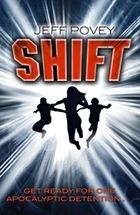
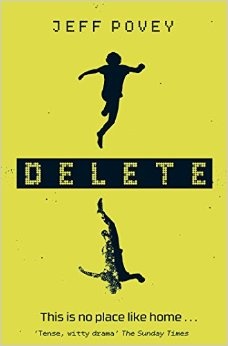
So, I’m sitting there writing alone in my shed knowing it’s coming. The Big Death. In the first book Shift, two characters died. The first death was an attempt to underline the seriousness of the situation the teenagers find themselves in. The second one was designed to propel the book to its nail-biting climax. But in Delete – and let’s face it the title gives it away – this is me delivering a tragedy. I’ve asked you to love and enjoy this particular character and here I am snatching him or her away from you. I’m imagining the gasps, the book slipping from a stunned reader’s fingers, then said reader having to go out for a walk and buy themselves a slushie to cheer themselves up. And I am quite openly praying for that reaction, I want you to be sad because I want you to feel the same searing loss I did.
But why would I want to deliberately upset a reader, that’s just cruel isn’t it? In my defence, I can honestly promise that l have no control over this particular death. It has been inevitable and unavoidable since the very beginning. It has been in the DNA of the books, like a cancerous gene waiting for the nod, and there’s nothing I could do about it. I didn’t want the character to die, I really didn’t, but it happened and almost without my say so. The words were appearing on my screen, the tension was mounting, and then I glanced up and – oh, boy – there it was, on the horizon, Death homing in. Yet maybe I could stop it, I just needed to figure out a way to…
…and then the character was gone, snatched away. I could still press the backspace key, there was still time for that, no one needed to know that I had just committed murder, but there was something else swirling in the air. The other characters were reacting, they were stunned, in pieces, and I could tell that the story was moving to another level. There was a new depth to their struggle and an emotional impact that twisted the story in a direction I hadn’t quite planned or foreseen. New and better ideas sprang from that death. I may have known it was coming but I didn’t know just how much of an impact it would have.
I think knowing their time was only limited may have enhanced my investment in the character. I tried to give them as much life as I possibly could but then the flip side to that is, of course, tearfully snuffing out a beautiful and exciting creation. There’s a song with a lyric that goes “better to burn out than fade away” and it sums up how I feel about the death of characters. It’s better to have them blaze a trail than limp along in the background. In literature we must never waste our exits and deaths because no one will cry otherwise. Including yours truly who is now off to buy himself a slushie.