IWAKI, Fukushima -- Hawaii in the Tohoku region, and hula, why!?
Even those who find this combination strange will soon say "We're in a tropical land," after watching smiling girls dance to Hawaiian music on a dim stage at the Spa Resort Hawaiians in Iwaki, Fukushima Prefecture.
The 2006 movie "Hura garu" (Hula girls) is based on the true story of how hula dancers were born at the same time that the facility's predecessor Joban Hawaiian Center was established.
The setting is a once-flourishing coal mining town in Iwaki, where mines have been forced to scale down in the face of coal-to-oil energy policies. To survive, a resort operator opens a leisure facility in 1966 that utilizes an abundance of hot springs.
The facility boasts hotels, hot springs, hula and calls itself "Hawaii." The task at hand is to teach local girls, who only know traditional bon-odori dance, to become professional hula dancers.
In the film, Yasuko Matsuyuki, who plays a teacher, trains girls in the inaugural class that includes a leader (played by Yu Aoi) and a clumsy character (Shizuyo Yamasaki from comedy duo Nankai Candies) who plays a comic role. The film rides a wave of ups and downs until the resort opening and a breathtaking dance performance at the climax that captures the audience's heart.
Half a century on, the Spa Resort Hawaiians is now recognized undisputedly as a popular Tohoku tourist destination. Palm trees adorn the huge tropical summer dome where young people in bathing suits play with beach balls in the spacious pool. There is also a hot spring where you can bathe in a swimsuit. It is a good place for families, too.
After enjoying themselves at the pool or spa, visitors put on Hawaiian wear set in their rooms and go to the dome "beach theater" where they watch hula dancers in straw skirts sway elegantly to music that evokes an exotic mood.
There is a scene in the movie where the teacher is fed up with the clumsy dancing of the country girls from the coal-mining town and pressures the facility manager, saying: "Why not recruit experienced dancers from Tokyo?" The manager replied, "I can't do that because, it's of the coal miners, by the coal miners, for the coal miners," in reference to Abraham Lincoln's famous quote.
Currently, nearly half of the 34 dancers are from Fukushima Prefecture, and the others are from various places including Tokyo, Kagoshima and Akita prefectures.
"At one point, the number of applicants was small, but many young people apply from all over the country, admiring the birthplace of 'Hura garu,'" said Hidefumi Kunii, the resort's public relations and advertising leader, who was also present at filming venues to observe the filming. "Dancers have completely settled in the town now."
The Spa Resort Hawaiians had overcome a series of hardships, such as the oil crisis and the declining number of visitors following the collapse of the bubble economy, and in 2011 faced its biggest crisis. The aftershocks of the Great East Japan Earthquake partially damaged the dome, forcing it to close for about six months. Some hula dancers were affected by the disaster, but they performed with the pride of Fukushima in a nationwide tour, which became a symbol of "restoration from the earthquake."
This year, the facility that was temporarily closed due to the spread of the novel coronavirus reopened on July 1, and the hula show has returned with a shorter performance.
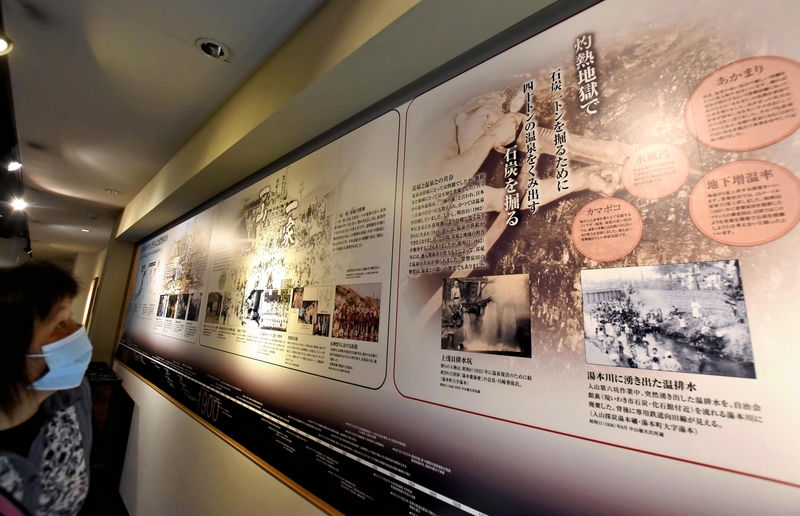
The facility features a section to display photos from the coal mine era and costumes used in the movie. Understanding the hula dancers' roots will surely make the show more interesting.
Read more from The Japan News at https://japannews.yomiuri.co.jp/