A new generation of innovators and financiers have dubbed Kenya’s capital the most attractive sub-Saharan investment destination outside South Africa. This reinforces Nairobi’s enviable reputation as east Africa’s economic hub and home of ‘hustle’.
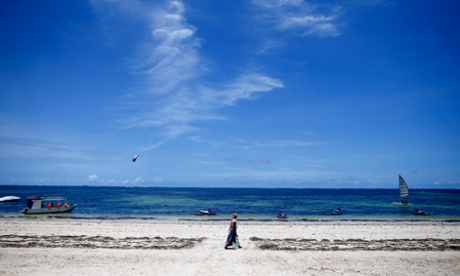
500km away, Kenya’s second city, Mombasa, can feel like a different country. Despite the presence of east Africa’s largest port and substantial manufacturing industries, Mombasa is chiefly renowned for its tourism industry and hot, humid climate.
Whilst Kenya has seen its share of foreign investment increase fivefold from 1.5% in 2007 to 7.5% in 2013, much of that money doesn’t flow far beyond Nairobi. Despite up to 40 private equity funds flourishing in the capital, many are limited in terms of their reach, with one of the biggest admitting (privately) that it does not have any deals outside a 20km radius of the capital.
This is not surprising. Investors seek the highest return at the lowest risk. A hub like Nairobi is a more manageable, familiar environment with an established infrastructure and strong skills base.
In a regional market town like Mombasa, the opportunities are less obvious. Industry is dominated by a relatively small pool of family firms, many of which rely upon informal networks for making business links. Lack of exposure to a modern business support environment can limit awareness of financing options. Many businesses are unfamiliar with even the most basic investment requirements investors look for, such as a business plan.
International development projects can help bridge the gap. The Kuza Project, which aims to reduce youth unemployment in Mombasa and is funded by Dfid, identified early on that a key factor in getting young people into work was helping local businesses access investment.
An early success came with Kentaste, a coconut-processing firm which had been struggling to reach a wider market for its products. “Investors seemed to have little awareness of the industry’s potential,” says Norbert Onyango Mbewa, Kentaste’s managing director. “We knew we had great products but didn’t know how to reach out to retailers and customers to help us grow.”
Kuza assisted Kentaste to identify a potential partner who could bring an injection of funds and help them connect to a network of larger businesses. As a result, Kentaste turned their six part-time staff into full-time positions, and created an additional 17 jobs.
This, however, is just the start. Looming over Mombasa’s low-rise skyline are the cranes of the container port. Last year, the port authority celebrating a new milestone: shifting a million of the twenty-foot long containers in twelve months. They come in from all around the world, destined not only for Kenya, but also Rwanda, Uganda, Ethiopia and other countries in the region. It’s a massive exchange of raw materials and finished products, but aside from the logistics industry, little of the profit touches the ground in Mombasa.
Take tea. Mombasa hosts the world’s second-largest tea market (after Colombo, in Sri Lanka). 95% of Kenyan tea—325,000 metric tonnes of it—passes through here each year for export. All but a tiny proportion is sent out in bulk, to be blended and packaged (the process known as ‘value added’) in other countries.
With investment, companies in Mombasa could take a much greater slice of this business, without seeing profits—and jobs—exported overseas. Likewise fish. Apart from the occasional picturesque silhouette of a hand-carved dhow, there is little evidence of the abundant marine stocks off Kenya’s coast. Just beyond the horizon, however, European and Asian ships trawl the oceans for stock to be processed on board or in massive facilities in places like the Seychelles. Mombasa would be an attractive landing point for large-scale fishing, if industry here had the capacity to handle it. But to do that, they need the funds and the know-how to grow.
Kenya’s second city has long played second fiddle to the capital when it comes to investment. But there is an appetite among investors beyond the traditional financial centres—and helping local businesses to attract them will allow Mombasa to reap the dividends.
Content managed and produced by Adam Smith International