A supernova blast wave and the dunes of Mars – in pictures
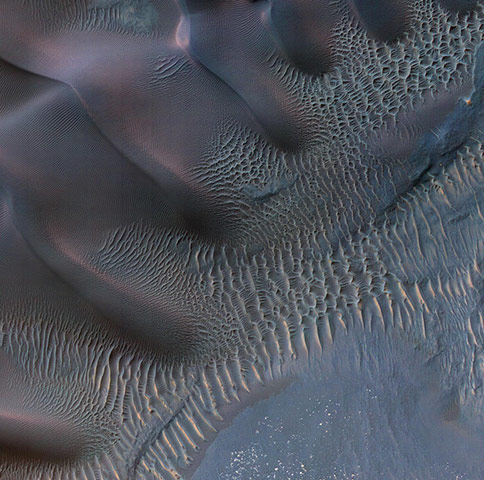
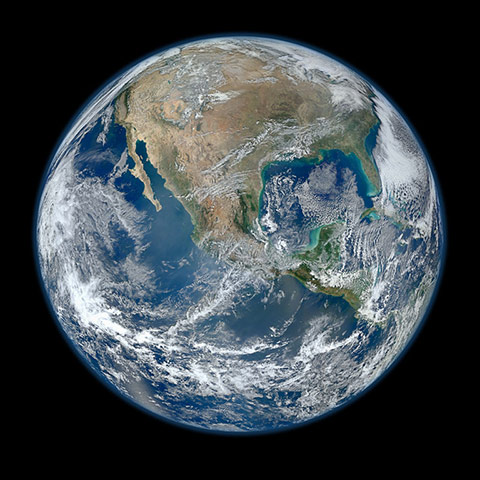
Sand dunes trapped in an impact crater in the Noachis Terra region of Mars. The area covered in the image is about 1km across. Sand dunes are among the most widespread wind-formed features on Mars. Patterns of dune erosion and deposition provide insights into the sedimentary history of the surrounding terrain. This picture is from the High Resolution Imaging Science Experiment (HiRISE) camera on board the Mars Reconnaissance Orbiter Photograph: JPL/Nasa'Blue Marble', a composite of several images from Nasa's Earth-observing satellite Suomi NPPPhotograph: Norman Kuring/VIIRS/Suomi NPP/GSFC/NOAA/NasaNasa captured this dramatic image of a solar flare on 2 January. To view a video of the event click here. The show lasted about three hours, but the blast was not directed at EarthPhotograph: SDO/NASA
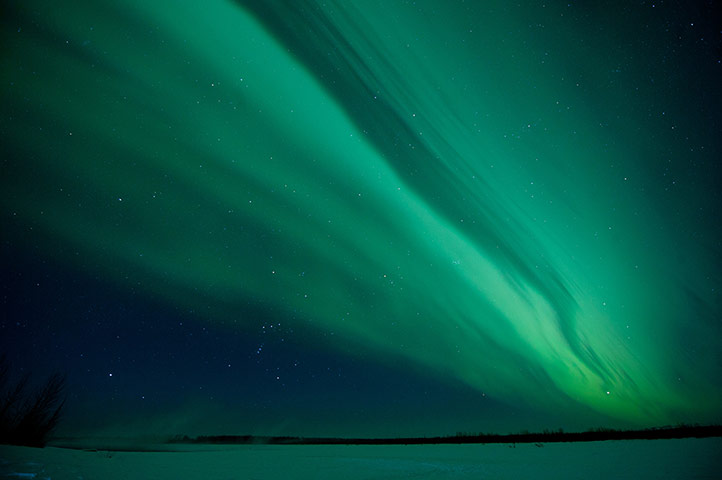
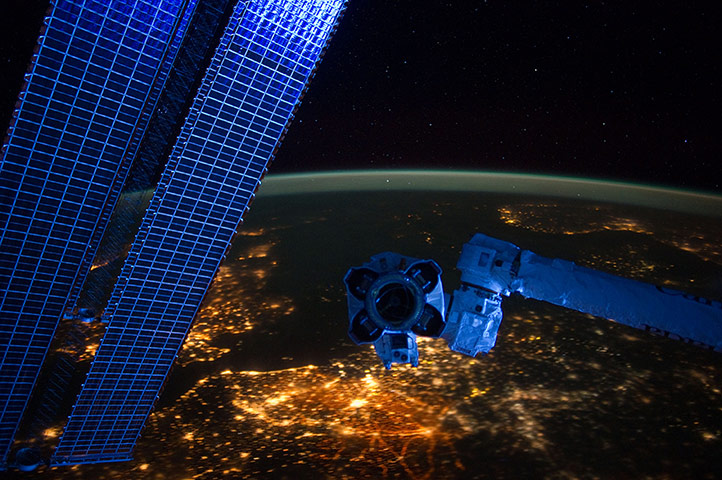
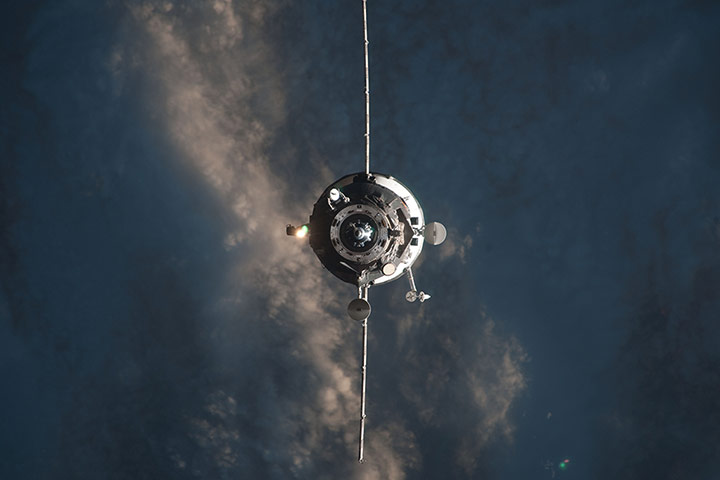
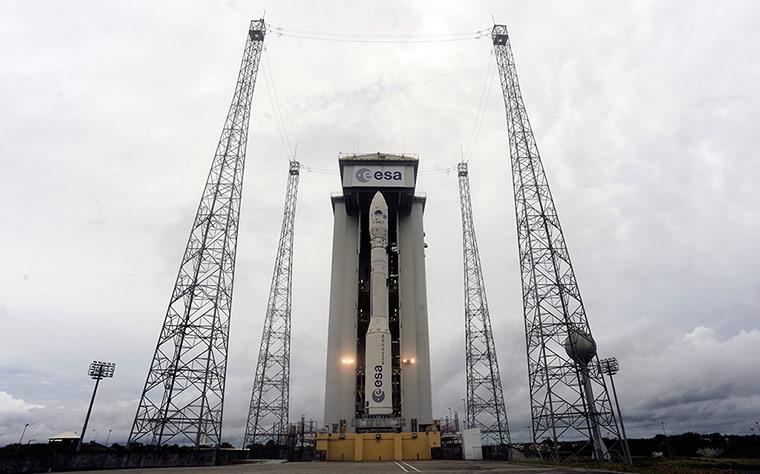
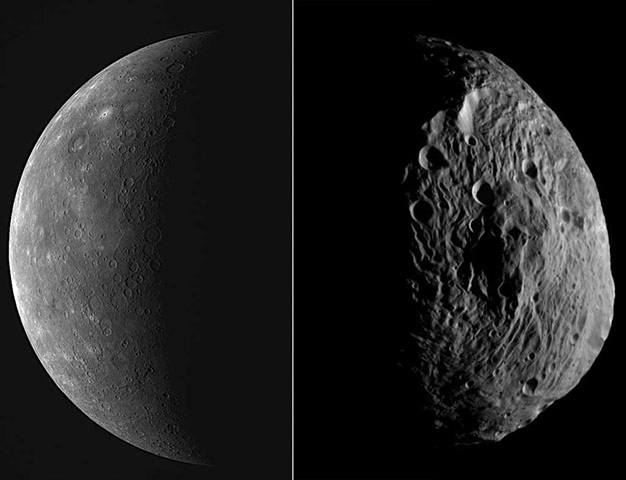
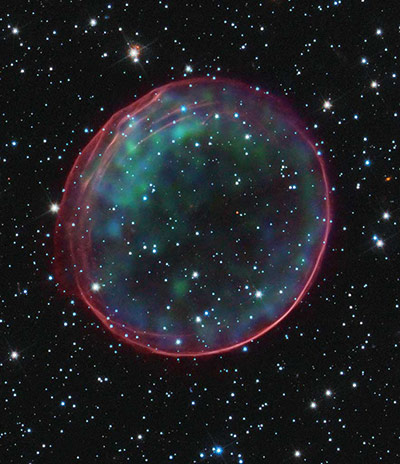
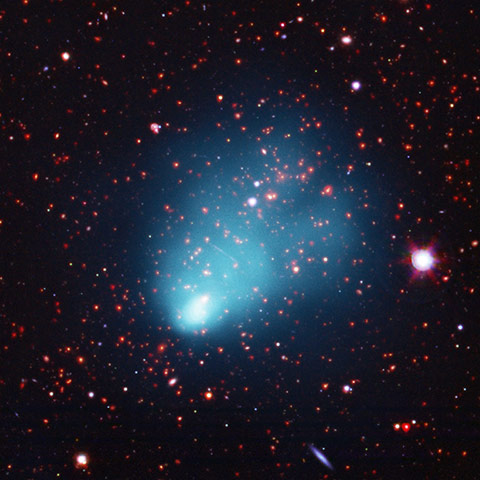
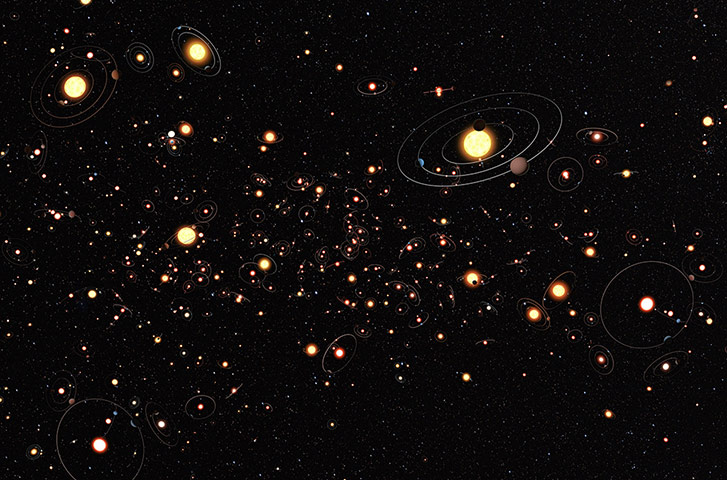
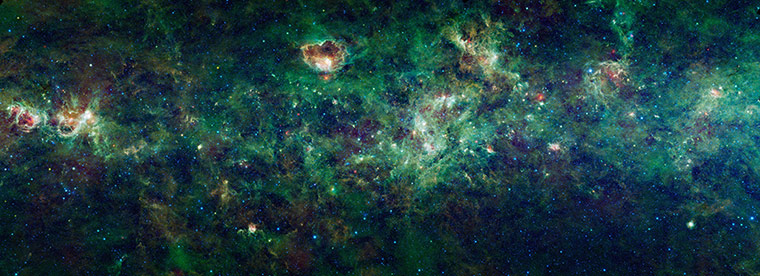
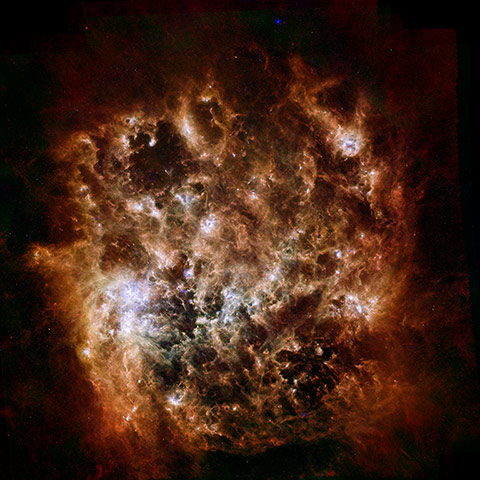
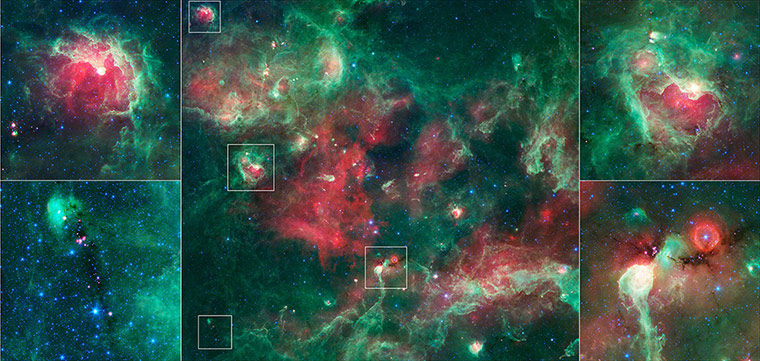
Solar flares on 23 January, however, enhanced the aurora borealis in the skies over the frozen Susitna River near Talkeetna, in AlaskaPhotograph: MICHAEL DINNEEN/APThis panoramic image taken from the International Space Station shows lights from population centres in Belgium and the Netherlands (centre bottom), the British Isles partially obscured by solar array panels (left), the North Sea (centre left), and Scandinavia (right) behind the space station's remote manipulator system Photograph: ISS/NasaAn unpiloted Progress resupply vehicle approaches the International Space Station on 27 January carrying 930kg of propellant, 50kg of oxygen and air, 420kg of water and 1,260kg of spare parts and research hardwarePhotograph: ISS/NASAThe European Space Agency's new Vega rocket on its launch pad at Kourou in French Guiana. Final preparations are in full swing for the rocket's inaugural flight when it will carry nine satellites into orbitPhotograph: ESAThis image shows the planet Mercury on the left and the asteroid Vesta on the right. In March last year Messenger became the first spacecraft to orbit Mercury, and in July, Dawn was the first to orbit a main-belt asteroid, Vesta. Both objects' surfaces are marked by impact craters, but Vesta's irregular shape is a consequence of its weak gravity. Mercury's mass is about 1,300 times greaterPhotograph: JPL-Caltech/UCLA/MPS/DLR/IDA and Johns Hopkins University Applied Physics Laboratory/Carnegie Institution of Washington/NASAA supernova remnant 170,000 light years away in one of the Milky Way's galactic neighbours. This image, taken by the Hubble Space Telescope, shows ambient gas being shocked by the expanding blast wave from the exploding star Photograph: J Hughes (Rutgers University) and Hubble Heritage team/CXC/SAO/Nasa/ESAThis galaxy cluster, nicknamed 'El Gordo' – 'The Fat One' in Spanish – was discovered 7 billion light years away by the Chandra X-ray Observatory and optical telescopes. It is the most massive and hottest galaxy cluster known to astronomers, and the latest data suggest it is the site of a collision between two separate clusters. In this composite image, x-rays are represented in blue; optical data from the Very Large Telescope is red, green and blue; and infrared data from Spitzer in red and orangePhotograph: Chandra X-ray ObservatoryThis artist's impression shows how commonplace planets are around the stars in the Milky Way. A six-year search that surveyed millions of stars concluded that planets around stars are the rule rather than the exception Photograph: M Kornmesser /ESOThis photograph of the 36-inch telescope at the Royal Observatory, Edinburgh, taken by Eric Begbie, won the online vote and was highly recommended in the STFC Photowalk competitionPhotograph: Eric Begbie/STFCThe Herschel Space Observatory captured this image of the Eagle nebula, with its intensely cold gas and dust. Each colour reveals a different temperature of dust, from around 10 degrees above absolute zero (10 Kelvin or -263C) for the red, up to around 40K for the blue. 'The Pillars of Creation', the hand-like shape in the centre, were made famous by the Hubble Space Telescope in 1995Photograph: Hill, Motte, HOBYS Key Programme Consortium/ESAThis vast swathe of the Milky Way is a mosaic of images from Nasa's Wide-field Infrared Survey Explorer (Wise). Cassiopeia and Cepheus feature in the 1,000-square degree expanse: constellations visible in the northern sky. Wise took its pictures in infrared light, making the bright stars visible from Earth fade into obscurity among the backdrop of millions of other stars. Cool clouds of dust that fill the space between the stars glow in infrared, telling astronomers more about how stars are born and diePhotograph: WISE/JPL/NASAThe Large Magellanic Cloud, a nearby dwarf galaxy, in infrared light as seen by the Herschel Space Observatory and Nasa's Spitzer Space Telescope. Giant ripples of dust span 10s or hundreds of light years. Significant fields of star formation can be seen near the centre. The brightest region, centre left, is called 30 Doradus, or the Tarantula Nebula. Colder regions (red) show where star formation is at its earliest stages or has shut off, while warm expanses (blue) are new stars heating surrounding dustPhotograph: Spitzer Space Telescope/NASANasa's Spitzer Space Telescope captured a view of the Cygnus X star-forming region of the Milky Way, where stars can be seen at different stages of development. Infrared light has been colour-coded, with the shortest wavelengths in blue, the longest in red, and the middle wavelengths in green Photograph: Spitzer Space Telescope/Nasa
Sign up to read this article
Read news from 100’s of titles, curated specifically for you.