A stranded probe, a Martian volcano and space trash – in pictures
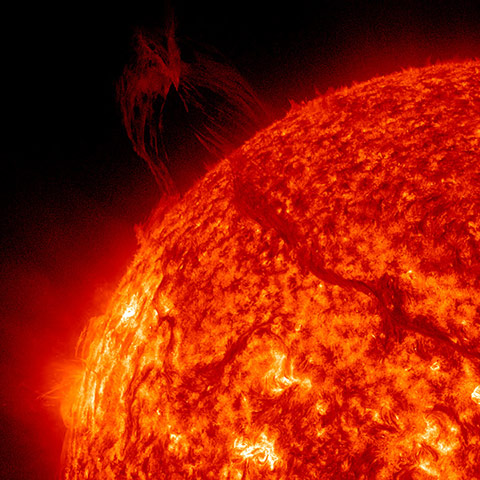
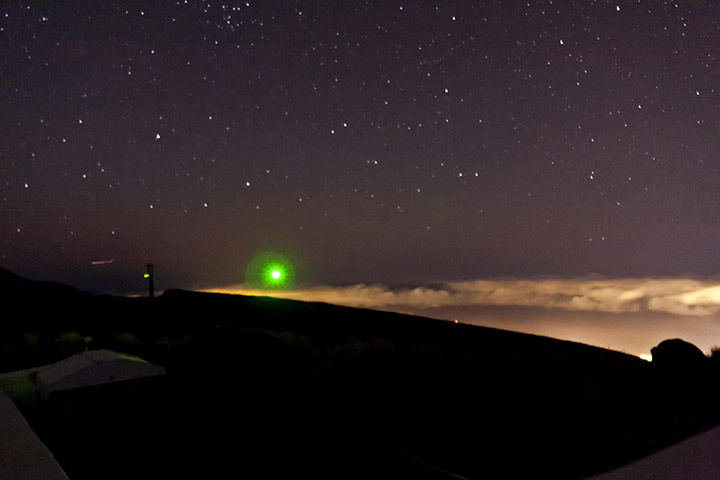
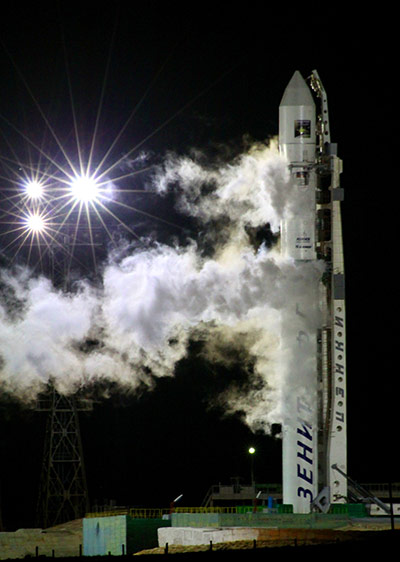
A portion of a solar filament erupted into space on 14 November. Solar filaments are structures made of gas cooler than the surroundings that are tethered magnetically to the Sun. A third of this filament rose up and broke away, but the other two-thirds can still be seen as an irregular diagonal line stretching from the edge of the image. The unbroken filament was a million kilometres long Photograph: SDO/GSFC/NASAPulses of green laser light were fired from a mountaintop in La Palma to a peak in Tenerife. The laser was being used as a guide for an infrared beam. If the concept can be proven, infrared beams will be fired between satellites to measure concentrations of greenhouse gases in the Earth's atmospherePhotograph: Armin Loescher/ESAThe Phobos-Grunt spacecraft atop a rocket at the Baikonur cosmodrome in Kazakhstan on 9 November shortly before launch. Russia's mission to bring the first sample of the Martian moon Phobos back to Earth came to an abrupt end after booster rockets failed to fire, leaving the spacecraft marooned in Earth orbitPhotograph: STR/AFP
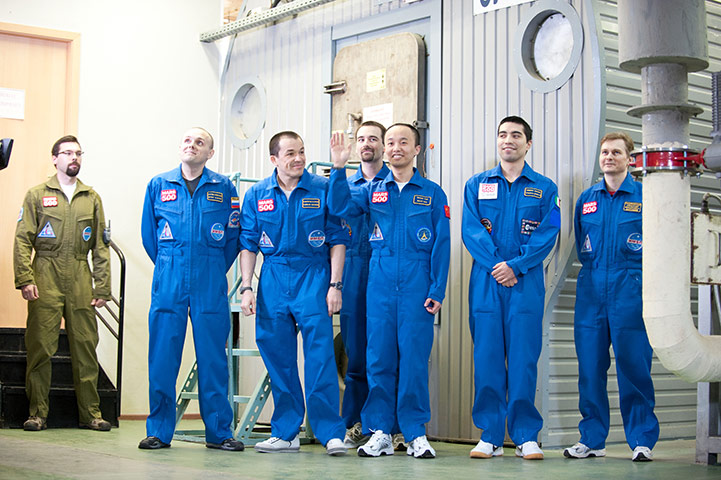
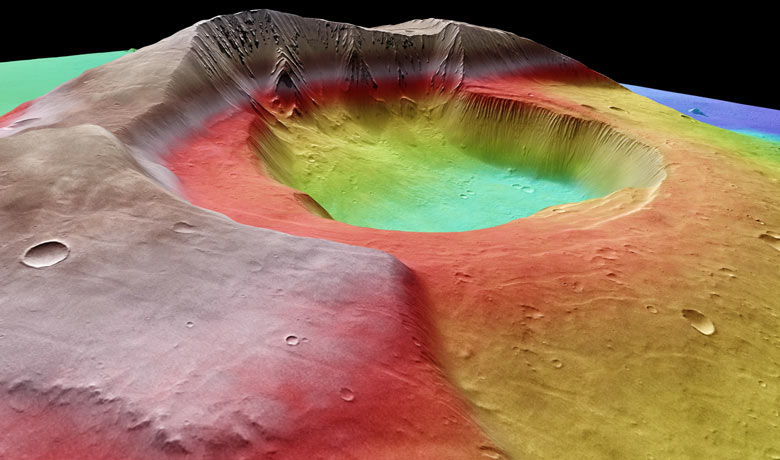
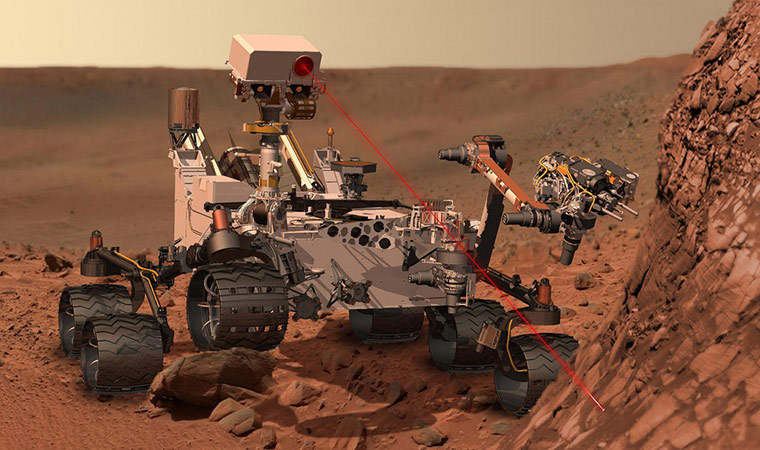
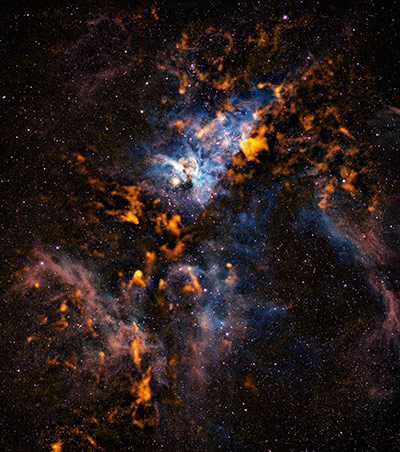
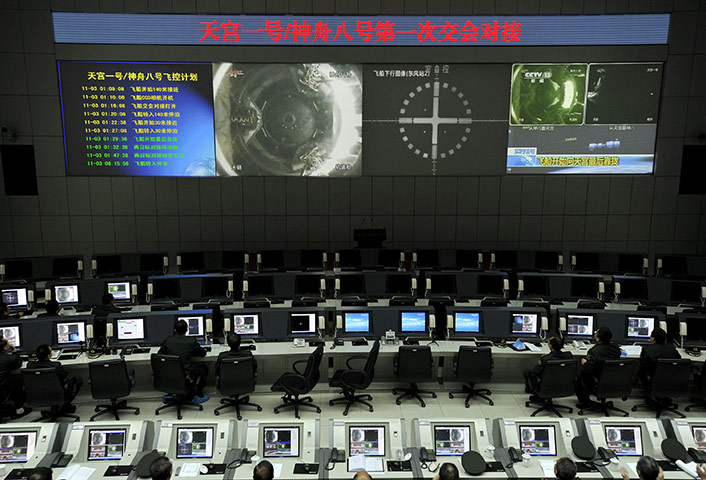
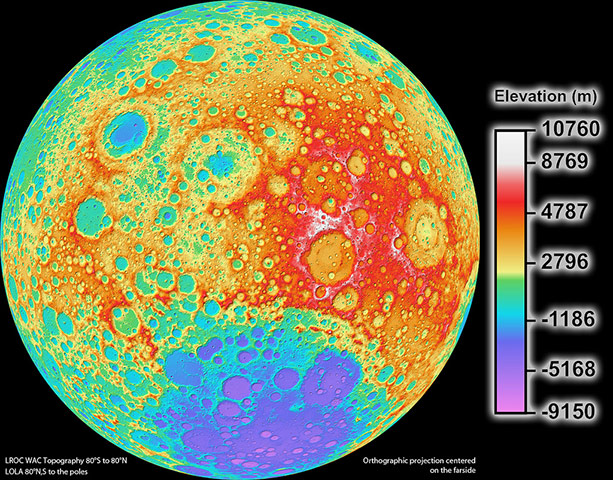
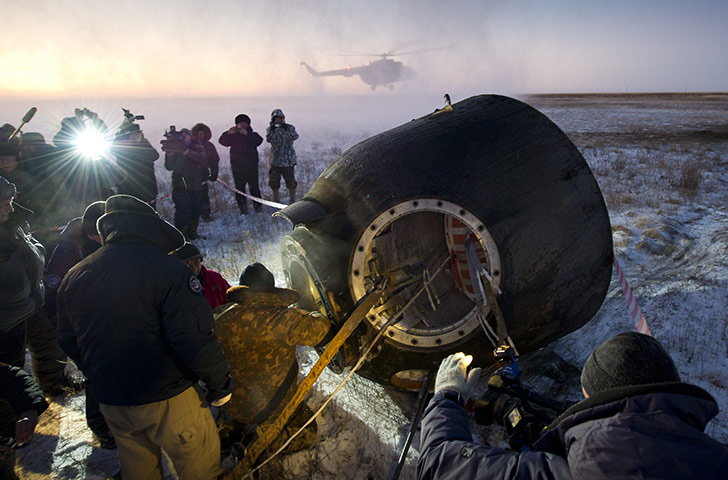
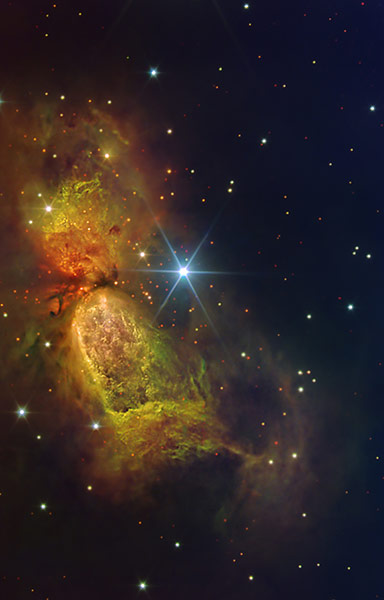
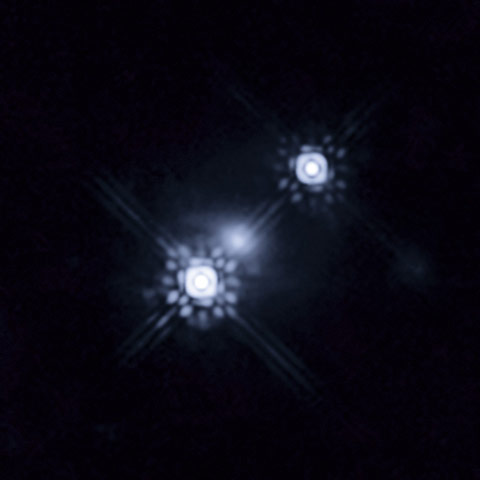
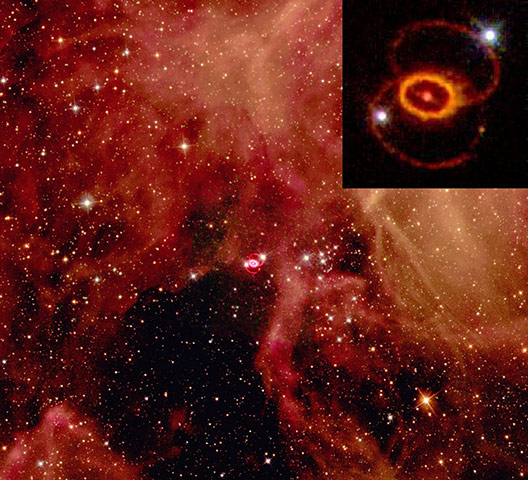
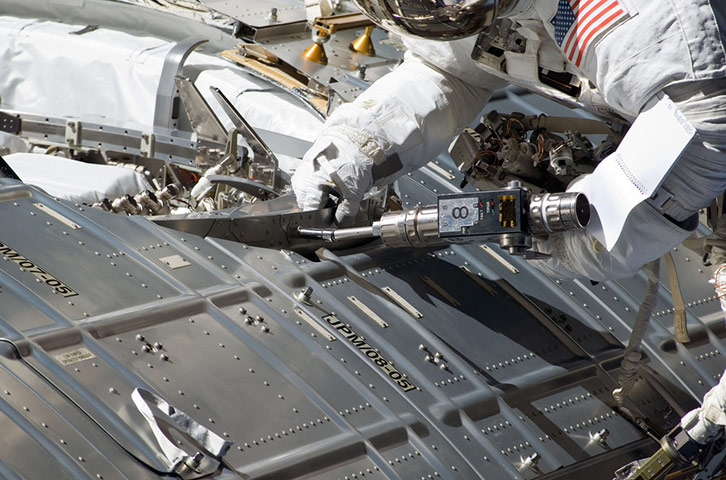
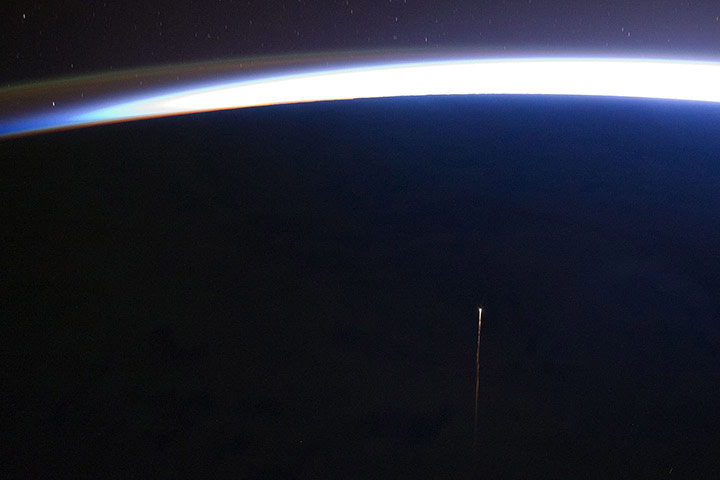
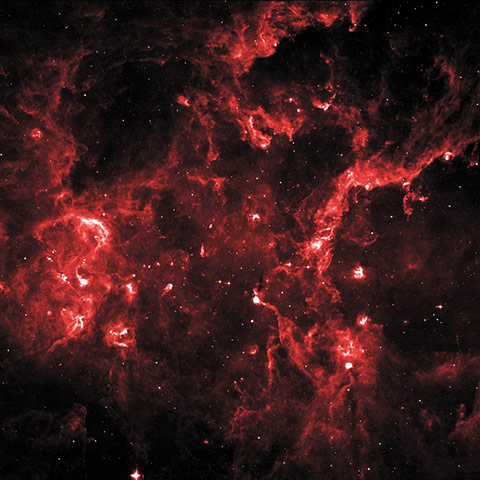
The crew of Mars500 on 4 November after emerging from a 17-month simulated voyage to the Red Planet. Scientists collected psychological and medical data from the men that may help in planning a future manned mission to MarsPhotograph: Oleg Voloshin/ESAData from the Mars Express spacecraft was used to create this extraordinary image of Tharsis Tholus, an extinct volcano on the Red Planet. The volcano towers 8km above the surrounding terrainPhotograph: EsaAn artist's impression of the Curiosity rover at work on Mars. On 26 November, Nasa launched the Mars Science Laboratory mission which stars Curiosity, the largest and most advanced rover ever sent to the Red Planet. The rover is scheduled to land in August 2012Photograph: Caltech/JPL/NasaCold dusty clouds (orange) – the birthplace of stars – in the Carina Nebula. The clouds were revealed by the Apex telescope in submillimetre wavelength light. The Apex image was combined with a visible light image from the Curtis Schmidt telescopePhotograph: ESOChinese scientists monitor the docking of the Tiangong-1 space lab module and the Shenzhou VIII spacecraft on 3 November, a crucial step towards China fulfilling its ambition to set up a manned space stationPhotograph: STR/AFPAstronomers announced that they had identified a subterranean lake of liquid water inside the icy shell of Jupiter’s moon Europa. The lake contains as much water as all North America's Great Lakes combined and is a potential habitat for life. There may be many more lakes like this in the shallow regions of Europa’s shell Photograph: Britney Schmidt/University of Texas at AustinThe farside of the moon, part of the highest-resolution topographic map of the moon ever created. Data from Nasa's Lunar Reconnaisance Orbiter was used to create a map of almost the entire surface of the moon. Mark Robinson from Arizona State University in Tempe said the map would help Nasa plan future robotic and human missions to the moonPhotograph: LRO/NASARussian ground personnel work to extract crew members from a Soyuz spacecraft shortly after the capsule fell to Earth outside Arkalyk in Kazakhstan on 22 November. On board were Commander Mike Fossum and flight engineers Sergei Volkov and Satoshi Furukawa, returning from more than five months on the International Space Station Photograph: Getty ImagesThe nebula Sharpless 2-106, a stellar nursery of glowing gas and light-scattering dust, captured by a telescope on La Palma in the Canary Islands. The nebula's hourglass shape is thought to be caused by material being ejected from a hidden, high-mass star incubating withinPhotograph: NASAThis picture taken by the Hubble space telescope shows a quasar that has been 'gravitationally lensed' by a galaxy in the foreground. Gravity bends spacetime, deflecting beams of light like a lens. Direct observations of the detailed structure of quasars are impossible, so astronomers used stars in the intervening galaxy like a cosmic microscope to probe features in the quasar’s disc that would otherwise be too small to see Photograph: Hubble/Nasa/EsaRepresentatives from 41 countries met at the Palazzo Ducale in Lucca, Italy, on 10 November for the Third International Conference on Exploration, which promotes international cooperation in space exploration. Can anyone identify the painting? It appears to depict the arrest of Christ in the Garden of Gethsemane. No prizesPhotograph: ESAPhysicists have used the neutrinos emitted by a particular kind of supernova to develop their theories of why massive stars explode. Type II supernovae briefly emit as much light as an entire galaxy – the amount of energy they release is second only to the Big Bang. (The inset is a 'blow-up' of the supernova at the centre of the main image)Photograph: NASAA financial manager at Nasa's Goddard Space Flight Centre won an award for his idea of setting up a Nasa space tool lending library. Matthew Ritsko's idea would enable the sharing of expensive spaceflight tools and hardware. The image shows astronaut Ron Garan working on the International Space Station Photograph: NASAPutting out the trash: A Progress supply vehicle carrying refuse from the International Space Station burns up in the Earth's atmosphere Photograph: ISS/NasaAn infrared image of Cygnus X, one of the richest known regions of star formation in the Milky Way. Bright spots within ridges of hot gas indicate where stars are forming.Photograph: IPAC/MSX/NASA
Sign up to read this article
Read news from 100’s of titles, curated specifically for you.