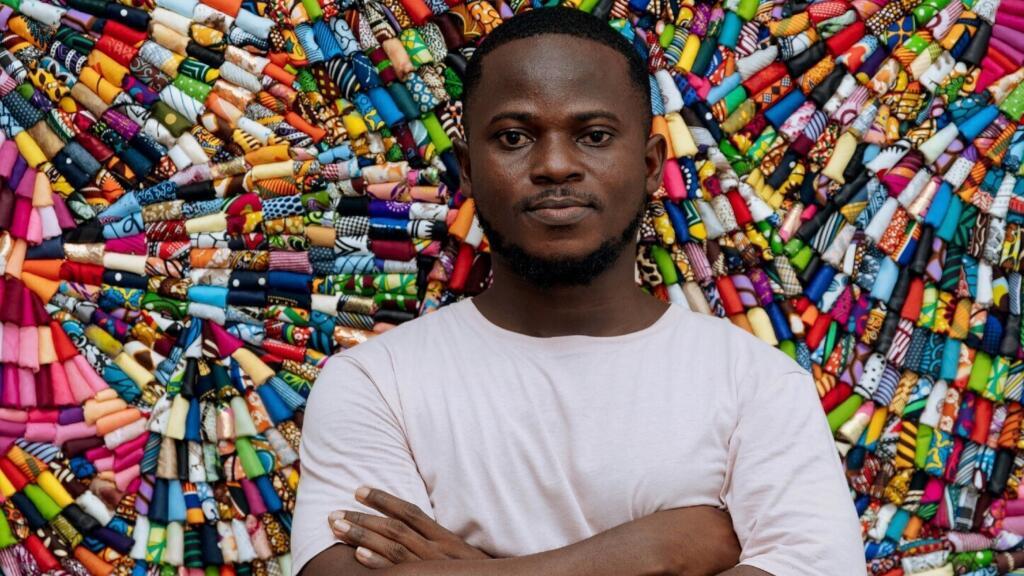
A civil engineer by trade and an artist at heart, Emmanuel Aggrey Tieku has found an innovative way to raise awareness about the problem of textile waste in his native Ghana. His ever-expanding installations are stitched together from hundreds of pieces of used clothing, collected from cities around the world as part of a decades-long project.
Tieku credits his grandmother as one of his main sources of inspiration when it comes to his interest in textiles and their role in society as markers of cultural identity.
"She was a queen mother, and she loved textiles. She was an avid collector. We're talking about collections from the '50s, limited editions, particularly African fabric," Tieku tells RFI.
"She would talk to me about the essence of textiles and what it means for someone to have pride in what they wear."
While Tieku was exposed to his grandmother’s love of fashion from his childhood, it wasn’t until engineering school that he reconnected with fabrics and their hidden potential.
Working on a project investigating how textile waste could be transformed into building blocks for the construction industry, he began to think about its potential to become something useful, beautiful and meaningful.
Fast fashion, slow art
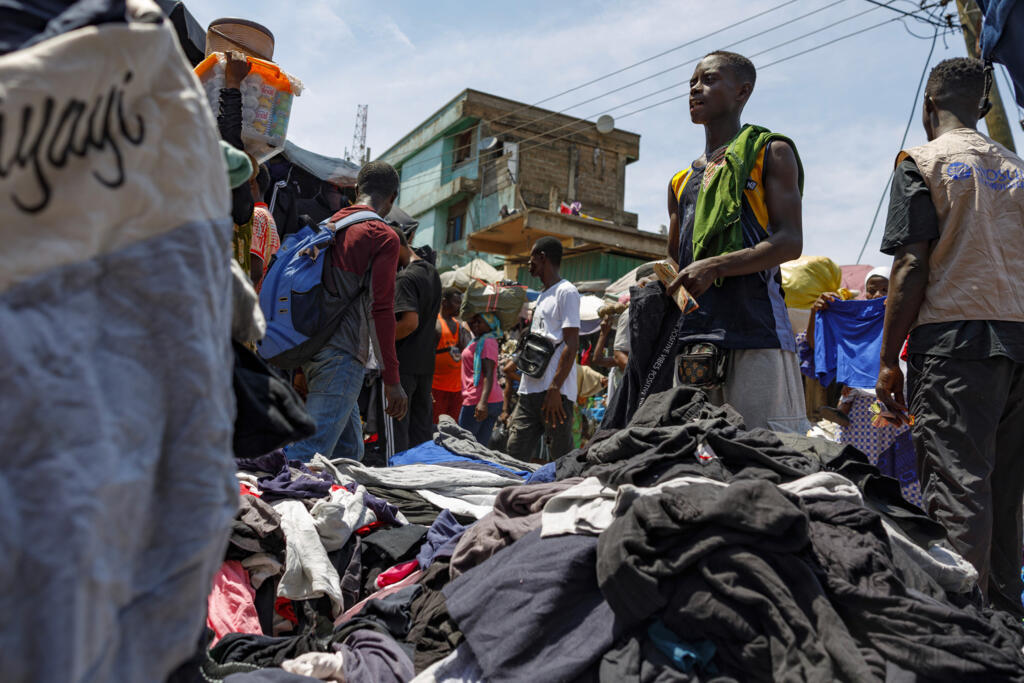
Tieku's native Ghana has become a dumping ground in recent years for clothes that people in other countries no longer want. Some 14 million items of clothing arrive each week, he says, be it unsold pieces from the "fast fashion" industry or secondhand items.
Although locals have made a living out of reselling some of the clothes, there are simply too many to handle.
Ghana grapples with crisis caused by world's throwaway fashion
Reflecting on the mountain of discarded items and the stories they contained, Tieku began experimenting with large cloth installations in and around Accra. They became the foundation of his travelling project "How to Heal a Broken World – Fragile Origins, Futile Foundations".
It is a giant global patchwork which he says he will work on for the next 45 years, sewing textile installations in cities around the world.
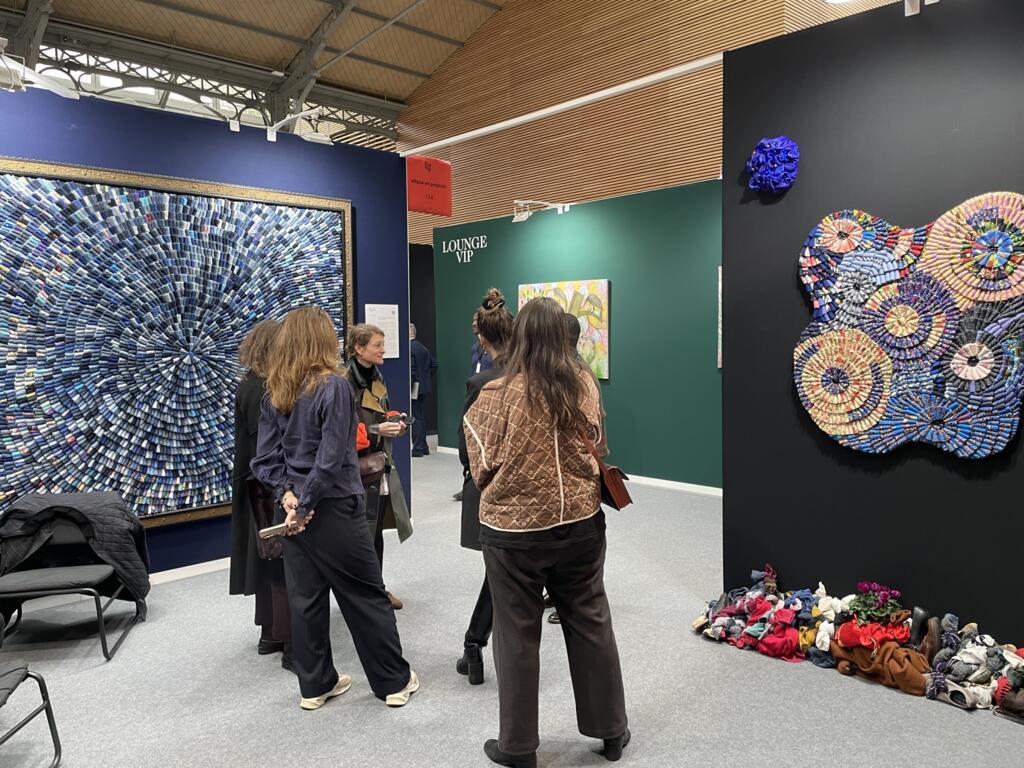
Part of the project was created in Paris, where Tieku was invited to participate for the first time at the Also Known as Africa contemporary African art fair (AKAA) in October after winning this year's Ellipse Prize from French foundation Ellipse Art Projects.
The dozen of his works on display drew from some 1,000 kg of secondhand clothes donated by French charity Emmaüs.
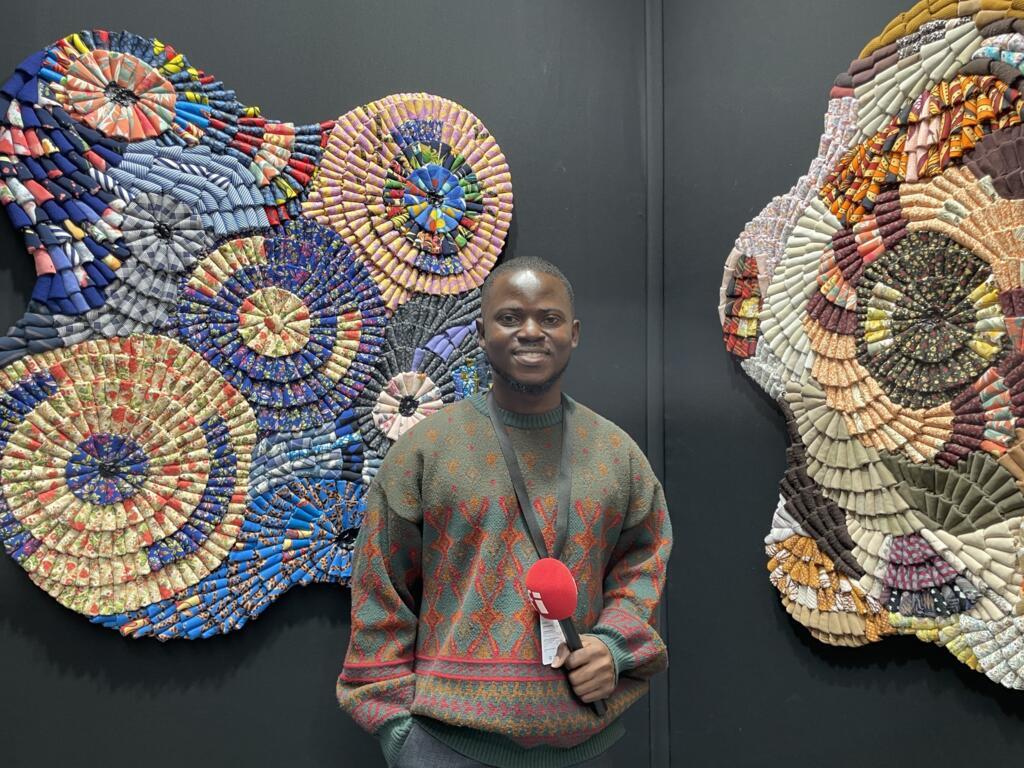
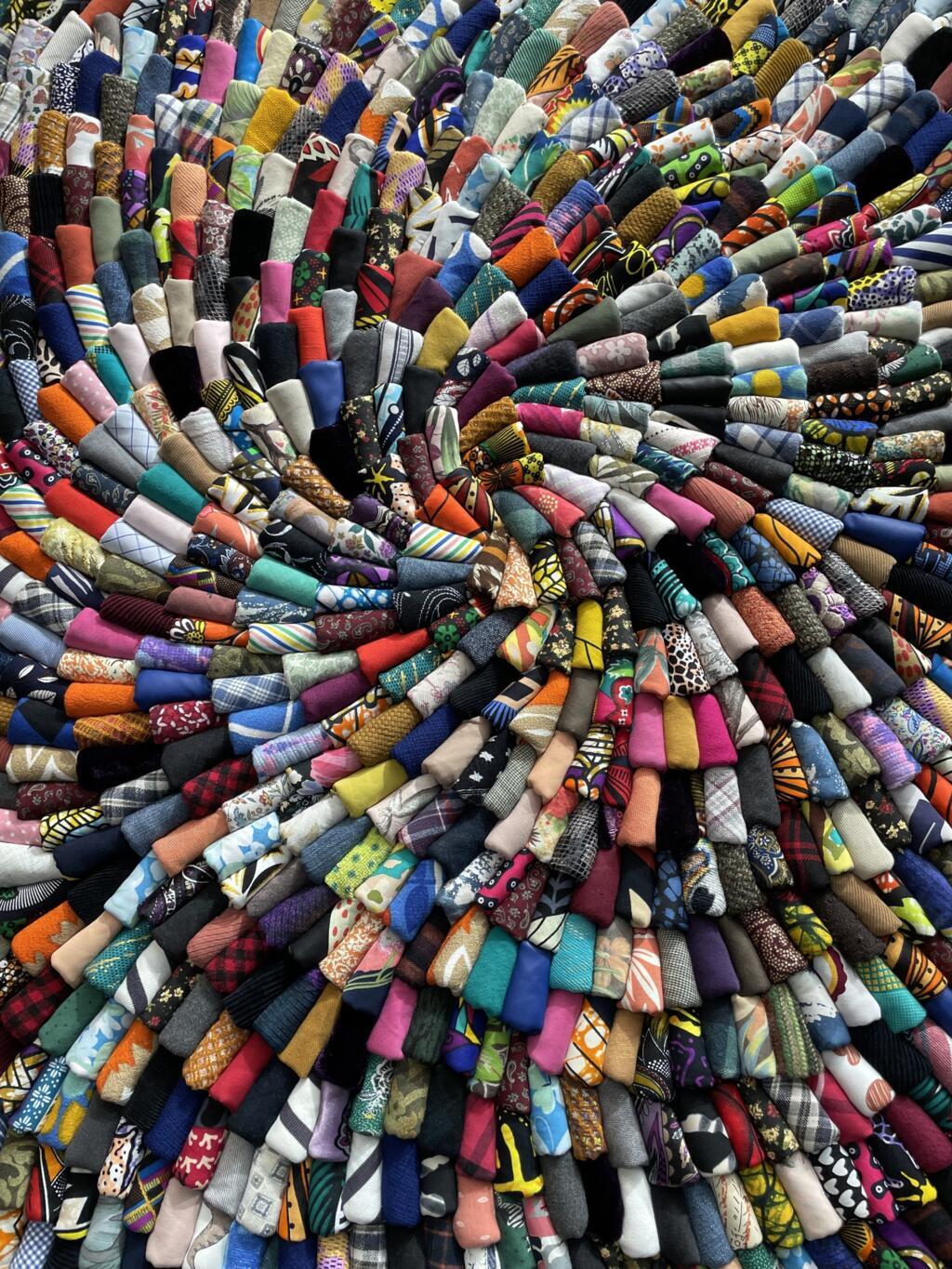
"I wanted to give the fabric a second life and also document the life of Paris in the moment, through what people wear and how people choose to be seen," Tieku says, pointing to an eye-catching circular motif called "The Sky Sings Over Paris".
Measuring around two square metres, the piece is made up of tiny, folded pieces of blue and grey denim, cut from old jeans and stitched together to form patterns that fan out in a spiral.
Collecting stories, memories
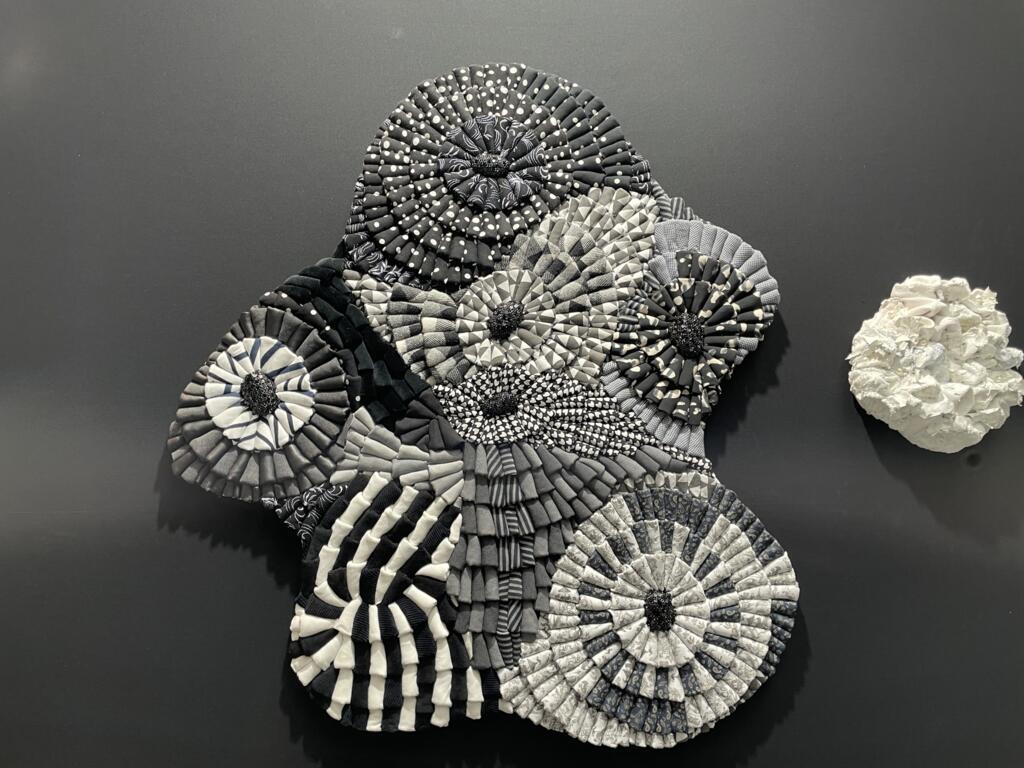
Tieku says he has no control over the shape each piece takes; instead, it’s the fabric that speaks to him.
He does, however, emphasise the collective experience in each city where he takes his project. He encourages people to donate clothing that has a special significance and he collects stories about them along the way.
"As it travels from city to city, [the project] accumulates history, memories... People write messages on it, for other people to see from the other side of the globe."
A floating garden
The Paris leg has taken the total project to 400 metres of stitched fabric, but Tieku hopes to reach 700 metres by the beginning of 2026.
The next stages will happen in Basel and Milan, where similar textile creations will be added to the larger project – the final size of which the artist hasn't yet decided.
Meanwhile, "How to Heal a Broken World" will return to its roots in Ghana with an installation called "Bridge over Troubled Water".
Ghana’s plastic house: a step towards dealing with the country's pollution
Tieku has chosen the Korle Lagoon in Accra, one of the most polluted water bodies on Earth, where he says attempts to dredge the basin of textile, plastic and electronic waste have so far failed.
"I want to convert the morbid, stagnant water into a temporary blooming field where a garden grows and a sense of hope arises," he says.
The 2.5 km-long discarded textile installation will cover a part of the lagoon between two bridges, where it spills into the Atlantic Ocean, and form a floating garden with more than 100 species of flowering plants.
Tieku hopes the project will spur viewers "to reimagine ways to bring life to what is dead and hopeless, to care for the planet and heal the world through our collective responsibility".