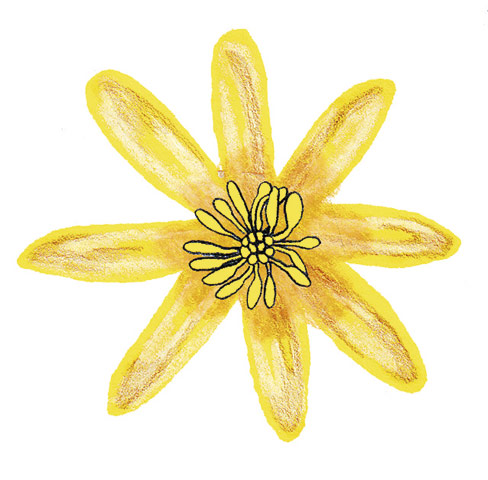
This member of the buttercup family is one of the first spring flowers to appear, its custard-yellow blooms appearing as early as February in some parts of southern Britain. Like many early flowers, it prefers sunnier areas, such as woodland glades and the banks of streams. It was one of the naturalist Gilbert White’s favourite plants, and was also used by ancient herbalists to cure a range of ailments, including piles
Illustration: Hennie Haworth

Another familiar bloom of early spring, found from March to May in broad-leaved woodlands throughout Britain, apart from remote offshore islands. From a distance, the delicate blooms appear white but a closer look reveals a yellow centre and pinkish-purple on the underside of the petals. Among its many folk names is the evocative “windflower”, earned by its habit of swaying in the gentlest breeze
Illustration: Hennie Haworth

Clumps of primroses are a classic sign of early spring. Indeed, the plant gets its name from the medieval Latin prima rosa – “first rose”. It prefers sunny areas, so it is commonly found along banks and hedgerows, or in woodland clearings, from March onwards, and earlier in the mild south-west of Britain. The wild flower is a delicate lemon-yellow shade, but, because it is such a popular garden plant, you will often find stronger-coloured hybrids of wild and cultivated varieties
Illustration: Hennie Haworth
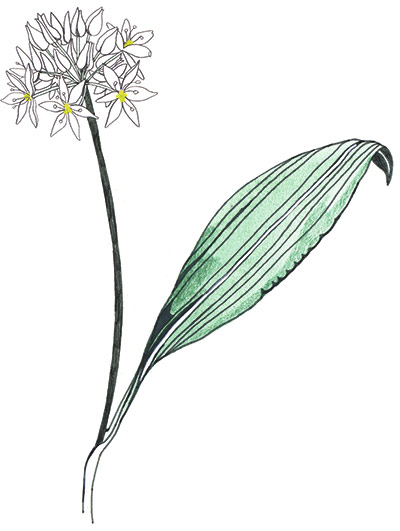
Also known as “ramsons”, this late spring flower can be found from April to June, carpeting the ground in damp woodlands throughout lowland Britain. Its spiky white blooms sit among large, ridged leaves, which are ideal for adding to soups or making wild garlic bread. The plant is easy to locate by smell – a subtler version of commercially grown garlic
Illustration: Hennie Haworth
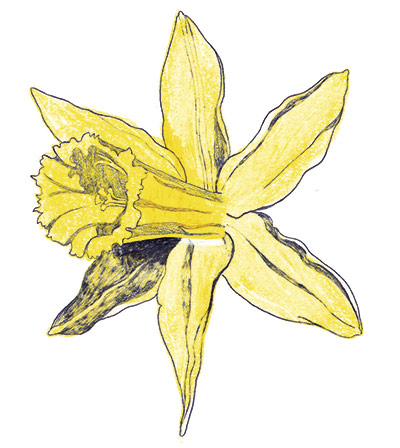
The wild daffodil’s most famous fan was William Wordsworth, who encountered it towards the northern limit of its range, in the Lake District. It is also the national flower of Wales. In bloom from February to April, wild daffodils – which are also known as lent lilies – are usually to be found in oak or ash woods. They can be told apart from garden varieties by their whitish-yellow flowers, which form around a deeper yellow trumpet
Illustration: Hennie Haworth
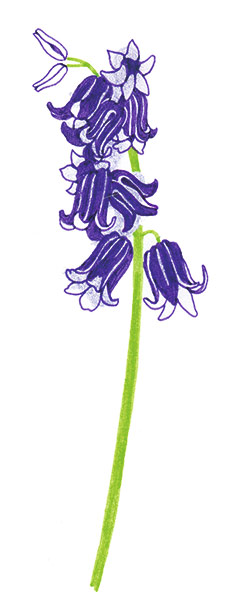
Britain holds well over half the world population of bluebells, most of which are to be found in ancient broad-leaved woodland. Sadly, the native bluebell is under threat from an imported Spanish variety, and its hybrids. The Spanish bluebell can be recognised by its straighter stems, broader leaves and less noticeable scent. Only native bluebells have creamy-white pollen. Bluebells reach their peak in mid to late April in the south of England, and May in northern England and Scotland
Illustration: Hennie Haworth