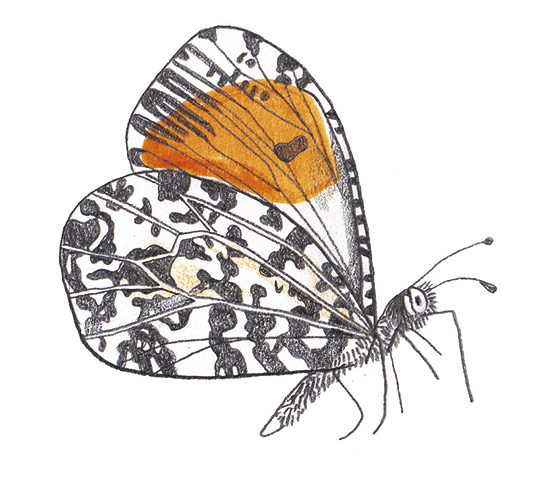
One of the classic signs of spring, orange-tips emerge from late April and can be seen until mid-June, after which they usually disappear. The male is unmistakable, thanks to the bright orange wingtips that give the species its name; lacking these, the female may be mistaken for one of the three common species of white butterfly, but has a distinctive green mottling on her underwings. It is found throughout England and Wales, extending its range north into Scotland
Illustration: Hennie Haworth
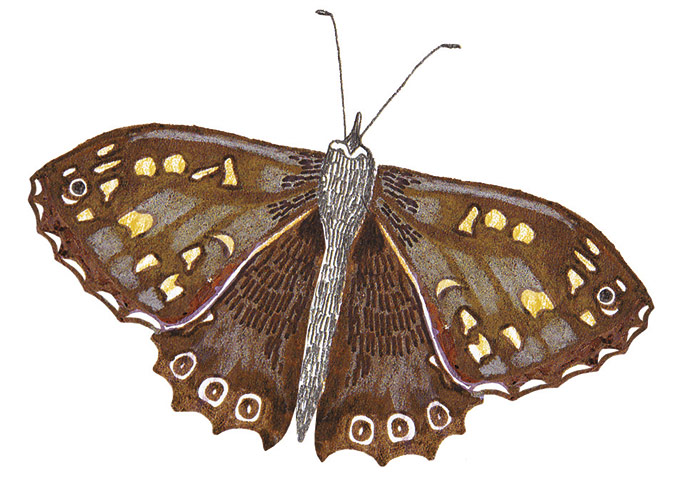
A delicate brown colour, with creamy-buff markings, the speckled wood is one of the few British butterflies to thrive in shade as well as sunshine. It can be seen from April to October in woodland clearings and rides, often vigorously defending its tiny patch of territory against intruders from its own and other butterfly species. Found in southern Britain and parts of Scotland, the speckled wood is currently expanding in numbers and range
Illustration: Hennie Haworth
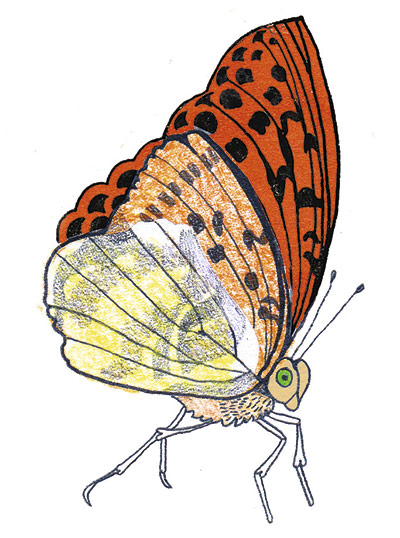
One of our largest and most elegant butterflies, this rich orange and black insect can be spotted on warm, sunny days during July and August. Found in glades and rides in broad-leaved woodlands – especially oak – in southern and western England and parts of Wales. Watch out for males pursuing females in flight, during which they loop around their prospective mate as if performing acrobatics in order to impress her
Illustration: Hennie Haworth
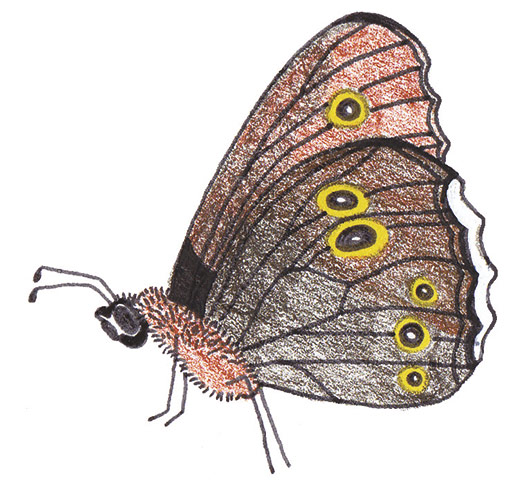
Our darkest common butterfly, the ringlet can be told apart from the superficially similar meadow brown by the series of round “eye-spots” on both the upperside and underside of its wings that give the species its common name. Often found in shady woodland, the ringlet is only around for a few weeks from early July onwards, in most of England, Wales and southern Scotland. Its sombre colouring enables it to warm up quickly, making it one of the few butterflies that are active on cloudy days
Illustration: Hennie Haworth
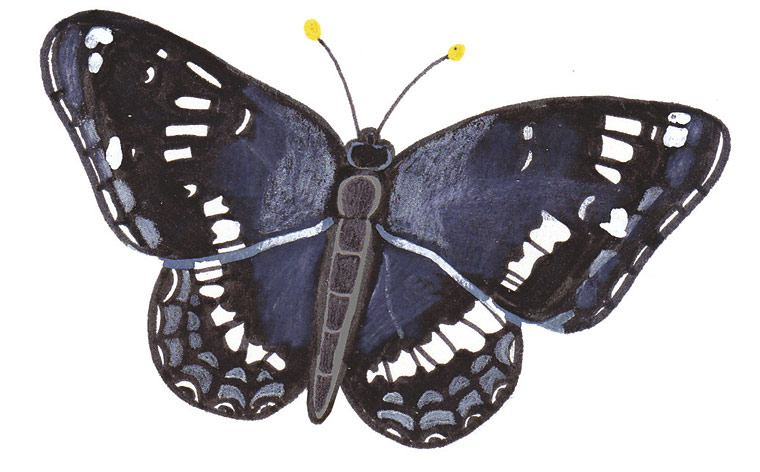
A large, striking black and white butterfly, the white admiral can be found in mature oak and hazel woodlands across southern England, the Midlands and parts of East Anglia north to Lincolnshire. It flies during warm, sunny days from the end of June to early August, especially when there is plenty of honeysuckle, the food plant of its caterpillar. When full-grown, the latter is a remarkable-looking creature, its bright green body bristling with reddy-brown spikes
Illustration: Hennie Haworth
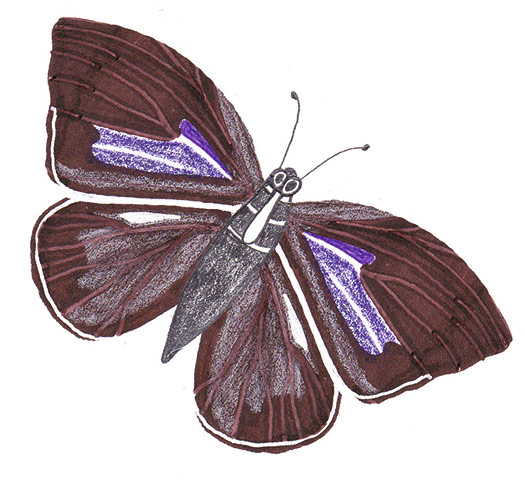
The most common and widespread of Britain’s five species of hairstreak, the purple hairstreak shares its relatives’ elusive habits, and can be surprisingly hard to see. This medium-sized, dark purple and brown butterfly is on the wing for just a few weeks from early July to the end of August, and usually spotted early or late in the day as it flutters around the foliage near the top of mature oak trees
Illustration: Hennie Haworth