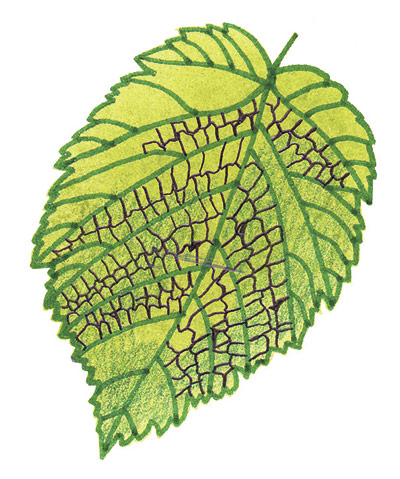
The long, drooping catkins of the hazel are one of the earliest signs of spring, appearing in January or February. This is so the tree can disperse its pollen in the wind before leaves appear on surrounding trees, blocking its path. The nuts appear in late summer, after the serrated leaves with their hairy undersides, and are green at first, turning brown before dropping to the ground in autumn
Illustration: Hennie Haworth

The oak is our most important native broad-leaved tree, providing a home for hundreds of species of insects. As a result, oak woodlands are one of our most biodiverse habitats, supporting a wide range of birds and mammals, as well as lichens, mosses and fungi. An easy tree to identify, thanks to its characteristically lobed leaves and, in autumn, its fruit: acorns
Illustration: Hennie Haworth
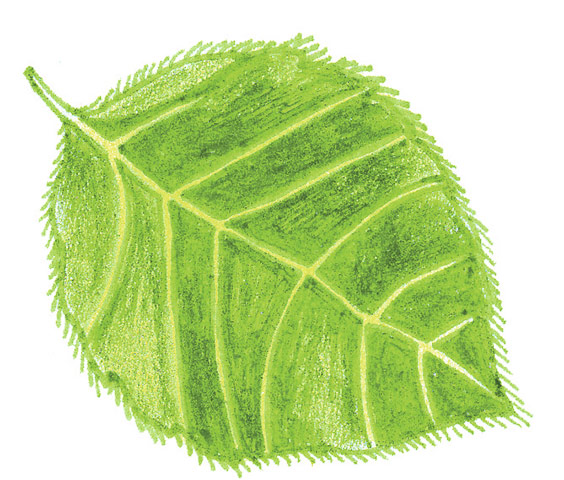
One of Britain’s largest and most majestic trees, the beech grows on chalky soil, with its stronghold in southern England. The broad leaves form a dense canopy, allowing little sunlight to reach the forest floor, so few wild flowers grow in beech woodlands. In autumn, the trees produce spiky clusters of nuts known as beech-mast. Beech trees are now under threat from climate change, because they are very sensitive to prolonged drought
Illustration: Hennie Haworth
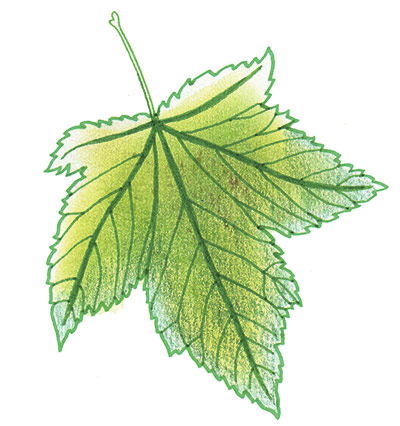
A member of the maple family, the sycamore is thought to have been introduced to Britain by the Romans, though some people dispute this. It has successfully spread throughout Britain, and can even be found on coastal headlands, as it is very tolerant of salt spray. Sycamores have distinctive large leaves with jagged edges, and in autumn they produce pairs of winged seed pods popularly known as helicopters, which allow the tree to spread its seeds in the wind
Illustration: Hennie Haworth

A favourite tree for many generations of British children because of its hard, shiny fruit. In spring it produces distinctive white clumps of blossom known as candles. Originally introduced here from its native Balkans in the 16th century, it has since spread throughout lowland Britain
Illustration: Hennie Haworth
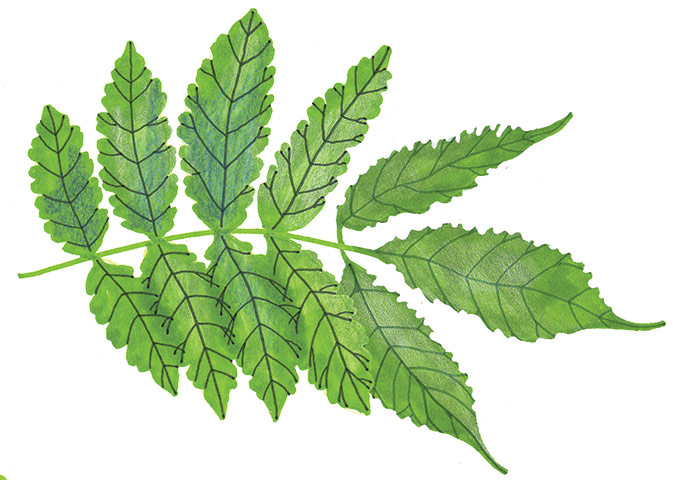
A common yet often overlooked tree, the ash is one of the latest to come into leaf, its sticky black buds usually opening only in late April. Later in the summer the seeds appear in the form of large clusters of “keys”, which may be carried some distance from the parent tree by strong autumn winds. Ash trees support a wide range of native insects, including the goat moth and the latest butterfly to emerge, the brown hairstreak
Illustration: Hennie Haworth