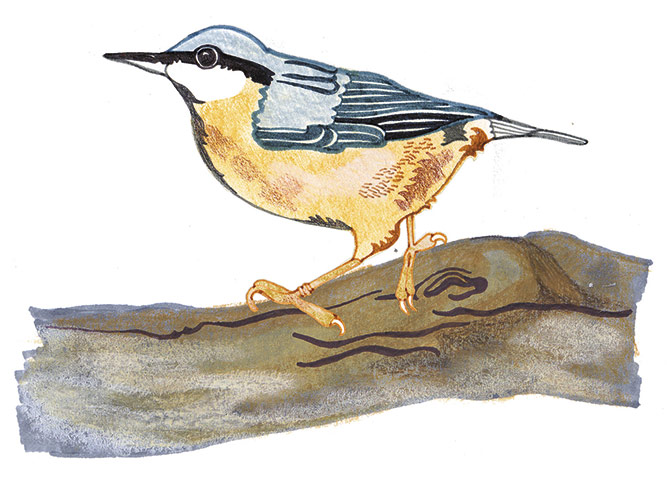
The only British bird able to climb down tree trunks as well as up, the nuthatch is commonly found in mature broad-leaved woodlands throughout England and Wales, and has recently expanded its range northwards into southern Scotland. A chunky, pot-bellied little bird: bluish-grey above and warm orange-buff below, with a white throat and black mask. The name derives from “nut hack” – referring to its habit of hammering open nuts with its powerful bill
Illustration: Hennie Haworth
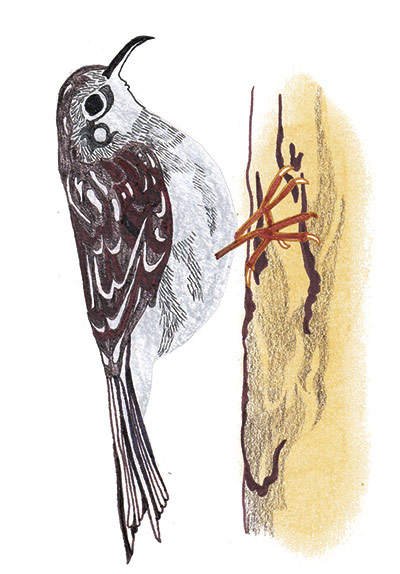
More like a small rodent than a bird, the treecreeper is usually spotted as it climbs surreptitiously around the trunks and branches of trees, probing its thin, curved bill into cracks and crevices in search of tiny insects. Found in coniferous and broad-leaved woodlands throughout lowland Britain, it is especially susceptible to cold, frosty winters, when icy branches make it hard to find food
Illustration: Hennie Haworth
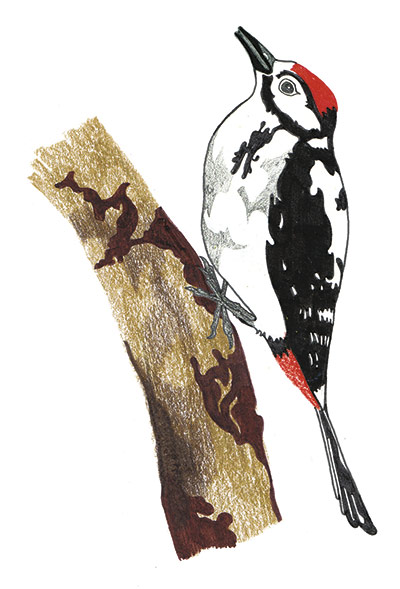
The most common of our three woodpecker species, the great spotted is a starling-sized bird with a striking black-and-white plumage and vivid patch of red on its lower belly. Males also have red on the back of their heads. Found in woods and gardens in lowland Britain, it has recently crossed the Irish Sea to colonise Ireland for the first time. Listen out for its loud, repetitive drumming in early spring
Illustration: Hennie Haworth
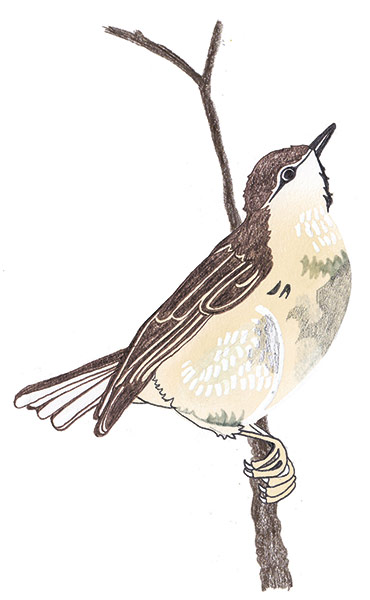
Our most common summer visitor: despite recent declines more than 2m pairs still travel here each spring from their southern African winter quarters. Small and greenish-yellow, similar in appearance to its close relative, the chiffchaff, but easily told apart by its sweet, plaintive song, the notes descending the scale. Found in open woodlands and scrub throughout Britain
Illustration: Hennie Haworth
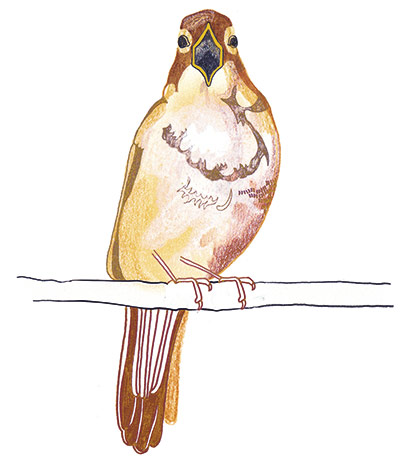
This legendary songster is one of the hardest British birds to see, as it prefers to hide away in the dense, scrubby understorey of broad-leaved woodlands. Its song, once heard, is never forgotten: a jazz musician’s virtuoso performance containing dozens of phrases. Found south and east of a line between the Severn and the Wash, it has recently suffered a catastrophic decline, due to drought and habitat loss on its west African wintering grounds
Illustration: Hennie Haworth
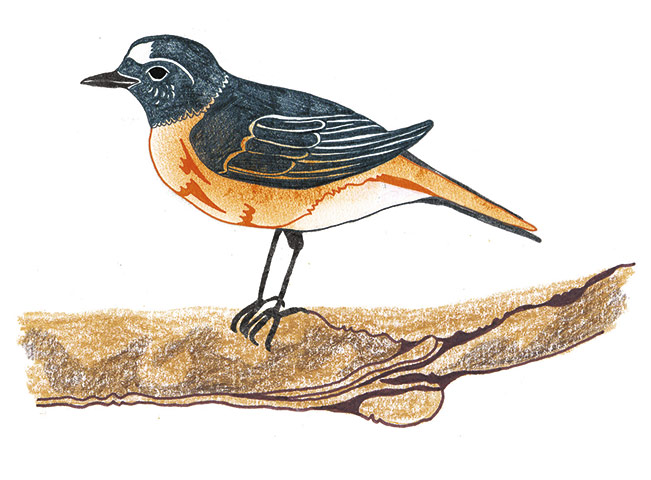
This colourful relative of the robin and the nightingale favours broad-leaved woodlands in the west and north of Britain and is especially common in the oak woods of mid-Wales. The male is a strikingly handsome bird, with a black mask, grey upperparts, rufous underparts and the reddish tail feathers that give the species its name – from the Old English r¯e ad steort meaning red tail. A summer visitor, arriving back in April
Illustration: Hennie Haworth