We, The Survivors, the fourth novel by the Malaysian-British Tash Aw, is a compelling account of the life of a working-class lad named Lee Hock Lye, or known among friends as Ah Hock. It's a vivid tale of an imaginative young man with ideas of setting foot in a better place than a ramshackle village where livelihood depends on fishing and harvesting cockles from the polluted mudflats. Ah Hock isn't an angry young man, nor is he an idler who accepts whatever comes his way as fate. He tries hard with life, changing numbers of jobs to make ends meet, hoping one day he'd move to settle down with a house and family in Kuala Lumpur or Singapore or even farther afield. The world that he inhabits, however, is a microcosm of the much larger equilibrium, where society permits a select few to climb the ladder, and the majority -- the ilk of Ah Hock -- remains stuck in poverty, leading a life that's going nowhere.
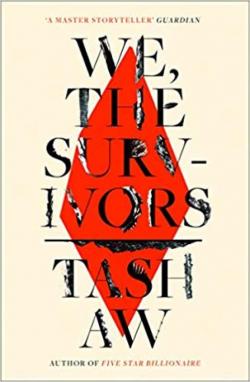
In the story, Ah Hock retraces his life since childhood to the fateful day when he kills a man to when Tan Su-Min, a PhD researcher from New York, comes home for fieldwork in Malaysia and plans to turn Ah Hock's life into a book. They usually work in Ah Hock's sitting room while Su-Min patiently records the details of his life into her mobile phone over several months. Ah Hock retells how his father left his mother and him at a young age, how his mother tried to spend her life with a new man, and how he and his mother chose to run a farm on their own.
The descriptions of how mother and son work on the farm are bold and understated. Aw viscerally inhabits the skin of his working-class characters, turning them into humans of nature and soil. At the same time, he tries to understand the psychological complexities underneath their working behaviours: "Those long, long days under the sun and rain, we experienced pain in the same way, and satisfaction and laughter too, but mostly hardship, and that is what bound us."
The structure of hardship, through a thick description by Aw, is exposed in the form of body, which Ah Hock and his contemporaries possess. The human body, as Wittgenstein observed, is the best picture of the human soul. Throughout the story Ah Hock never forgets how his body has become accustomed to the hardships gained from intensive physical work. He tells Su-Min he believes the ability to endure deprivation and hardship is in the genes that he inherited from his mother.
Observing foreign workers constructing cement works, Ah Hock reveals that he "remembered that same sensation in my own legs … that feeling of forcing your body to do what it didn't want to do, until it became so familiar that you no longer knew how not to force your body, and simple acts like lifting a cup of tea or a bowl of rice to your lips felt strange and lifeless". Later in the story, we learn that Ah Hock's body can "unlearn the lessons of a lifetime". He moves up in his line of work and leaves the back-breaking jobs to the migrant workers in the fish farm. The hard labourers: Bangladeshis, Indonesians and Indians, whose lives Ah Hock doesn't wish to be associated with any longer, will, however, bring far-reaching and dangerous consequences to his life.
In perspective, Ah Hock's life is plain and undemanding. Apart from his mother, whom he recalls often, his life is affected by his childhood friend, Keong, a village lad who has led a more adventurous life than himself. In his teenage years, Keong has already joined youth gangs, plunging himself into petty crimes like selling pirated DVDs and counterfeit goods, and supplying amphetamines to addicts and rich kids. There are long years that Ah Hock spends with Keong, but they go their separate ways after becoming adults. Ah Hock in his 30s appears to have come to grips with life. He seems less obscure when getting a job as a middleman who manages the fish farm for his frequently travelling Chinese employer. Ah Hock even meets a girl, falls in love and gets married. For brief moments, life seems to give him some space to breathe.
As life picks itself up, Ah Hock's relationship with his documenter, Su-Min, improves too. They talk more often, even go out shopping together. The talks and exchanges with Su-Min, nonetheless, re-emphasise the contrasted world the two characters come from. Hers is the world of reason, certainty and opportunity, and his is a sordid world of stories, danger and damage. Trying to contemplate the world of Ah Hock is like watching a film by Jia Zhangke, Ken Loach and Mike Leigh rolled into one.
Keong makes a return to Ah Hock's life when the latter runs into trouble from manpower shortage at the farm. Together, the old friends embark upon a world of human trafficking -- Bangladeshis or Rohingyas through transits in Southeast Asia -- or any illegal nationals that Ah Hock needs to replace his unwell workers. They're aware of the risk but know full well that illegal migrants accept lower wages and take jobs local workers refuse to do. There is, nevertheless, a great danger in finding them. The shady underworld of human trafficking, something of which Ah Hock has initially no wish to be involved with, eventually leads him to kill a ringleader, who blackmailed Keong, by accident.
Ah Hock's narrative of life comes to a conclusion after he's served three years in prison. At the same time, the record of his life has turned into a published book, celebrated by the educated elites who are, for a moment, fascinated by Ah Hock's life.
Throughout We, The Survivors, Aw avoids moral judgement of his characters. The protagonist Ah Hock, under the pen of Aw, is far from a working-class hero; neither is he portrayed as an inhumane savage. He's an ordinary man, leading a pragmatic life according to fortuities, pervasive influences and capricious probabilities in a system he is trapped in. Ah Hock is a true survivor -- he survives candidly.