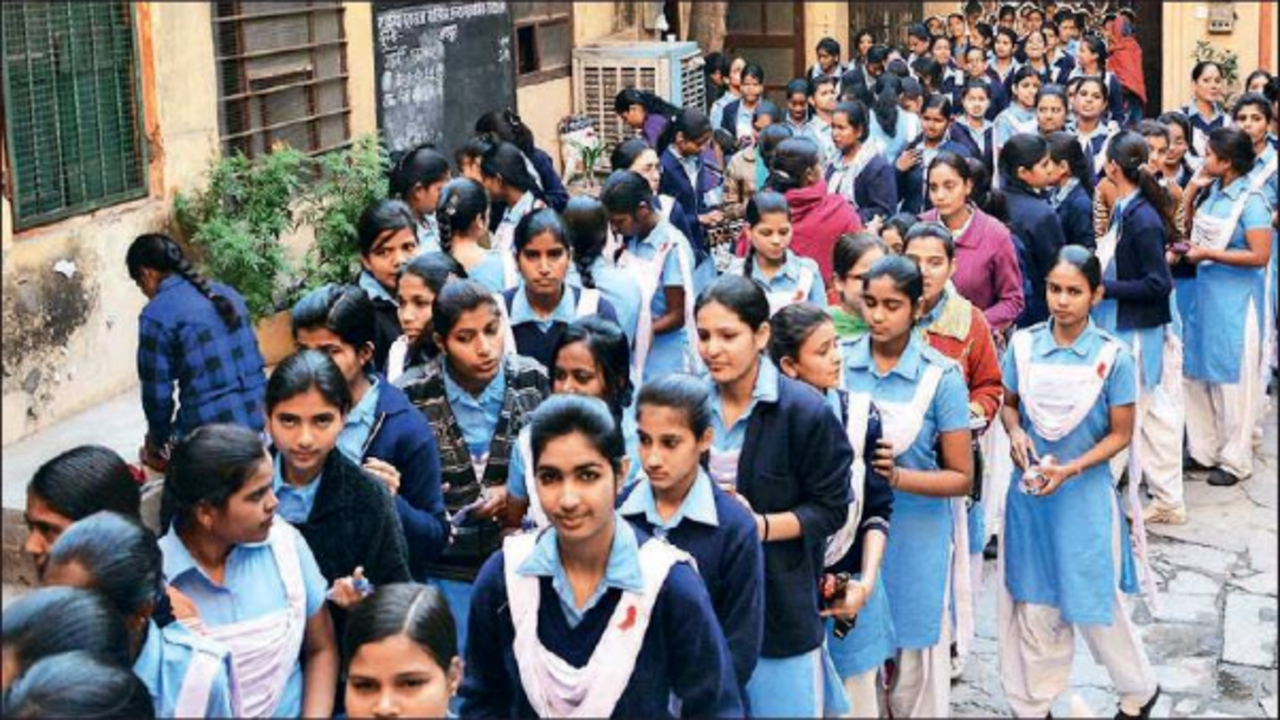
JAIPUR: Rajasthan, a union of erstwhile 22 Rajputana states, had once led the way in promoting literacy or education among the commoners. The erstwhile princely state of Bikaner had introduced the country’s first Right to Education Act in 1929, while Jodhpur started libraries on camel carts in 1930.
Jaipur did have formal education centres for royals and nobles since the mid-Nineteenth century, but it introduced education for the masses much later as compared to other princely states.
The Right to Education Act, 1929, comprised 21 provisions which made primary education compulsory for all students living in the municipal limits of Bikaner.
“Visionary Dungar Singh launched a special drive in the state to identify students eligible for education. A special grant was also allocated to establish schools to accommodate all students,” said Mahendra Khadgawat, director of Rajasthan state archive department in Bikaner.
The Act defined its objective as, ‘To attain a level where an age-specific student can have a meaningful reading, writing and do a simple calculation.’ The act was motivated by the education model in Britain. “The act intended to create a classless society with equal economic opportunities for all. Singh was a scholar, who visited several educational institutions across the globe,” Khadgawat said.
Education was kept free for all to increase enrollment. “Considering the remote location of the villages, the state opened education centres in villages, which were centrally located,” he said.
To ensure strict compliance with the Act, a ninemember school committee was formed comprising four teachers to monitor the learning outcome of students. “A post of ‘director of education’ was created for the first time in the country, especially for the implementation of the RTE Act. Also, an integrated new education policy was introduced in 1929 for the said purpose,” said Khadgawat.
The law had a far-reaching impact in Bikaner as enrollment shot up in all government schools.
Maharaja Dungar Singh had opened the first formal school in 1872 to impart education in Sanskrit, Urdu, Farsi, Hindi and English. Singh stressed the need to educate girls by opening a girls’ school in 1891.