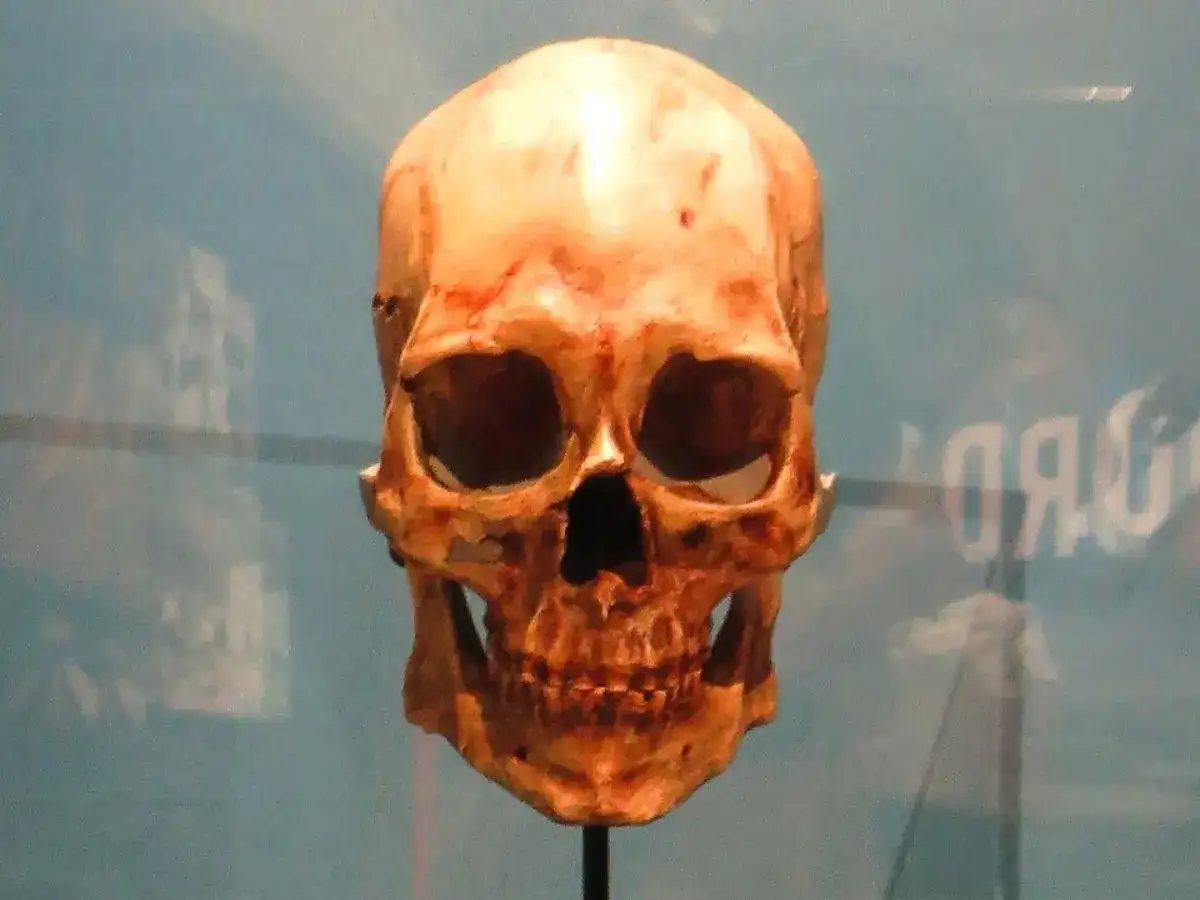
Kennewick Man is perhaps one of the most controversial ancient skeletons discovered in North America to date. It was excavated in 1996 in the vicinity of the Columbia River in Washington, according to a paper published in Nature. The archaeologists established that the bones of the person belonged to an epoch that had lasted over 8,000 years ago. However, a more heated discussion revolved around the following questions: whose were the bones?
Initially, some researchers concluded that the peculiarities of the skull were different from those of current-day Native American people and concluded that the skeleton belonged to a separate migratory wave. However, ancient DNA analysis has totally turned the discussion upside down.
Using genome sequencing, scientists have found out that the genetic profile of Kennewick Man was most closely associated with modern Native Americans from the Pacific Northwest region. This research has taught scientists the importance of rethinking the approach to ancient ancestry and the risks of focusing only on morphological characteristics.
Why was this skeleton controversial?
For years, there were those anthropologists who focused entirely on skeletal traits, like skull morphology, to infer about the ancestry of an individual. In the case of Kennewick, a number of scholars have found that the skull morphology was more akin to other populations who were not part of any modern-day Native American community. This observation was quickly disputed.
According to the paper published in Nature, these claims were based mostly on morphological characteristics, not genetic studies. It is not surprising since skull morphologies can vary within a population group and not necessarily signify another ancestry. Human biology evolves over the ages and is influenced by environmental and adaptational factors, too.
In due course, the issue took on a non-scientific turn as Indigenous groups residing in the Pacific Northwest claimed the skull as belonging to their ancestors, as per the Burke Meseum. They demanded repatriation according to the federal law. Consequently, the skull acquired both scientific and legal dimensions in addition to the anthropological one.
The DNA evidence altered the discussion
In 2015, ancient DNA testing shed new light on the matter. According to the genome study, Kennewick Man showed more similarities genetically with Native Americans compared to any other group examined. In addition, scientists observed an especially strong relationship between the ancient man's DNA and that of the Colville tribe in Washington State. This contradicts previous studies that used skull features to classify Kennewick Man.
In the report published in PubMed Central, the researchers highlighted how genetic information offered a better way of determining ancestry than comparing physical characteristics.
Genetic sequencing presented challenges due to the deteriorated nature of the ancient DNA over many years. It was necessary to eliminate any contamination to create a usable genetic sample. According to Nature, even after accounting for the degraded state of the DNA, the genomic analysis still gave a clear signal of Indigenous Americans. This changed the opinion in the scientific community completely.