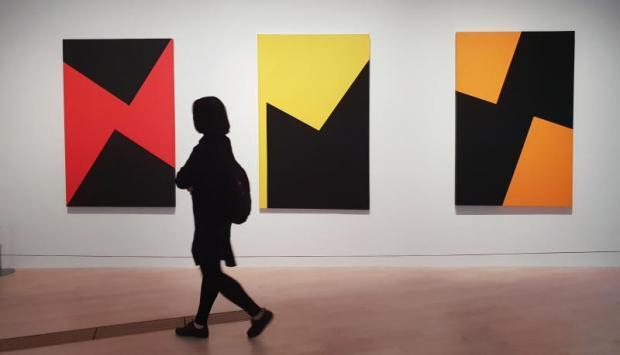
The word "minimalism" nowadays is rarely associated with the groundbreaking art movement of the early 1960s, which eventually reshaped the art world, pop-culture and people's way of living. Today, it's mostly associated with architecture, interior design and the fast-growing movement of living a decluttered, material-free life.
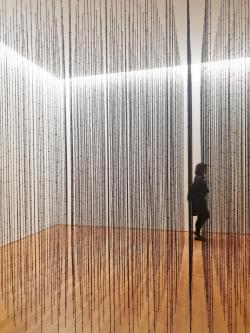
Mona Hatoum Impenetrable (2009).
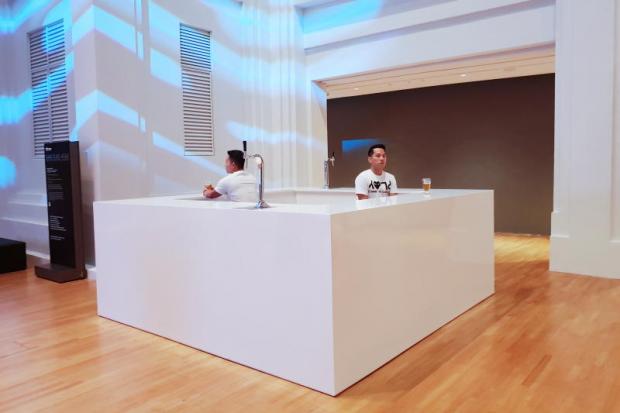
Wanting to put minimalism as an artform back in the spotlight, National Gallery Singapore, in collaboration with ArtScience Museum, has put together an ambitious and impressive exhibition -- "MINIMALISM: Space. Light. Object." -- which chronicles the development and legacies of minimalist art from the 1950s until the present day. Spanning two venues, the exhibition hosts over 150 artworks from some of the most influential Western and Eastern artists, like Donald Judd, Martin Creed, Anish Kapoor, Ai Weiwei, Tatsuo Miyajima and Montien Boonma.
As the first ever survey of minimalist art in Southeast Asia, the National Gallery Singapore and the ArtScience Museum shake up the narrow, Western-dominated minimalism dialogue by exploring how Asian philosophies and artists actually contributed to the movement as well. Peppered among the big-league Western names like Frank Stellar and Elmgreen & Dragset are artists like Tadaaki Kuwayama and Yayoi Kusama.
"It's a show that really traces the emergence of minimalism in the 50s all the way through contemporary art, and it takes a global perspective," said National Gallery Singapore senior curator Russell Storer. "[We're] really trying to move beyond the US and New York to really think about it as a very disciplinary and cross-cultural movement that had iterations throughout the world -- that they were feeding each other and influencing each other. So [we're] really trying to look at global and contemporary art from the perspective of Southeast Asia to really position Southeast Asia within a global context."
Walking around the two galleries (there's a shuttle service between both), enthusiasts will definitely enjoy the vast array of meditative artworks -- some of which are showcased in Asia for the first time. Yet, for casual observers, it's easy to look at the all-black canvases, simple cube sculptures and pile of rocks and think: "How and why is this considered art?"
"We expect that a lot," laughs National Gallery Singapore director Eugene Tan. "So one thing we want to convey to visitors is really about the act of experience. Minimalists really wanted to highlight this act of experience of the object and of yourself viewing the object. This becomes very clear in Robert Morris's mirrored cubes, because you see your own reflection in the work, so you become aware of yourself looking at the work."
Rather than referencing the world outside and having a story behind the artwork, minimalist artists invite viewers to contemplate the space, the physical object in front of them, and think about what the object in itself says. This changed the way they used materials, space and the participation of viewers, which eventually developed contemporary artforms like installation and performance art.
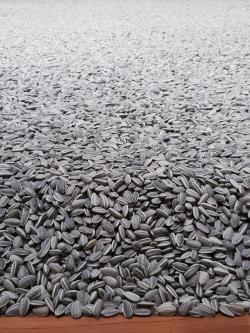
Left Ai Weiwei's Sunflower Seeds (2010).
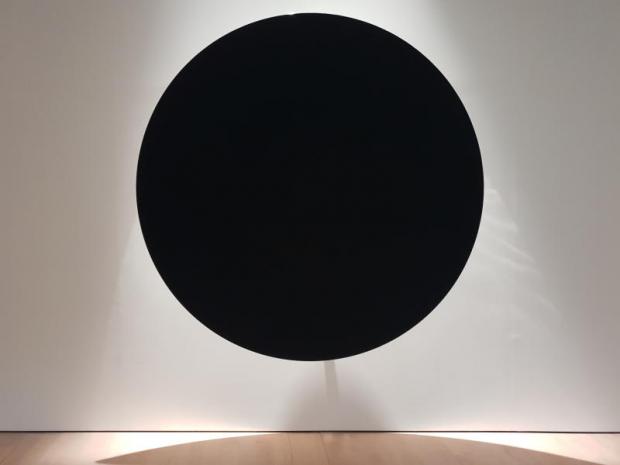
Though the initial experience of viewing these works can at first be a little frustrating, you're eventually drawn somehow into the simple shapes and objects. Frederik De Wilde's Horizontal Depth 3 -- "This In Not The Place We Go to Die. It's Where We Are Born", for example, is a carbon nanotube structure created with the "blackest black" in the world the artist developed with Nasa scientists. De Wilde makes viewers literally gaze into nothingness -- a void space that is the closest thing humans can experience to emptiness and singularity.
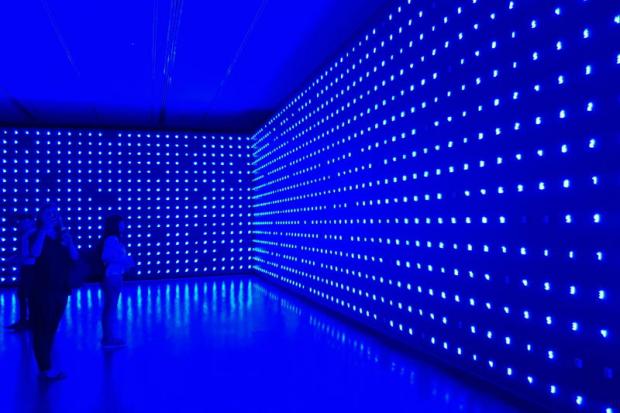
Tatsuo Miyajima's Mega Death also has viewers contemplating the meaning of life with his giant walls of LED numbers which count down from nine to one. Zero is instead replaced by darkness, representing the pause between life and death. Olafur Eliasson's Room For One Color is also a simple but powerful concept. Walking into a room with mono-frequency lamps mounted onto the ceiling, viewers' eyes adjust from seeing colour to only a spectral range of yellow and black, questioning our perceptual reality as a whole.
"We felt that this is a timely exhibition as well," said Russell Storer, who added later: "It's a very turbulent time politically and socially. The rise of mass media, and in this case social media, has really transformed our experience of the world and how we perceive information.
"And that desire to focus on what's important -- the fundamentals of things -- seems to be coming back. If you Google minimalism, art doesn't actually come up. It's about decluttering and lifestyle and interiors. It's something that's in popular culture, and it really resonates with how people are feeling overloaded with the world today. That of course has very strong connections with what happened 50 years ago. So we thought it was a good moment to really reconsider that and see and trace those histories."
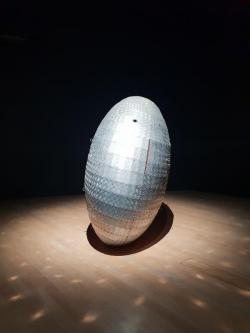
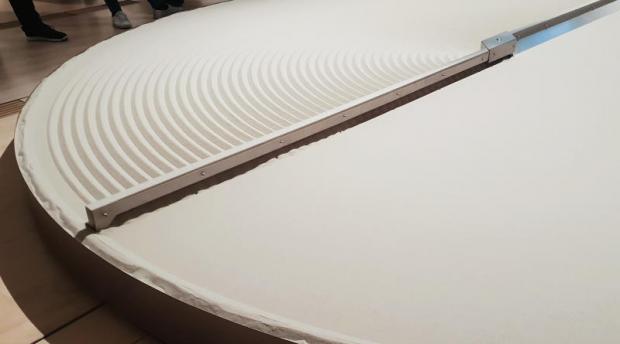
- Now until April 14 next year
Tickets available at minimalism.sg and the ticketing counter at National Gallery Singapore
"Minimalism" at National Gallery Singapore
- Non-Singaporean Ticket Price: SD$25 (600 baht; standard), SD$20 (concession)
"Minimalism" at National Gallery Singapore and ArtScience Museum
- Non-Singaporean Ticket Price: SD$30 (standard), SD$25 (concession)