SEATTLE _ From a few feet away, the metal trays look to be holding tiny rocks, plucked by a very particular and tidy collector. A closer look reveals that each tray holds not rocks, but remains _ one holds the bony bits of a ferret, the other a cat; both were pets, and both are done with their jobs as companions.
One more thing they have in common: After their deaths, they were brought to this place, where their little bodies were carefully and lovingly handled and reduced to bones. While their earthly hourglass has been turned, in death they are part of something new.
No one can say for certain what happens to the souls of formerly living things, but when it comes to the wrapper, it's pretty clear. You either bury or burn. If you've been through the gut-wrenching experience of having a pet put to sleep, you know that cremation is as familiar a choice at the vet clinic as it is at the funeral home. The clinic makes it easy. Your pet is taken away; you check the "cremation" box on the form and settle your bill; the clinic calls when your box of cremains is ready.
"And that's it," says Darci Bressler.
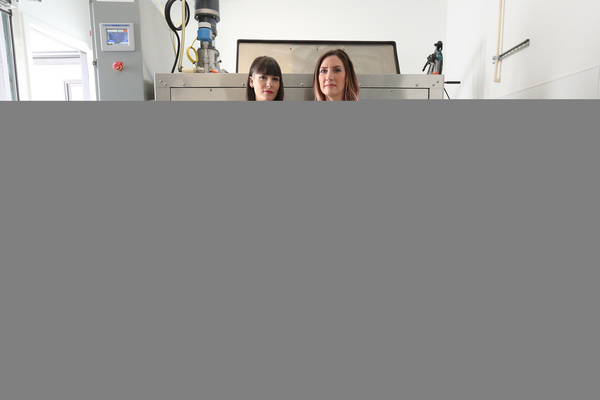
She and her sister, Joslin Roth, have met a lot of pet owners who want a better chance to say goodbye, a promise that their companion will be respectfully handled, a way to just do this death thing better. And, this being Seattle, they know those companions want their commitment to good environmental stewardship to stretch as far as possible _ into the days after life ends.
Out of death, then, was Resting Waters born. Bressler and Roth's West Seattle pet funeral home and disposition service does not burn animals' bodies. There are no body bags, no freezers, no carbon emissions. What there is: a stainless-steel machine about the size of a car, and some chemicals, and some drying racks. Resting Waters is the only place in the city that does death this way.
What Resting Waters has been doing since December is called alkaline hydrolysis or, more commonly, aquamation. The process is remarkably simple. A deceased animal's body is placed in a steel tank. The tank fills with water, and a few scoops of potassium hydroxide and sodium are added (amounts depend on how hard or soft your water is, as well as your elevation). The water heats to a little more than 200 degrees and is kept at that temperature, agitating gently, for 19 hours.
"The water is in constant movement," says Roth. When the cycle is over, a squeaky-clean skeleton is all that remains. All soft tissue has been reduced to a coffee-colored liquid that slips down the drain. No emissions enter the atmosphere, because where there is no fire, there is no smoke.

"All the chemical is used. All that's left is salt and sugars, and those go down the drain, to the water-treatment plant," Bressler says. Should a pet have medical devices, such as screws or rods, those come out intact as well, Roth explains, opening her hand to reveal a set of shiny metal parts once implanted in a dog's leg.
The Resting Waters tank holds 400 pounds, and thanks to metal dividers that slot in to brackets in the tank, several combinations of sizes of animals can be disposed of at one time.
"The more you can get in there, the better," Roth says. "Our goal is to have it be as efficient as possible."
It's a business, after all, even if it does deal with grief.
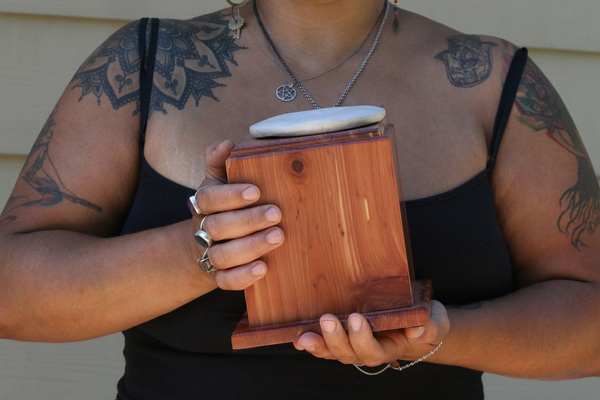
Once Roth or Bressler removes a skeleton from the tank, the bones are patted dry and arranged on a metal tray in a closet-sized space in what was once a garage, behind the Resting Waters office. The dry bones are put into a cremulator, a machine that pulverizes the bones into powder. The powder goes into one of Resting Waters' cardboard canisters, which are compostable and recyclable, and double as scatter vessels. Bressler and Roth would like to offer more choices, and in keeping with their eco-friendly ethos, they help clients find sustainable wood vessels. Once the canister has been filled, clients book a day and time to collect the remains.
"It's a difficult time. That's why we're by appointment," Roth says. Grieving clients will never overlap at Resting Waters.