A rare first-edition copy of Emily Brontë’sWuthering Heights, complete with its original spelling errors, is poised to go under the hammer for the first time in over a century. The auction comes as the tragic, tempestuous romance continues to captivate new audiences, fueled by a recent big-screen adaptation.
Christie’s auction house announced Monday that this particular volume is the first copy of the novel in its publisher’s original cloth binding to be offered at auction since 1908.
Only about 250 first editions were initially printed, and this specific book has remained in a private library since shortly after its publication in 1847.
Mark Wiltshire, a books and manuscripts specialist at Christie’s, underscored the extreme rarity of such an item. "The vast majority of surviving copies were rebound for collectors or libraries, meaning original cloth examples are now extremely scarce," he stated.
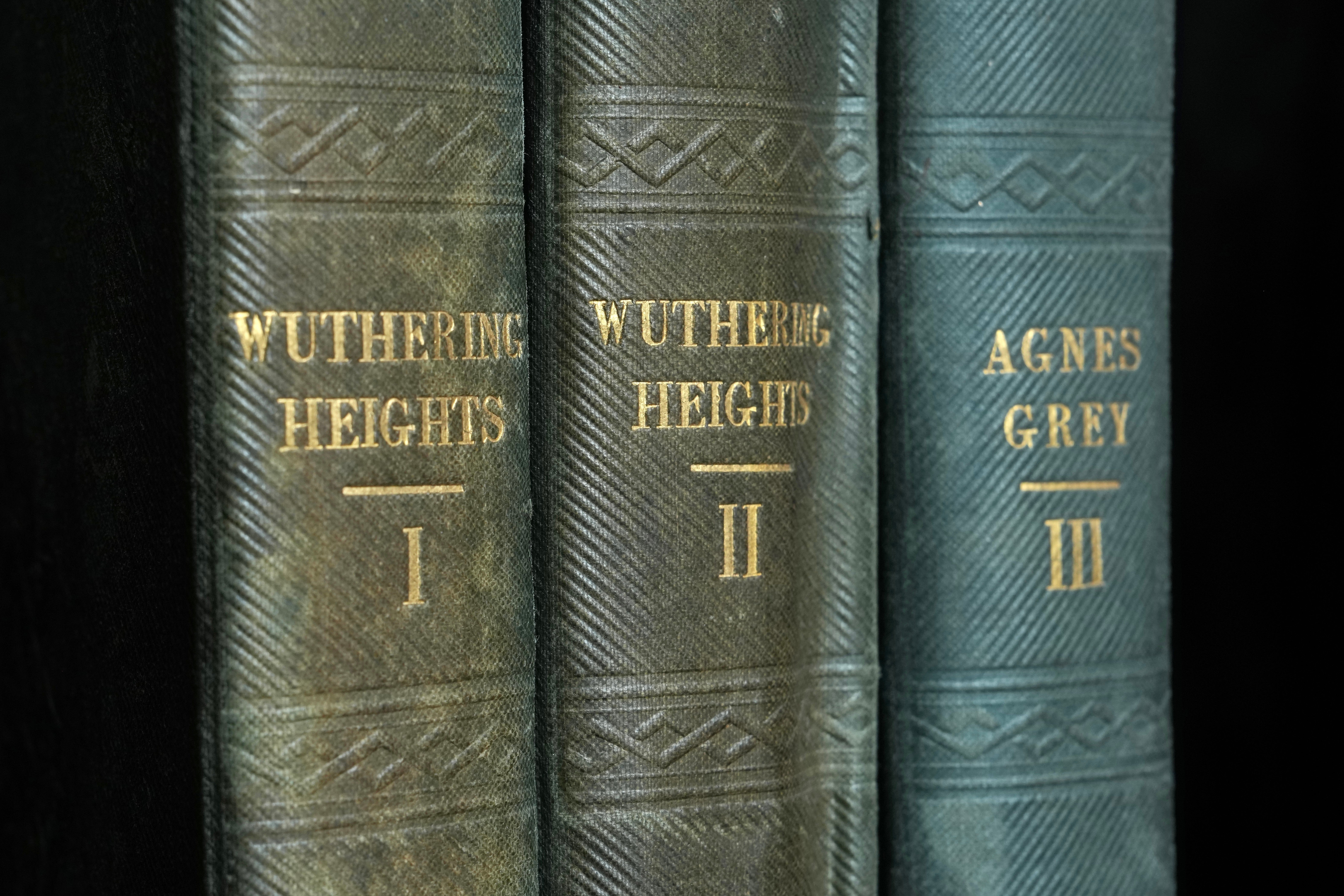
Being sold along with a copy of sister Anne Brontë’s Agnes Grey, it’s expected to sell for between 400,000 pounds and 600,000 pounds ($540,000 and $800,000) at a June 30 auction in London. Both books carry the male pen names the sisters adopted to get published: Ellis Bell for Emily and Acton Bell for Anne.
Wuthering Heights was rushed to publication after the success of Charlotte Brontë’s Jane Eyre, and the first edition is notorious for its typographical errors including, Wiltshire noted, the occasional misspelling of the word “heights.”
Emerald Fennell ’s recent movie with Margot Robbie and Jacob Elordi as mismatched pair Cathy and Heathcliff is the latest work to be inspired by — and take liberties with — Brontë’s brooding, Gothic tale.
The novel shocked some critics when it was published, with one in 1848 decrying its “vulgar depravity and unnatural horrors.”
Since then, Wiltshire said, it has “moved beyond literature to become a cultural touchstone,” inspiring art, music — notably Kate Bush’s pop-operatic 1978 song — and multiple film adaptations.
“It remains a work that artists return to again and again because of its emotional force, its atmosphere, and its psychological intensity, ensuring its place not only in literary history but in wider cultural imagination,” Wiltshire said.