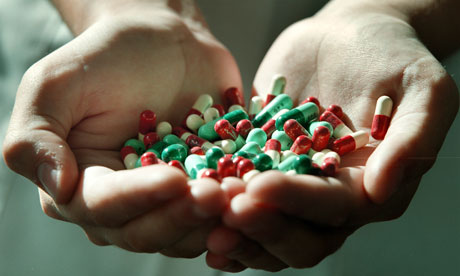
What are we to do about the diminishing power of antibiotics - once the miracle drugs that looked set to end infectious diseases? We know the problem is becoming very serious - here is a piece I wrote about the alarming prospects for a future without antibiotics.
But we don't hear much in the way of imaginative answers. So it's refreshing to read a paper out this morning from Aaron Kesselheim, from Brigham and Women's Hospital and Harvard Medical School in Boston, and Kevin Outterson, a professor at Boston University Law School.
Their analysis, published in the journal Health Affairs, says the usual idea, to give pharmaceutical companies financial incentives to invent and manufacture more antibiotics, won't work. One of the reasons we are in this parlous state of affairs, they say, is that drug companies in the past have tried too hard to sell more tablets. Of course, the misuse of the drugs - physicians over-prescribing and patients not completing the course - is largely to blame, but companies have been disciplined for promoting wrong uses of antibiotics. They cite two cases involving Pfizer. In one of those, in 2005, the company, they say, was warned by the Food and Drug Administration
that its 'misleading promotion' of linezolid (Zyvox) as a treatment for a wide range of methicillin-resistant Staphylococcus aureus (MRSA) infections 'poses serious public health and safety concerns because of its potential to result in inappropriate use'. The FDA concluded that the clinical trial data did not support linezolid's use for those conditions.
Kesselheim and Outterson say that infection control, including handwashing, can work and so can guidelines on prescribing, but they have limitations. So do the various proposals on incentives to drug companies, from extending patents to handing out cash prizes, they say. Limiting the use of antibiotics depresses company sales, while incentives do not directly tackle the resistance problem - companies may still look to short-term profits by trying to encourage greater use of the drug.
Their big idea is to reward both hospitals and drug companies for what they do to keep antibiotics effective.
Take, for example, a new drug, or a conservation program for an existing drug, that treats or reduces vancomycin-resistant Enterococcus and leads to fewer intensive care unit admissions for patients with this infection. A value-based reimbursement plan would allow part of the savings to be shared with the manufacturer of the product and with the hospital that put the infection control program in place. Under such a proposal, the combined increase in antibiotic reimbursement should be substantial - amounting at least to several billion dollars a year. This approach would close some of the gap between the private cost and societal value of antibiotics.
Radical? I think so. But it makes some sense. We would be paying for antibiotics to work and keep on working - not for more and more drugs that quickly become useless. I can imagine this being a nightmare to negotiate between the interested parties. But at least it's a new idea. Like new antibiotics, we are short of those.